Hanoi – Vietnam
This was our first visit to Vietnam. Hanoi is the capital of Vietnam and the country's second largest city. Each new country we go to we are amazed at how different and unique it is from the last.

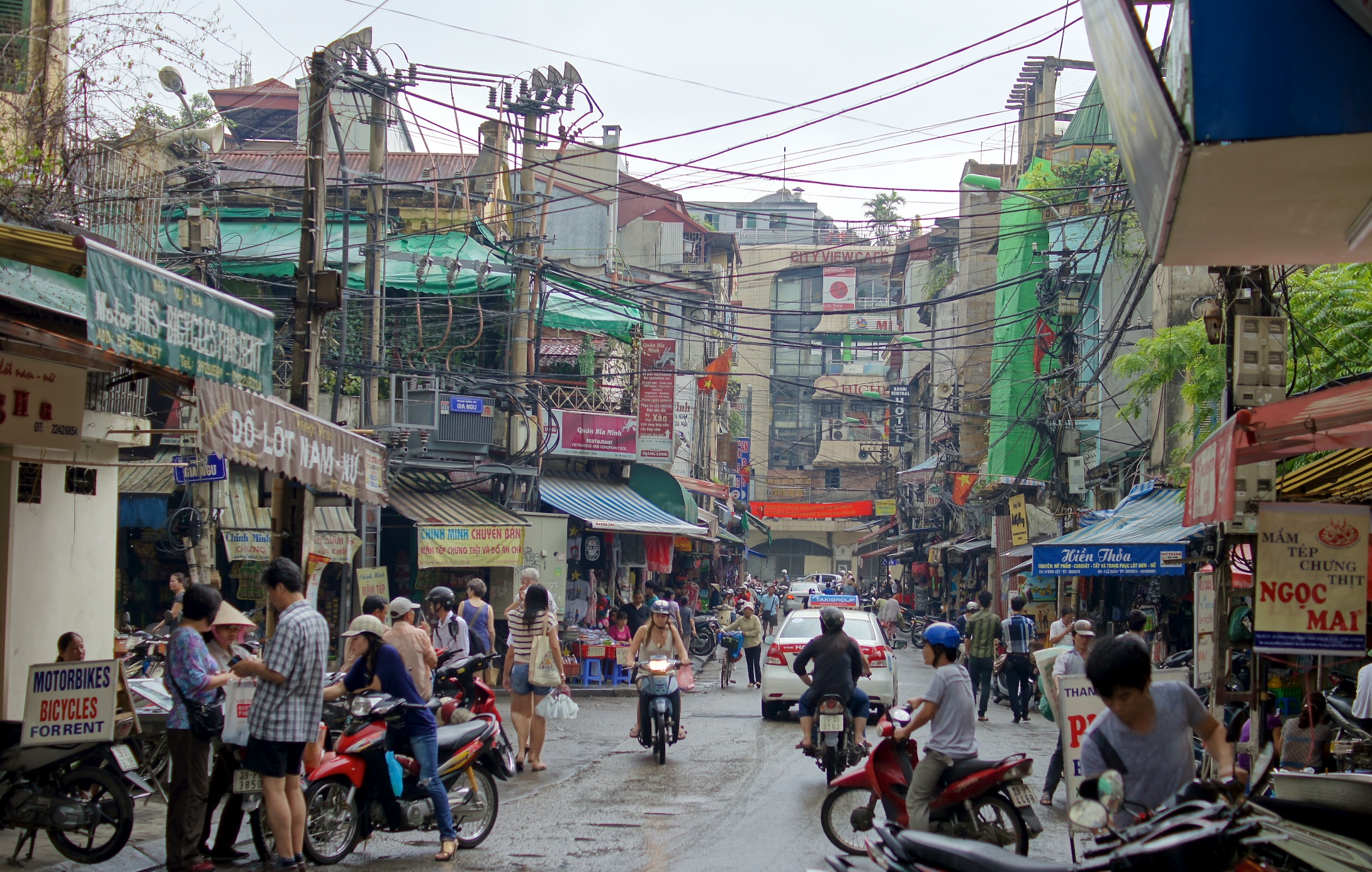
We arrived around 8:00 in the evening and were very hungry so out to the street we went. It was pure chaos in the streets! With more motor scooters than we have ever seen in any country. Between the overflow of the shops into the streets and the hundreds of scooters, it was difficult to even walk. But rest assured – the constant honking of the horns made us aware that we were in the way!

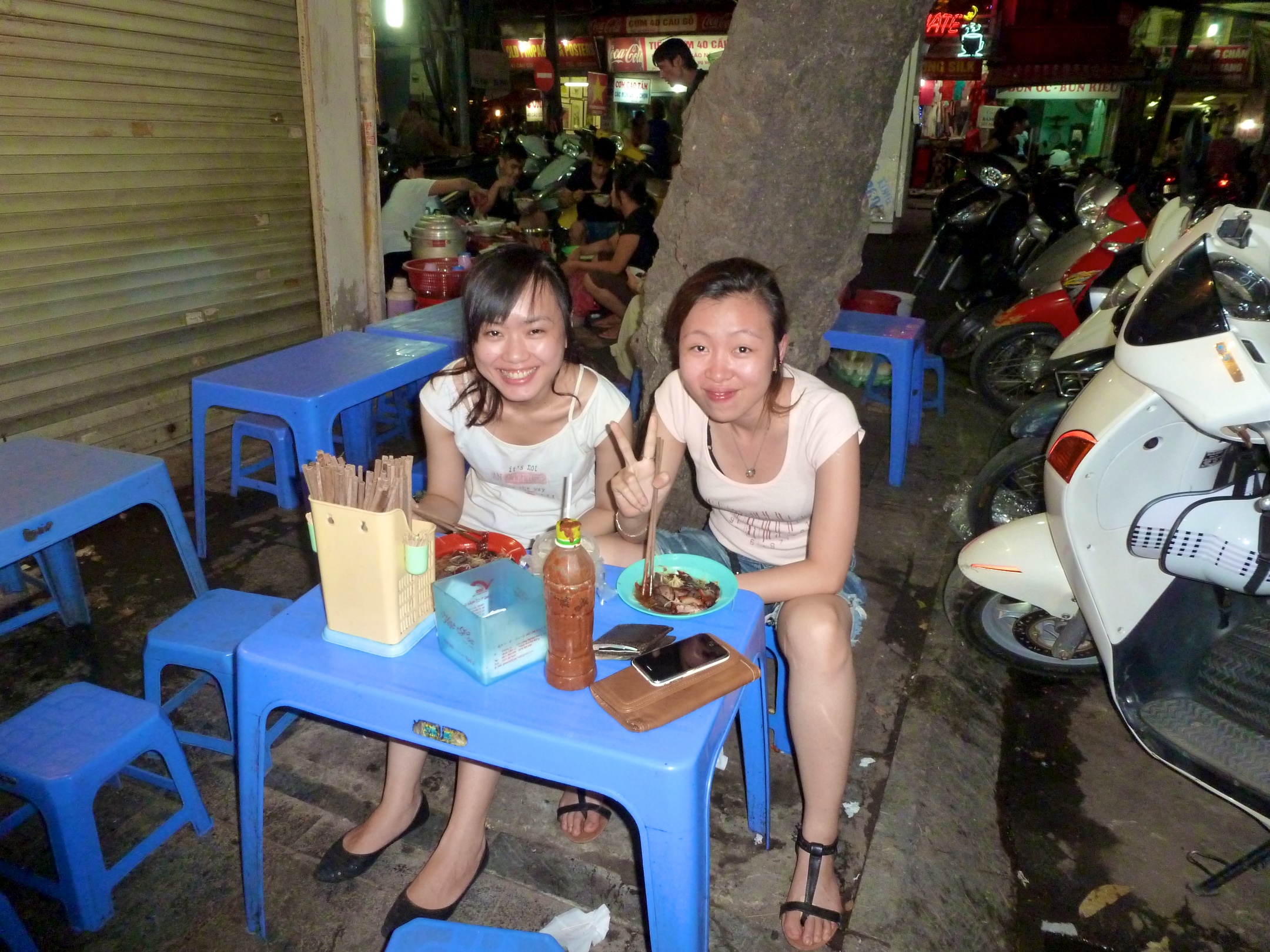
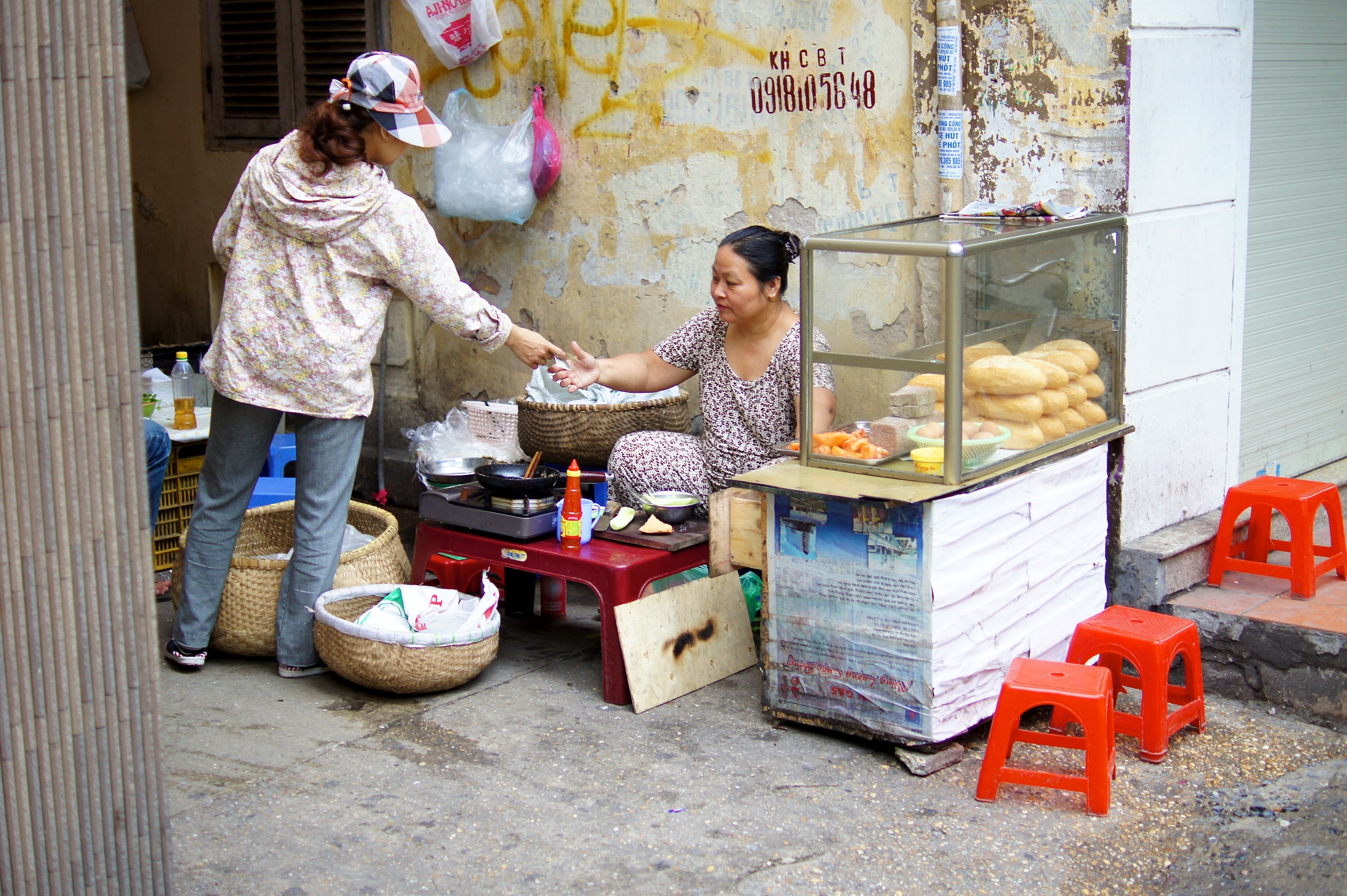
Of course D could not wait to get street food. So we stopped at this little cafe. How about these teeny tiny chairs? They were the norm for the street cafes.

We had a delicious beef and mango salad at Cafe Quang Minh (51 Dinh Tien Hoang) – two plates for $2.50 USD.

The two girls below were quite amused that we were eating there. It was a very local place so not sure how many tourists actually eat there – plus D was taking photos of me.
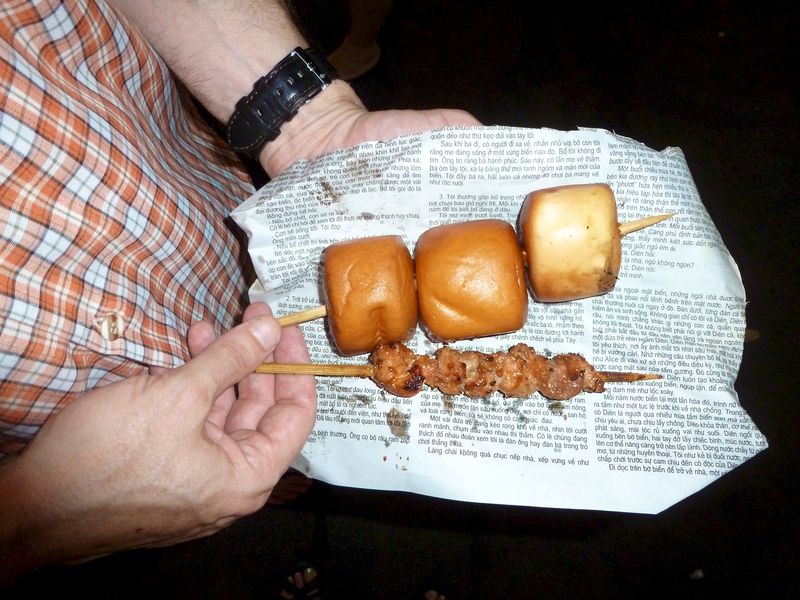
D was still hungry so he picked up this little tidbit – grilled meat and puffy rolls – we think.
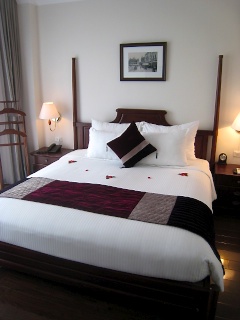
Our hotel was located in the old quarter a perfect location. We stayed at the Hanoi Essence Hotel. It was a fabulous hotel and we highly recommend it. The staff was exceptionally good. Splurge on the suite – it is not that much more than a regular room and the extra space is really nice.
Me cruising the street on a scooter!

The next morning we ventured out into the crazy streets. The streets are the heart of the city – and are used as a big part of the people's living space.

More teeny tiny chairs……..
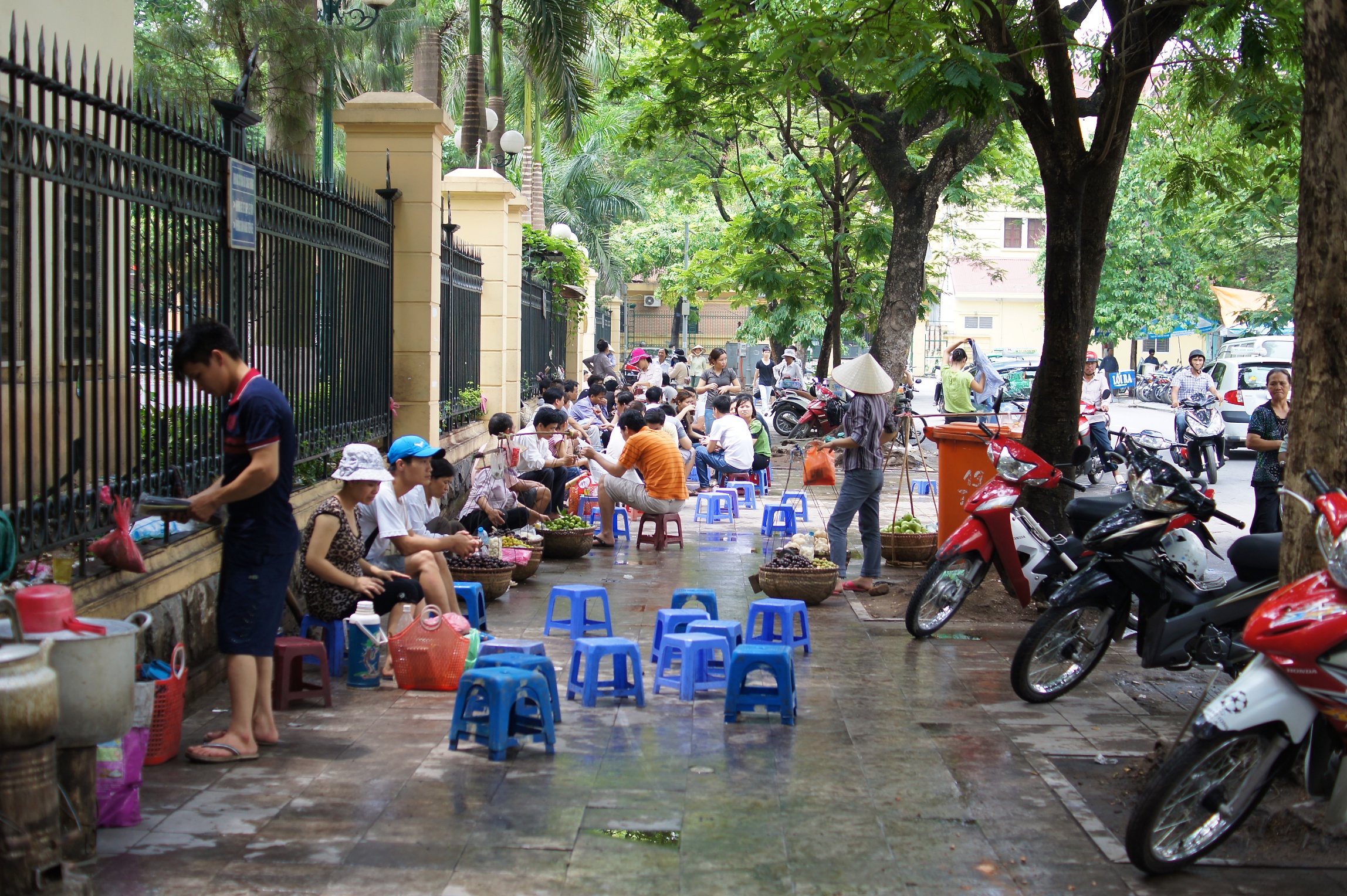
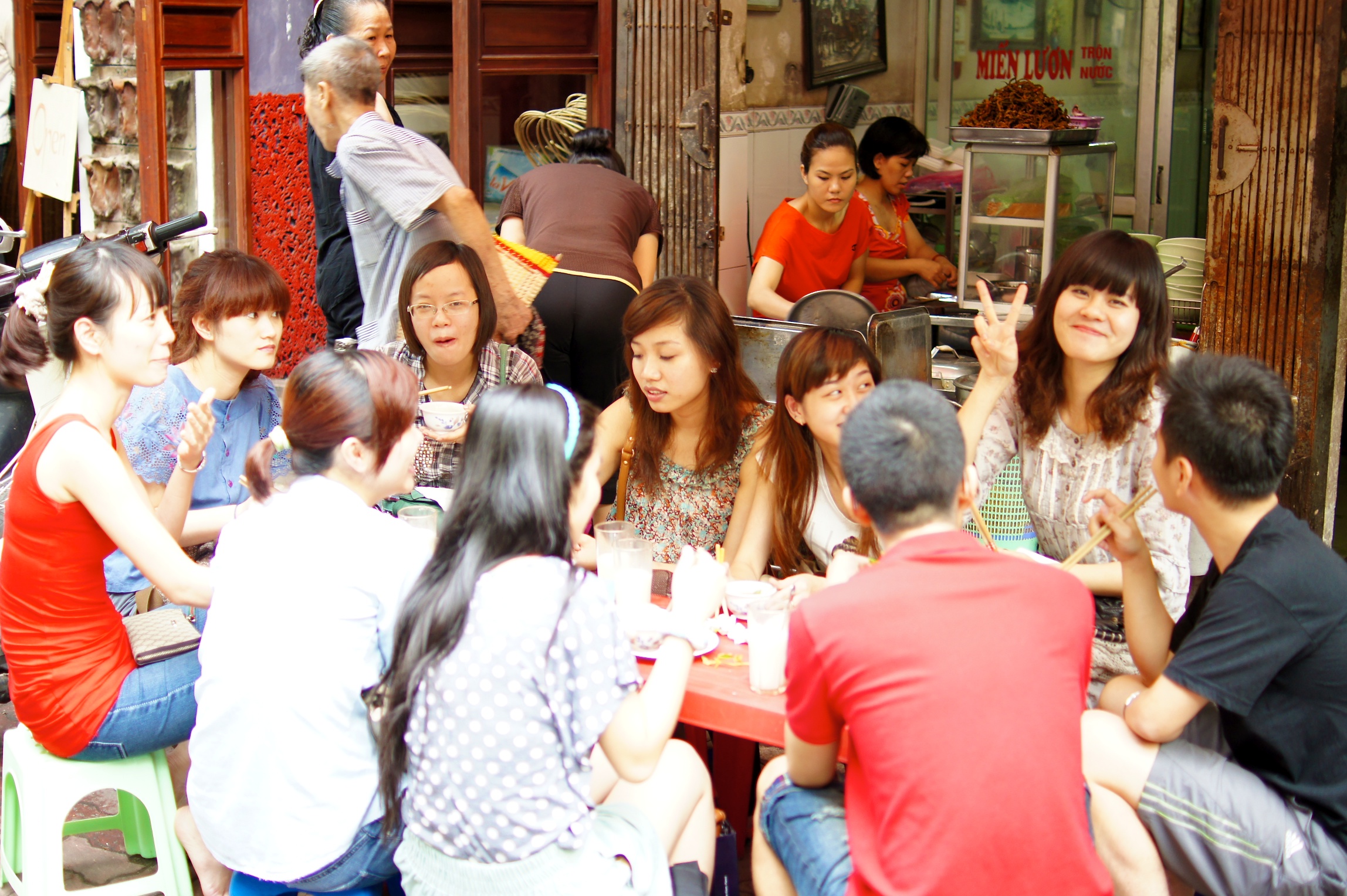
Little cafes filled the streets. Hanoi is a coffee culture, not alcohol.

This is a very common scene – large groups of young people eating and having fun.
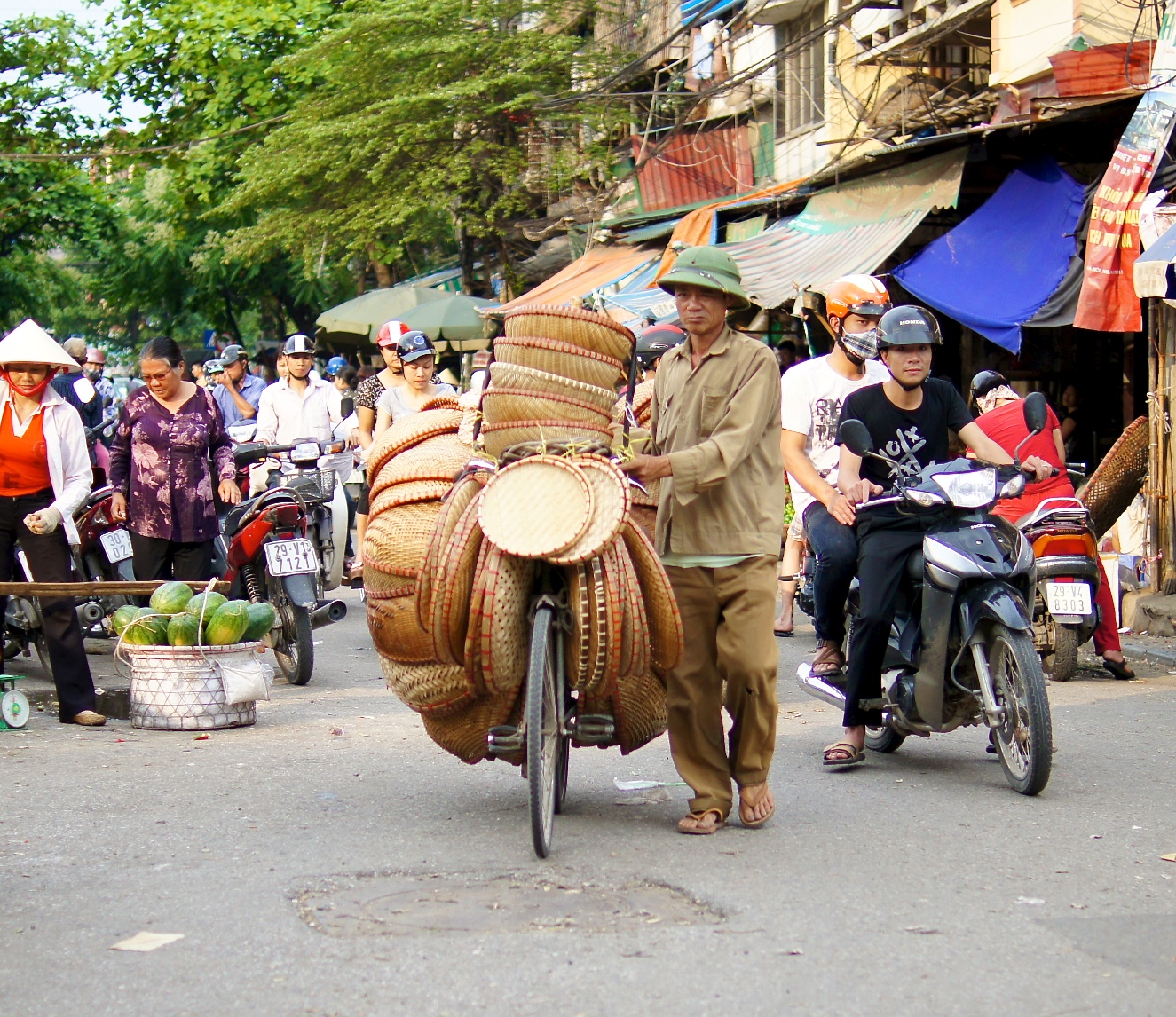
We were mesmerized by the traffic. We would just pick a spot out of the way and watch the traffic for an hour. To see our post on all the scooters click here.

There was an art to crossing the street. Just go! Don't run, just walk directly into the traffic and keep an even pace. Don't hesitate or turn around. Amazingly, it works. The drivers work around the pedestrians.

You can buy just about everything in the street.


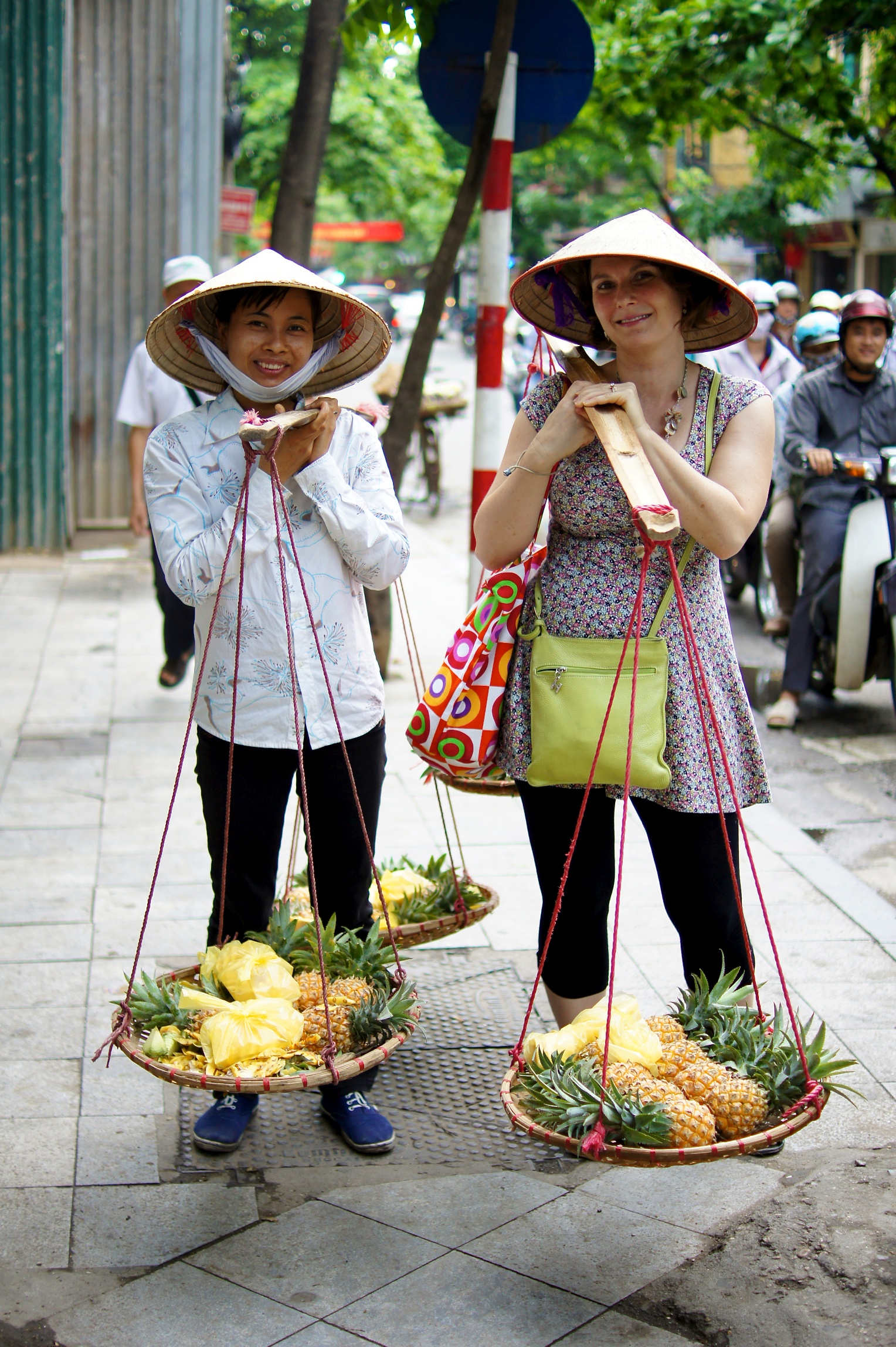
You can even "buy" a photo of yourself carrying pineapples.
Ancestor worship (the burning of paper) is a religious practice based on the belief that deceased family members have a continued existence, take an interest in the affairs of the world, and possess the ability to influence the fortune of the living.


Inquisitive boys asking her about the ritual.

A nice break for a fresh coconut drink.
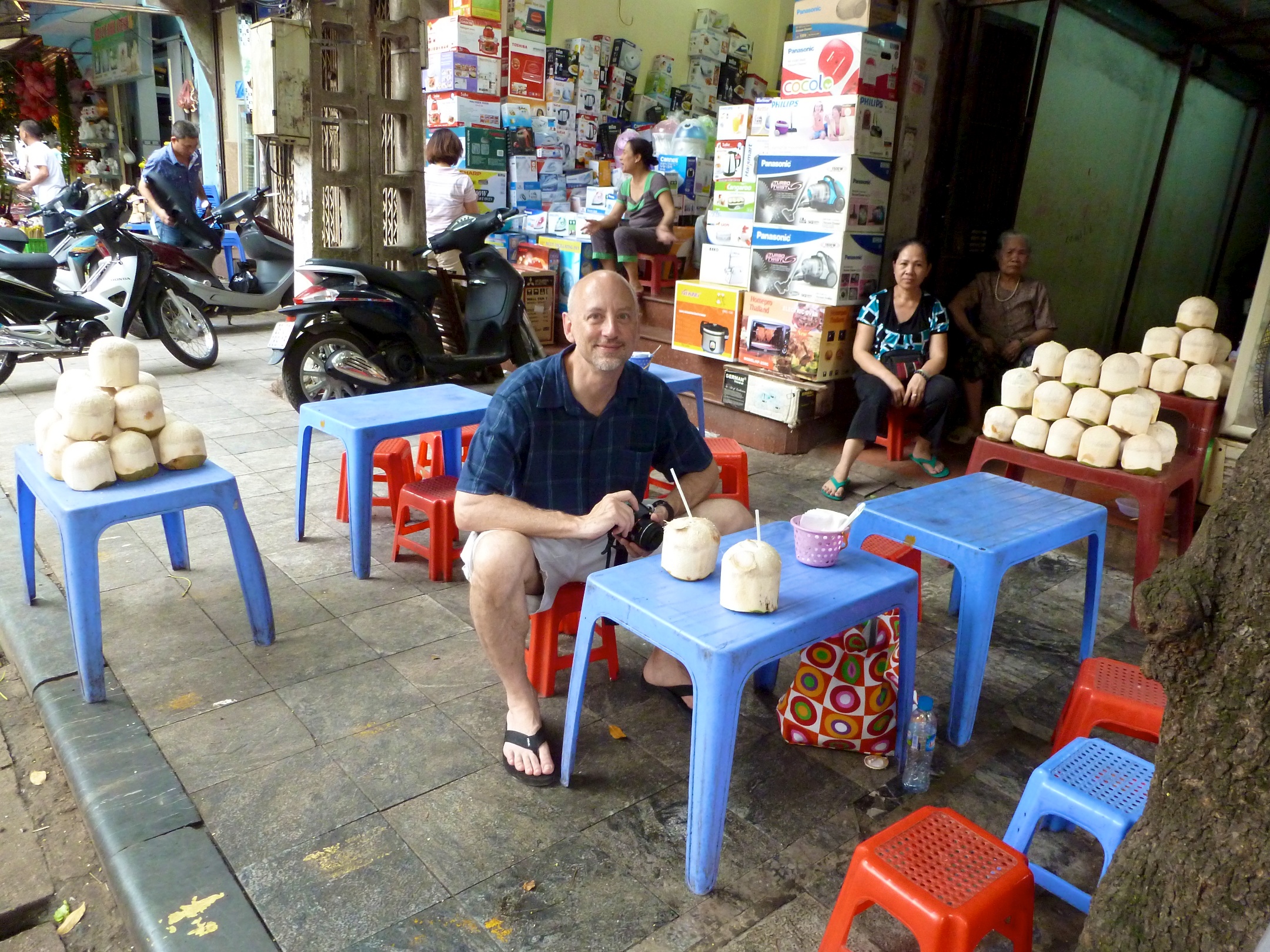
And later, more coconut in the form of a pina colada : )

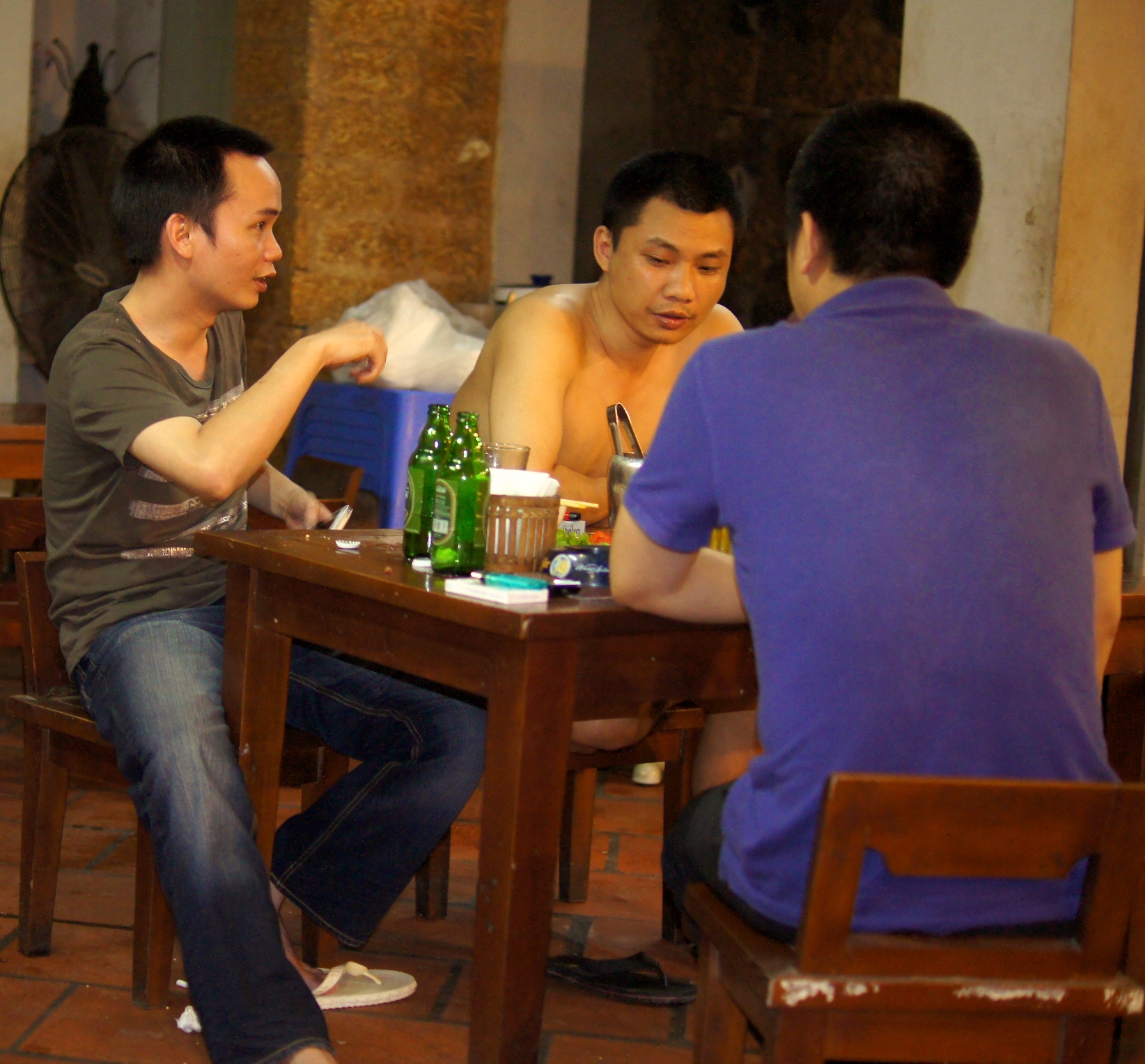
Don't you love how this man is not wearing his shirt at dinner – and this was a nice restaurant! I think this photo looks like a scene from a movie – robbers plotting their next gig.
Early Sunday morning (6 am!) we met up with Anh from awesome travel, for a 3-hour walking tour of the city. He only charges $1 – really! We were the only ones who showed up so it was a private tour. It was very interesting and we would recommend Anh for this tour or other tours he offers. And we did tip him more than $1 : )
The city is located on the right bank of the Red River. The site of present-day Hanoi has been populated for at least 10,000 years. Most Americans associate Hanoi with the Vietnam War and the tremendous conflict between the two countries. Following the war and during the ensuing U.S.-led embargo, life in Vietnam was extremely difficult. After the U.S. lifted the embargo in 1993, the Vietnamese have come to love Americans and American products.

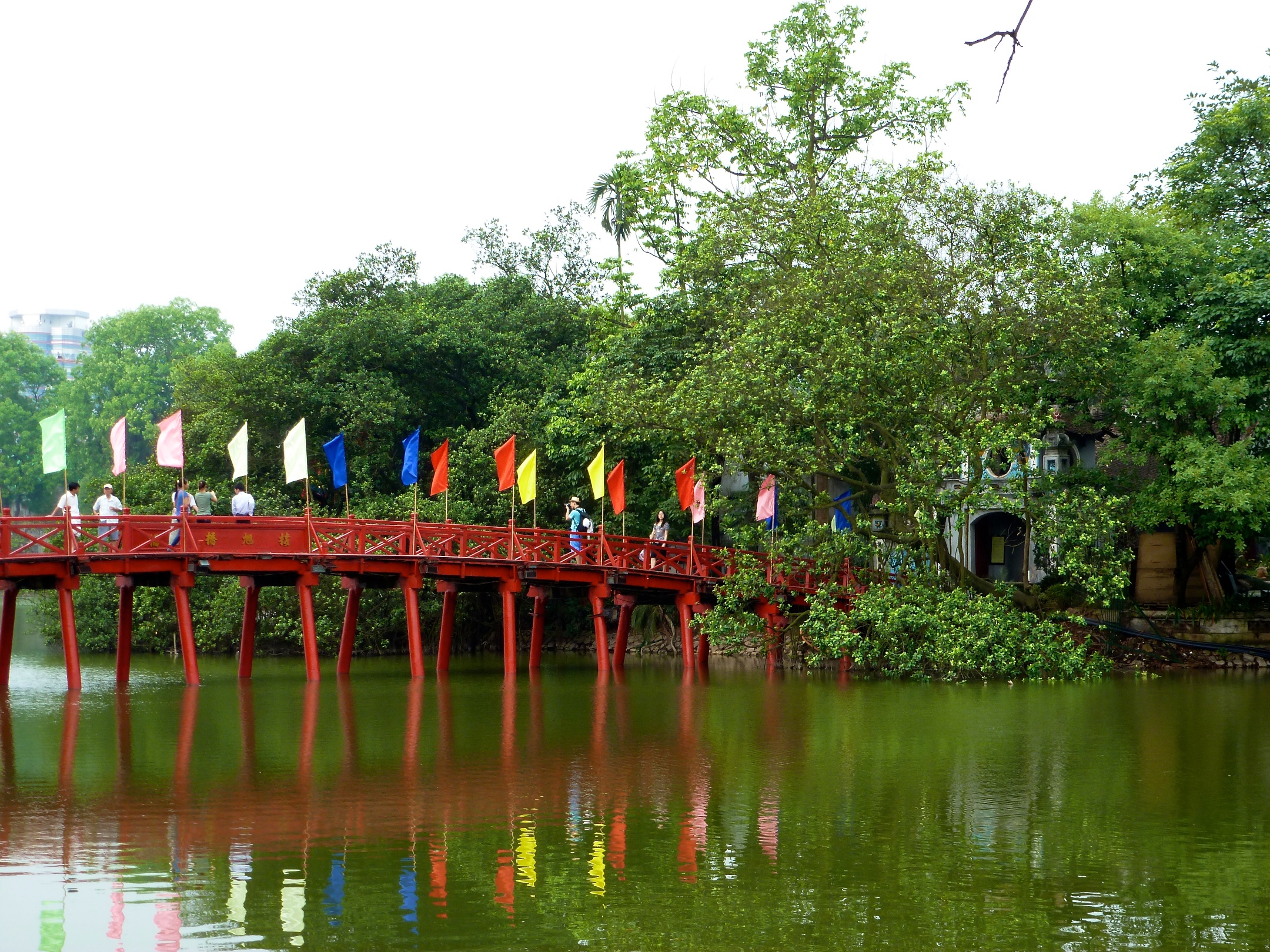
Hồ Hoàn Kiếm Lake: this historic lake is the site of a foundational legend for Vietnam: Hồ Hoàn Kiếm means "Lake of the Returned Sword", alluding to the legend that a future emperor received a sword from a magic turtle at the lake's edge. The emperor later used the sword to drive the Chinese out of Vietnam.
We were struck by the amount of construction going on all over the city and just outside of the city. It did not appear to be as poor of a city as we thought. But keep in mind the average income is only about $1000 per year. We saw many large houses like the one below. Most were very colorful.

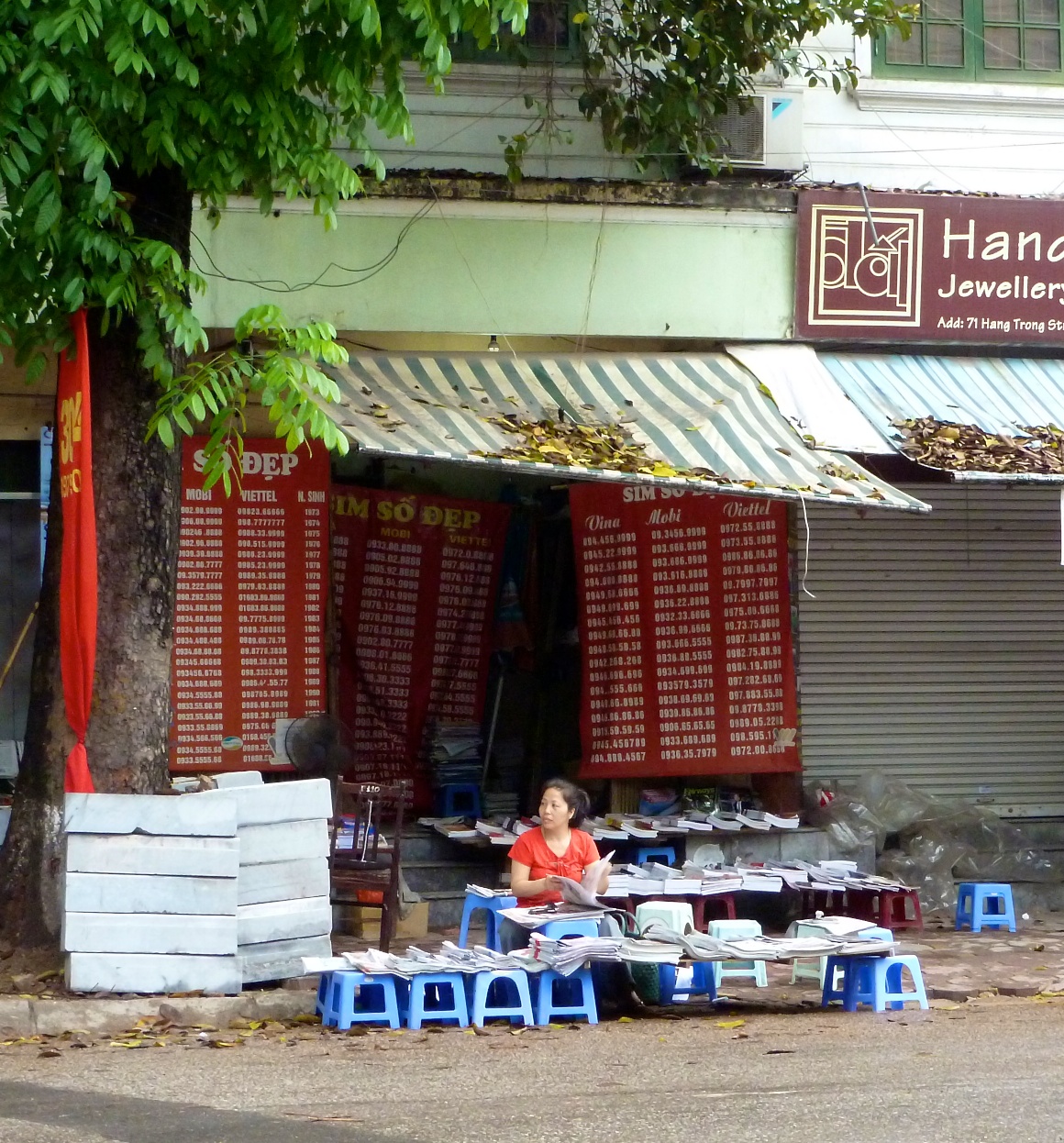
This woman is selling phone numbers. Anh told us this is big business in Vietnam and a good number can sell for a high amount of money. The same goes for license plates. What is a good number? Ones that are considered lucky - 1, 5, and 9. More importantly, the string of numbers must be ascending… indicating your fortune and health will ascend as well.
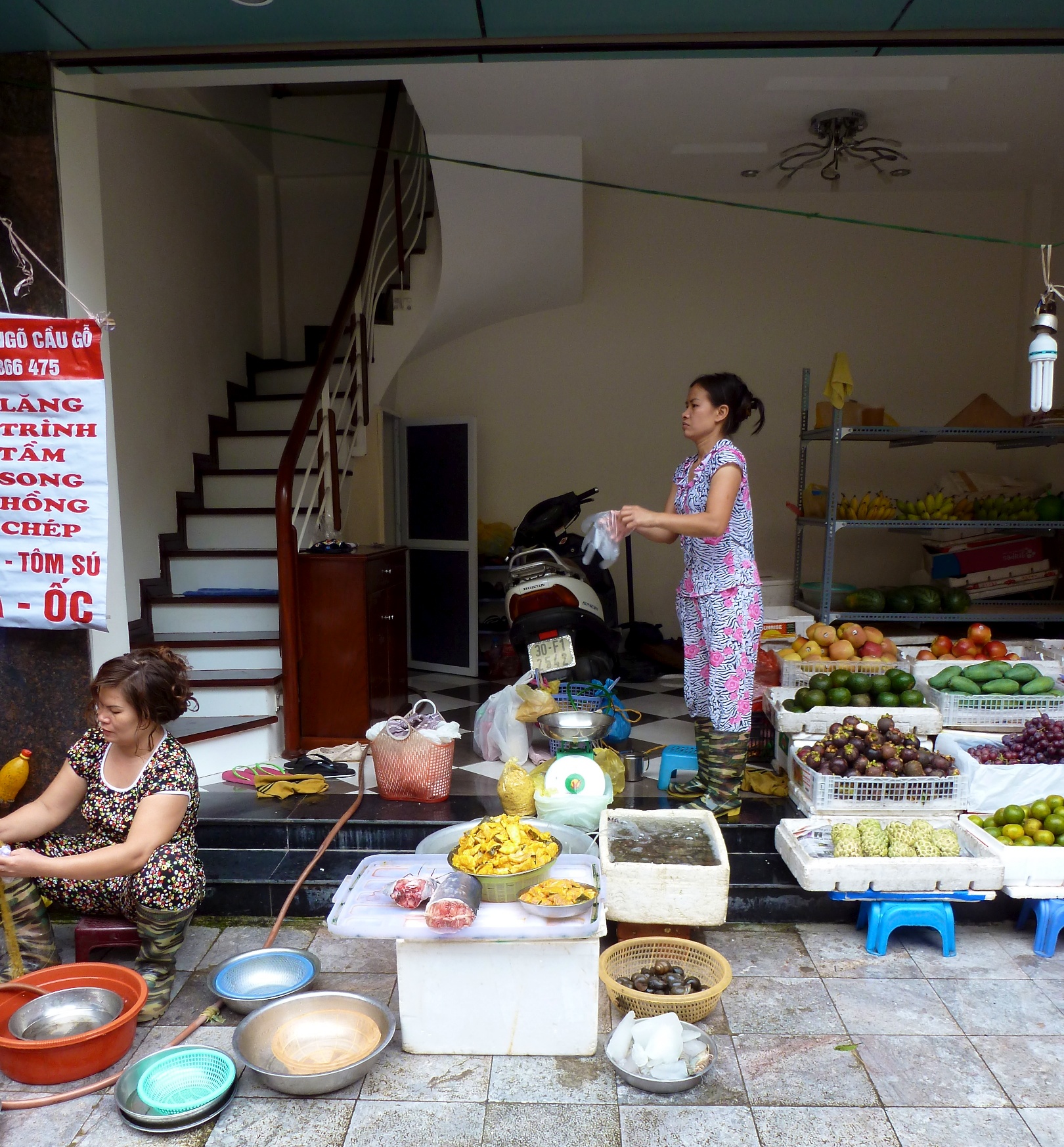
Anh took us through the early morning food market.

Many of them just sell the goods out of the lower floor of their house. If you look below, you can see the stairs off to the left leading to the main part of the house.
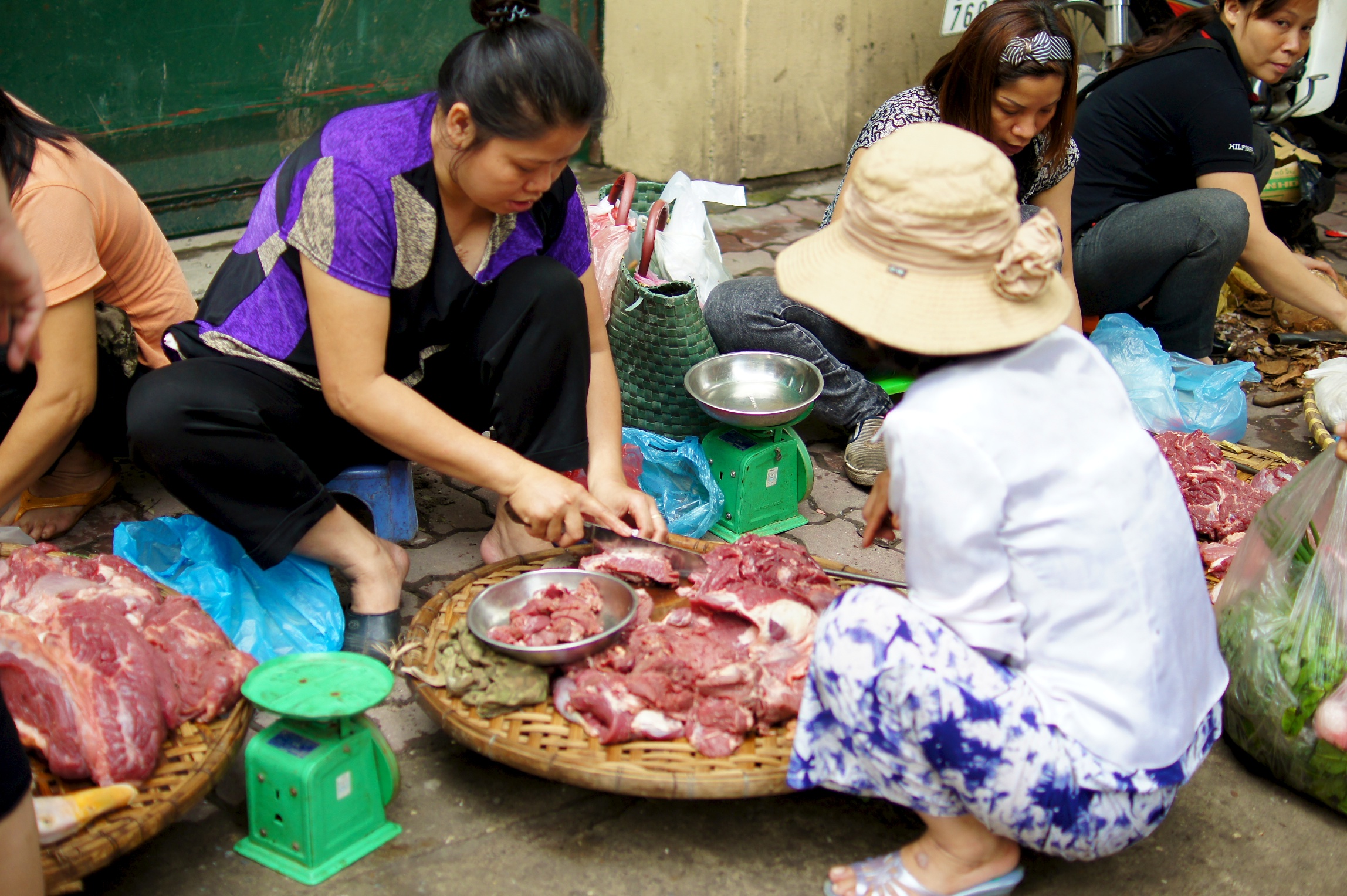
Butchers


Fish section

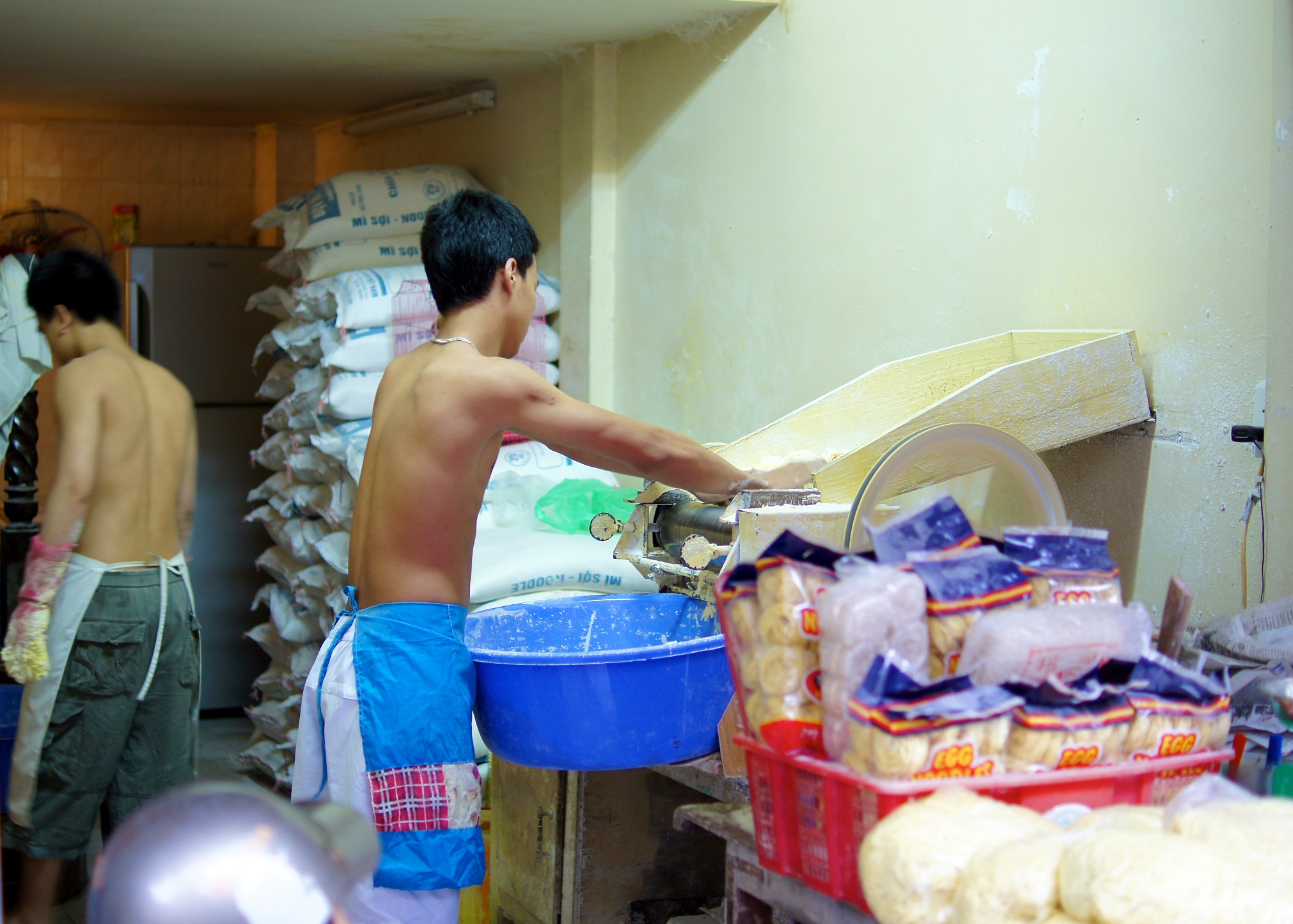
Making fresh noodles
Veggies


Eggs

Anh got us both to taste balut. What is this you ask?
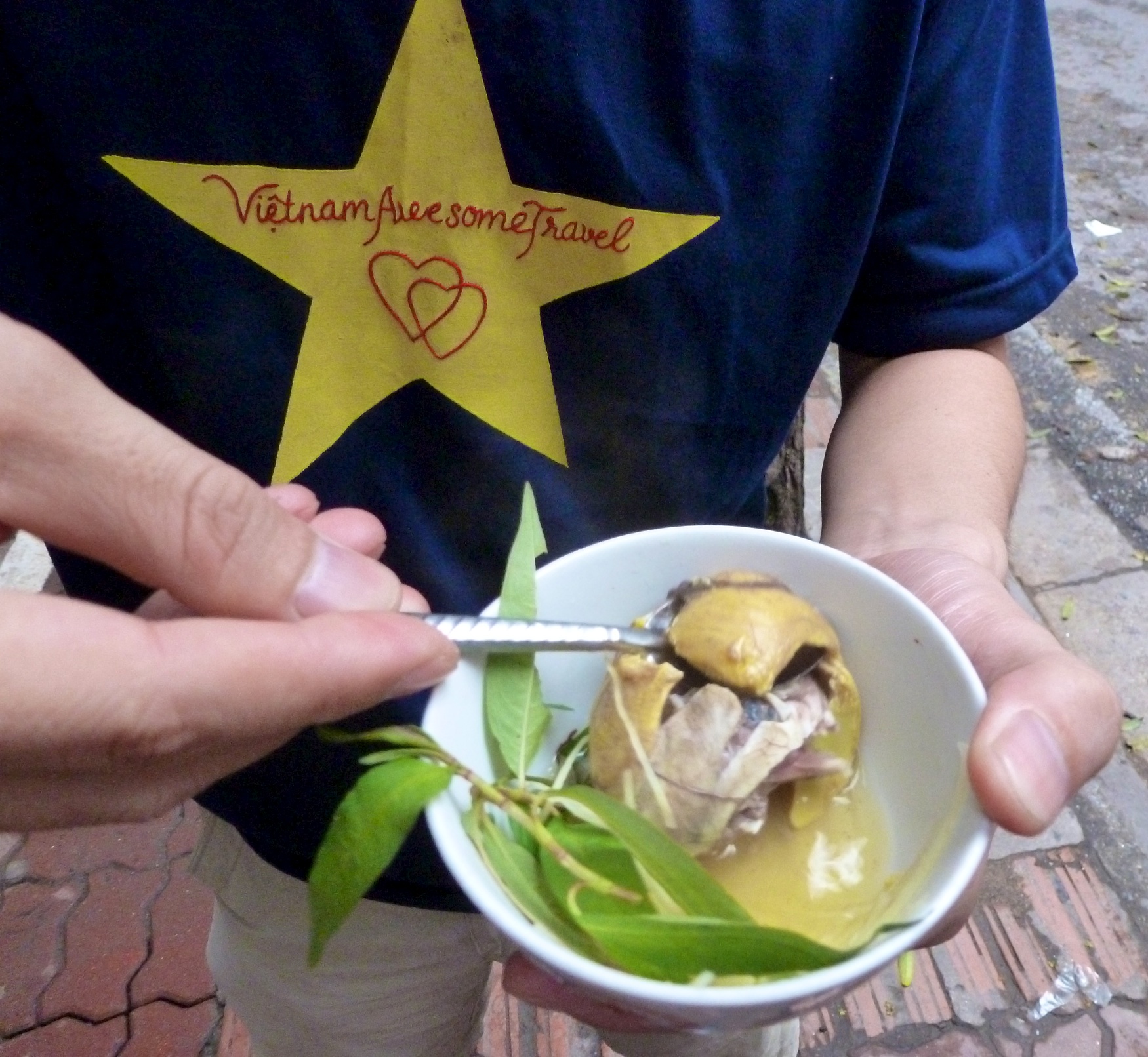
Balut is a fertilized duck embryo that is boiled and eaten in the shell. Believed to be an aphrodisiac and considered a high-protein. Street vendors mostly sell balut.
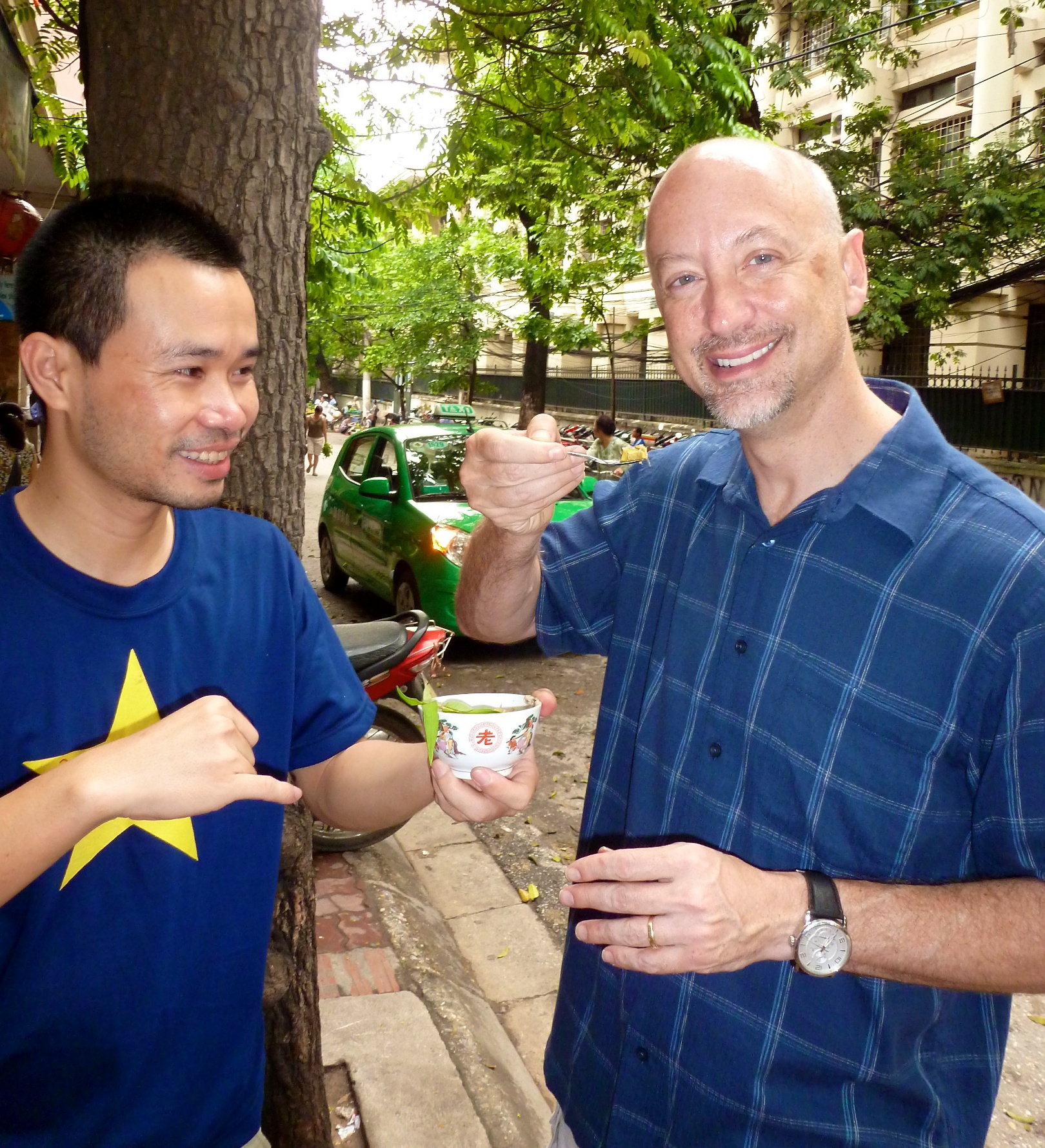
It tasted like boiled chicken; not bad. But I could not get over the idea of what I was actually eating, so I would say no – I did not like it!

The seniors exercise in the park every morning. Ho Chi Minh preached that all Vietnamese should exercise each and every day. They tend to take a social outlook on it and exercise together.
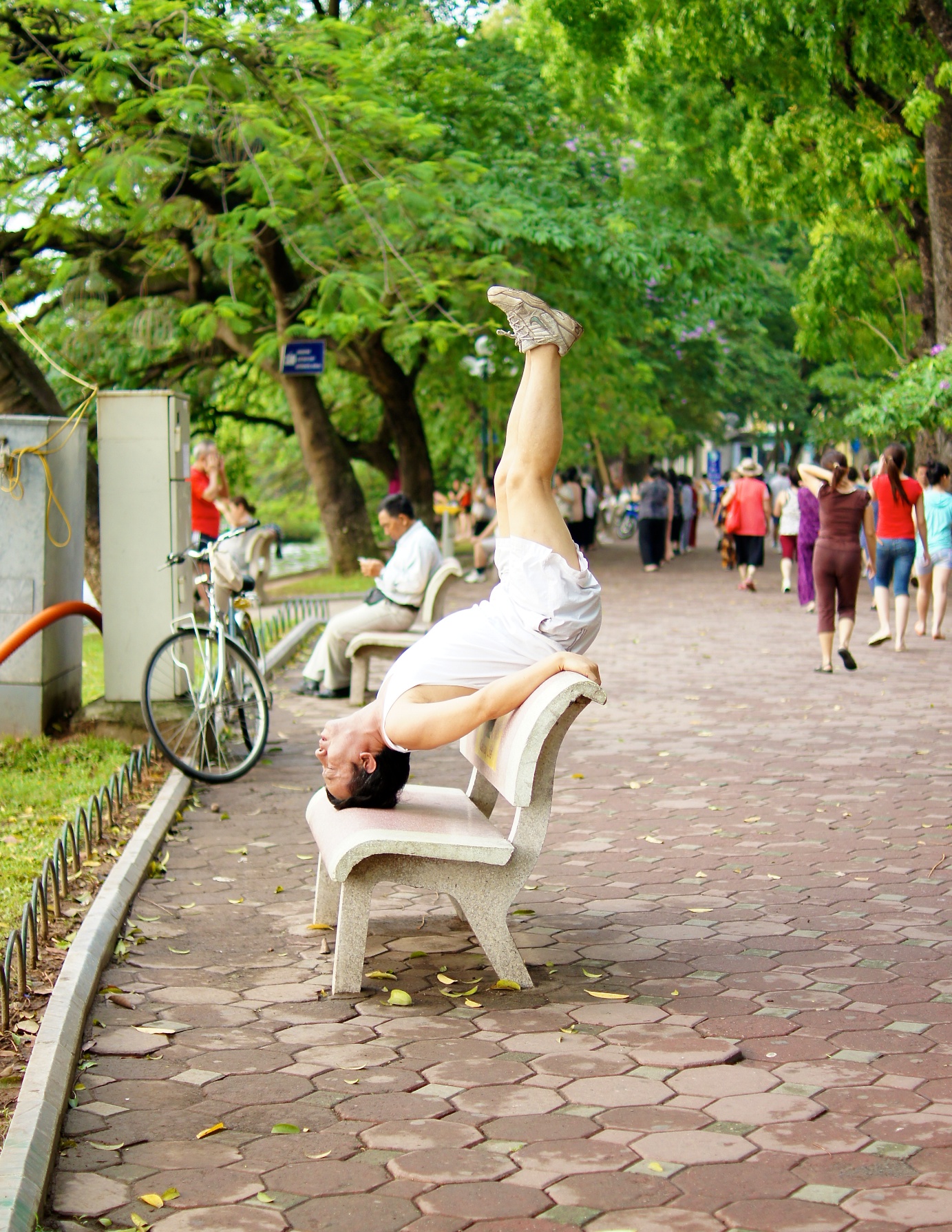
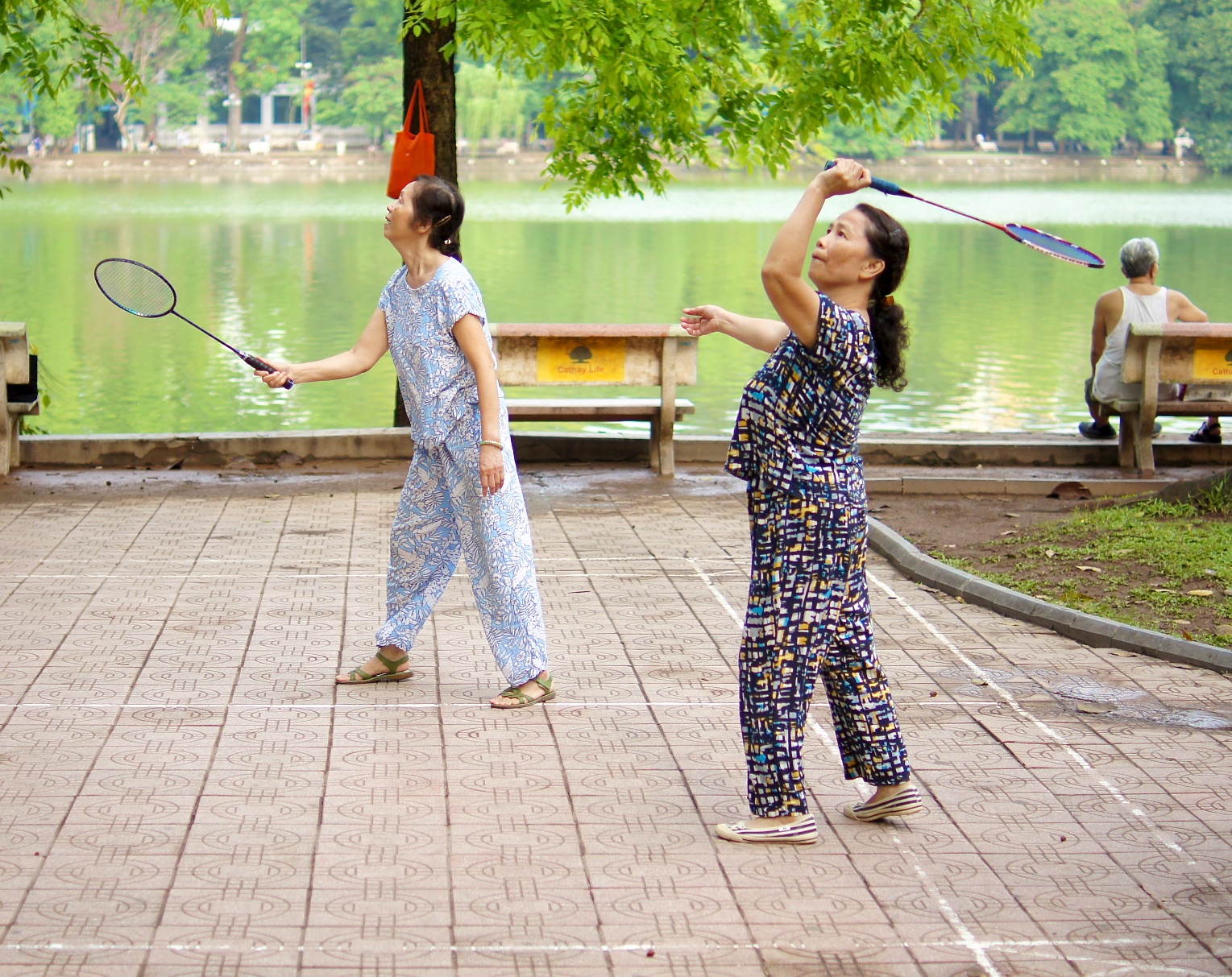
There was even an area in the park where you could learn how to dance.

I was surprised to see such a large traditional catholic church in Hanoi. This is St Joseph's Cathedral built in 1886. Of the population, 85 % are Buddhist, 7% are Catholic and 8% other.


Anh took us to his favorite PHO restaurant, Pho Gia @ 49 Bat Dan. At 8 am on a Sunday it was packed! That is Anh in the blue T-shirt looking at the camera.
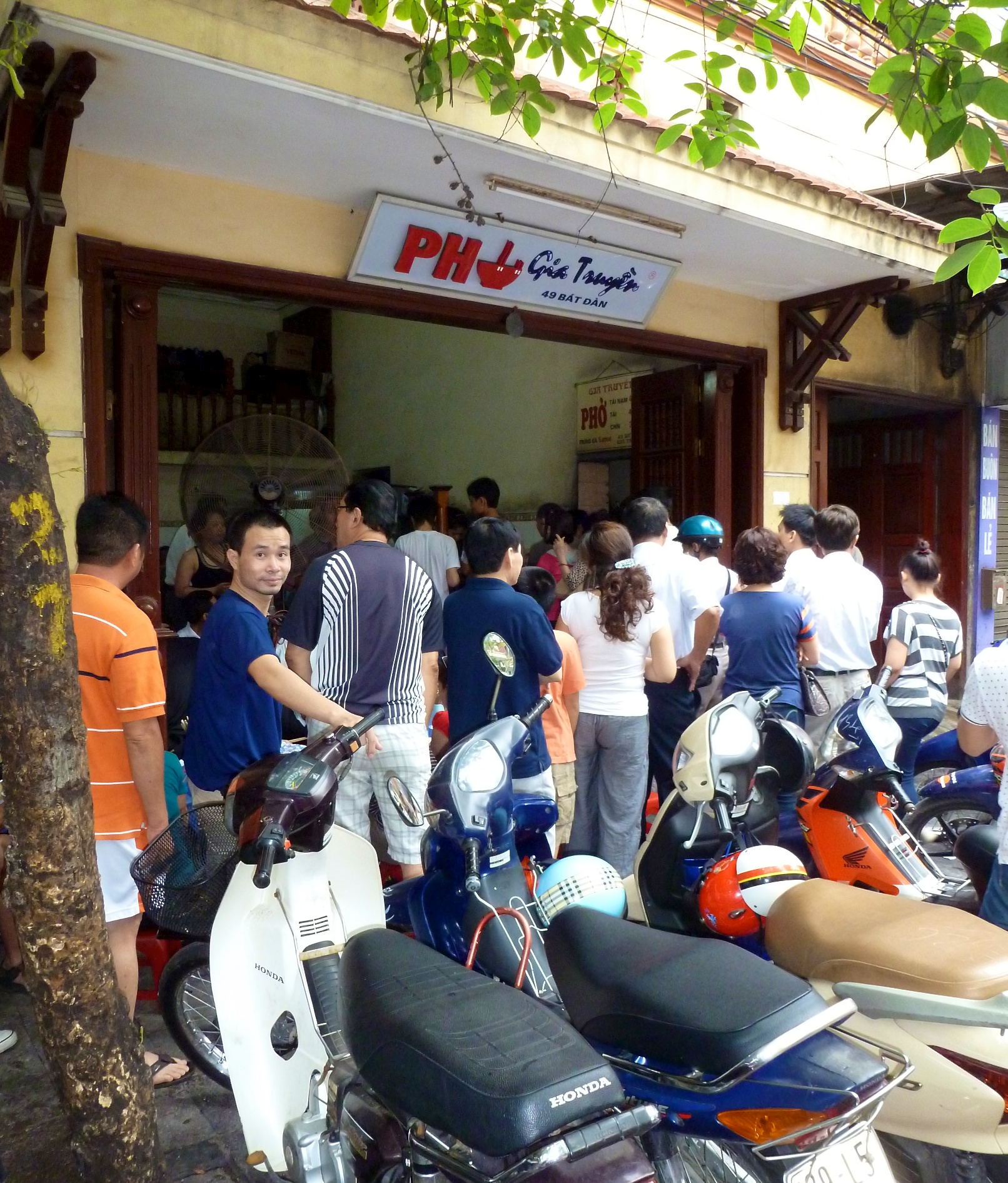
It was one busy "little" kitchen.

We were really enjoying the soup when…….

D bit into the biscuit below and broke his tooth! We have been very fortunate in that all the traveling we do, we have never had a major mishap……after this trip, we can no longer say this. They look soft – but they were very chewy.

The tooth was “hanging on” but we were very concerned it was going to fall out or worse, was infected. We had our hotel help us find a dentist that 1) was open on Sunday 2) spoke English 3) could take us immediately. Our hotel manager called and made the appointment.

We hopped into a cab and 20 minutes later D was sitting in the dental chair. They took x-rays and told him it was definitively broken but not infected. If he ate soft foods he should be okay for the next 10 days. We were very lucky in that there was a dental student in who spoke excellent English. The dentist did not speak a word.

And believe it or not, they refused to take any money for the appointment. We left them money on the desk and told them to buy lunch for the office. His tooth hung in there and he lost 5 pounds as he could only eat soft foods – eggs and tofu!
Sights we visited
Ho Chi Minh's Mausoleum

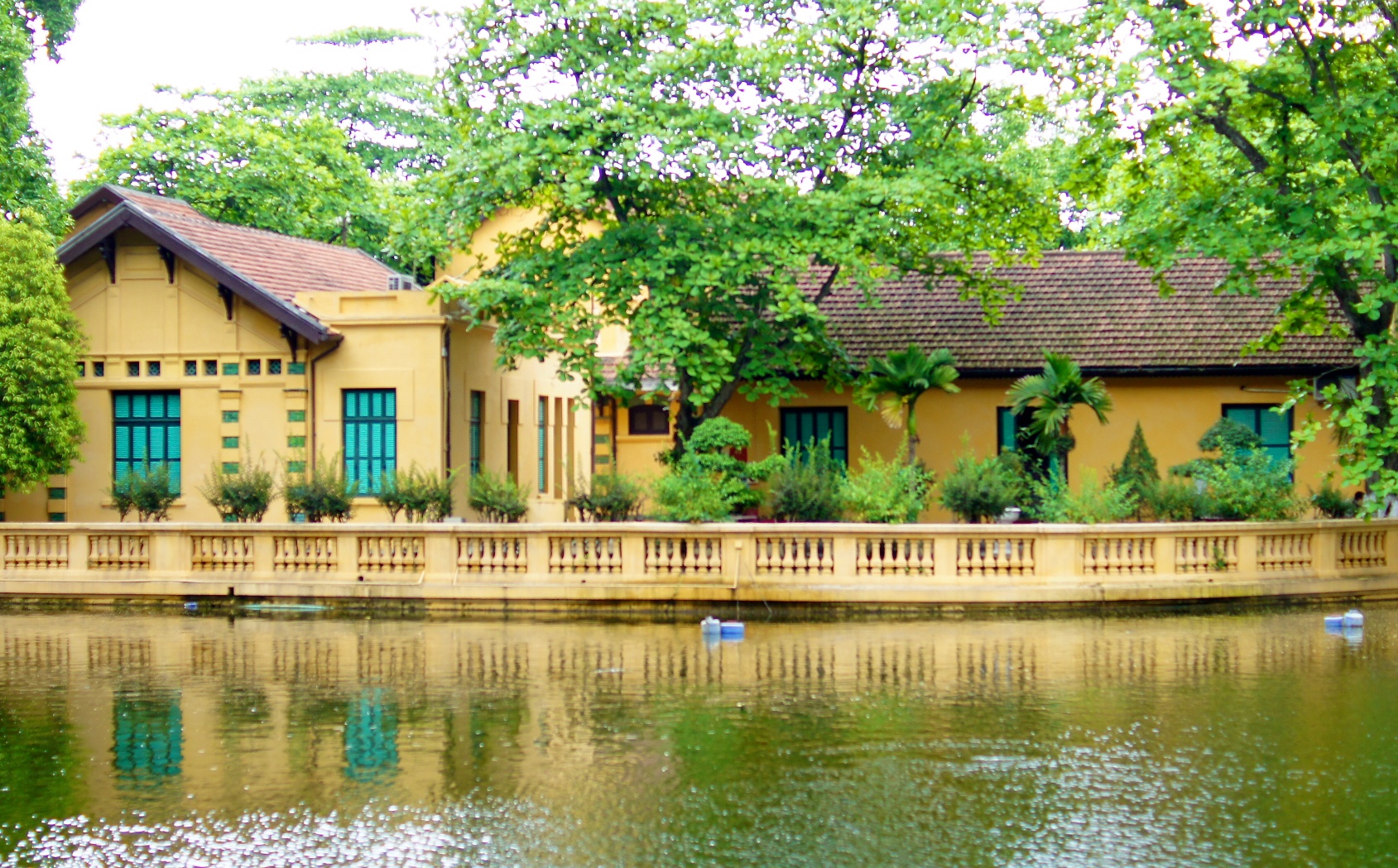
In the centre of Hanoi, a large area is devoted to Ho Chi Minh. He is affectionally known as Uncle Ho in Vietnam. The grandeur of the Mausoleum is a strange contrast to the simple house where Ho Chi Minh lived and worked. They say he would not have been happy with the Mausoleum, in fact, he requested to be cremated.
His embalmed body lies inside a glass case in the Mausoleum. I had not read this before my visit so I was quite shocked when I entered and saw the body laying there – looking like he was asleep. An interesting fact…..the embalming process was done by Russian experts and each year in early autumn, his body is flown to Moscow for three months for maintenance.
Hoa Lo Prison infamously known as Hanoi Hilton

There is not much left of the prison as it was demolished in the mid-1990s to build a hotel complex. Regardless, it still has an eerie feel when you walk through it knowing that it held thousands of inmates over the years. You can view the original cells and there are illustrations of life in the prison interestingly enough, showing the American prisoners having a grand old time playing cards, having parties, eating well, etc
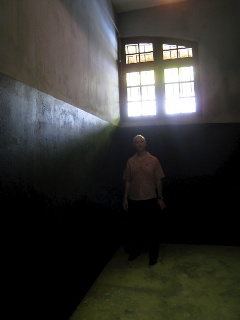
The prison is known as one of the most unjust and cruel prisons in Vietnam. Previous prisoners included numerous American pilots including U.S Senator John McCain (see his uniform below).

The Temple of Literature
The Temple of Literature is one of Hanoi's most popular landmarks. Despite the “temple” in the name, it is not a religious site. The temple was built in 1070. It is one of several temples in Vietnam, which are dedicated to Confucius, sages and scholars. Shown below, Khuê Văn Các, the red tower at the Temple of Literature is the symbol of Hanoi.

This young lady was posing for her friends. So pretty in the traditional Vietnamese dress..

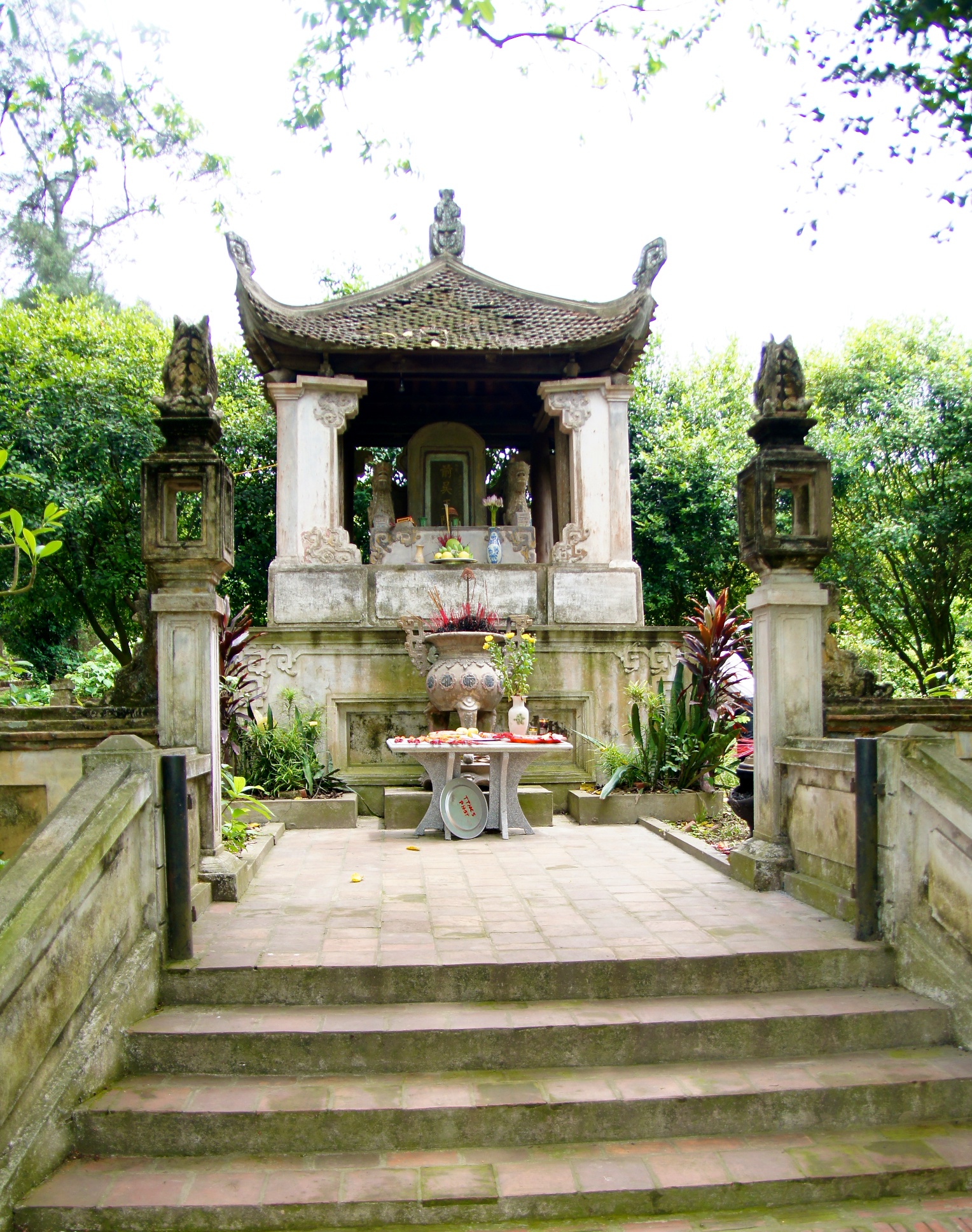
We took a day trip to Duong Lam, an ancient village on the outskirts of Hanoi, home to many houses built three or four centuries ago. It is also the birth village of two Vietnamese kings. Duong Lam was recognized as a national relic in 2005.
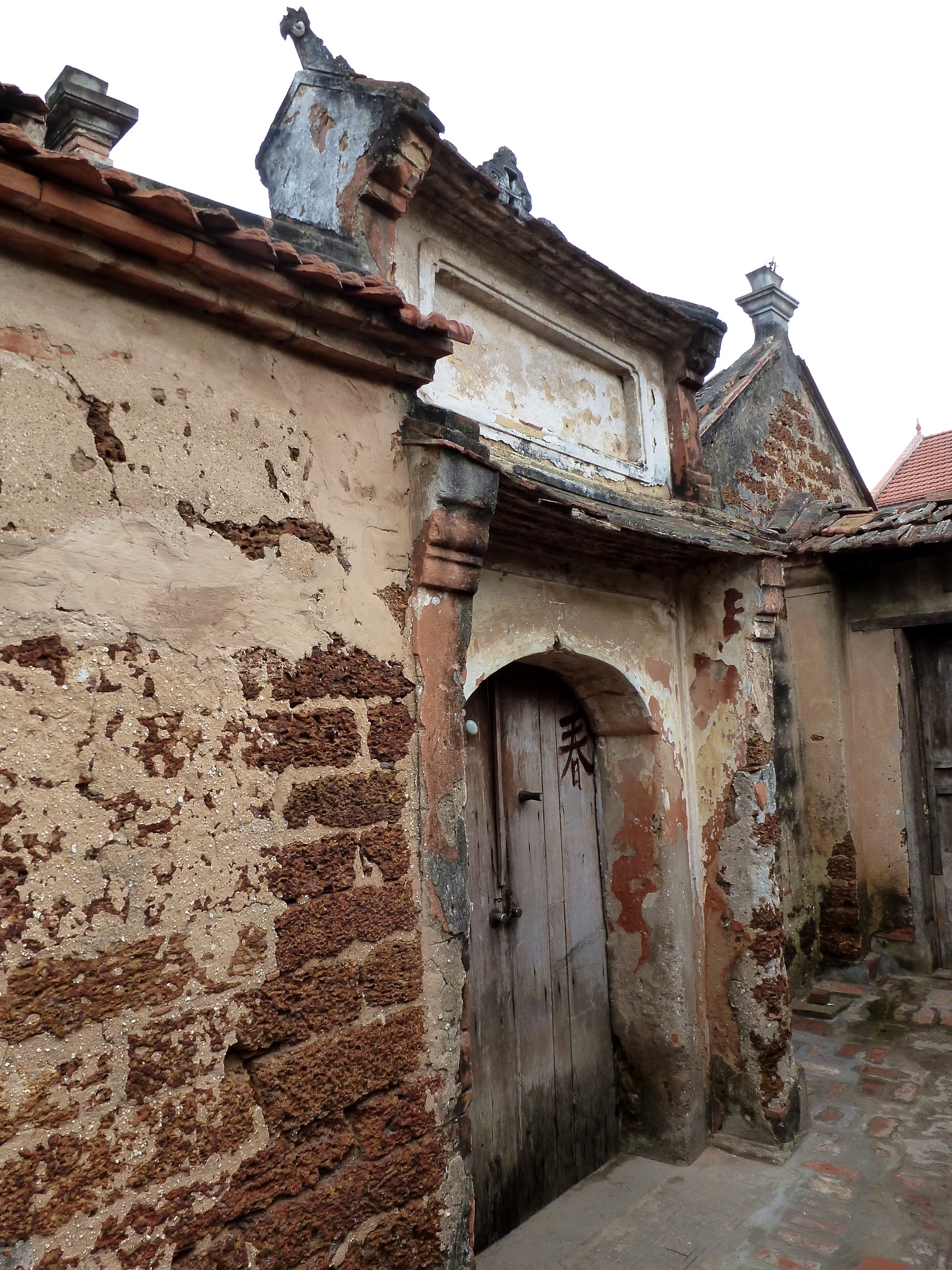
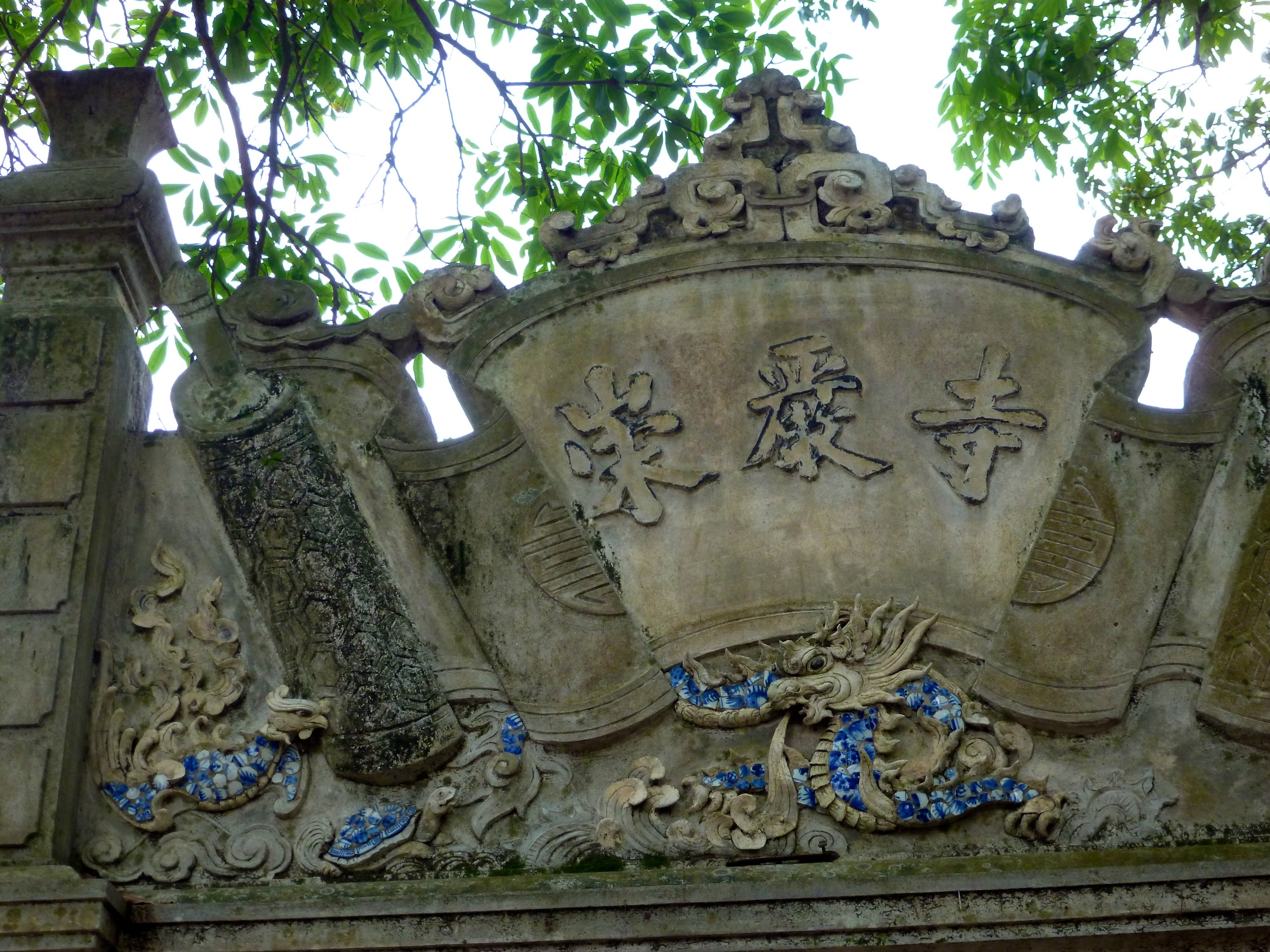
Many centuries ago the Chinese dominated Vietnam and this is seen heavily in the architecture and the written words on older buildings.

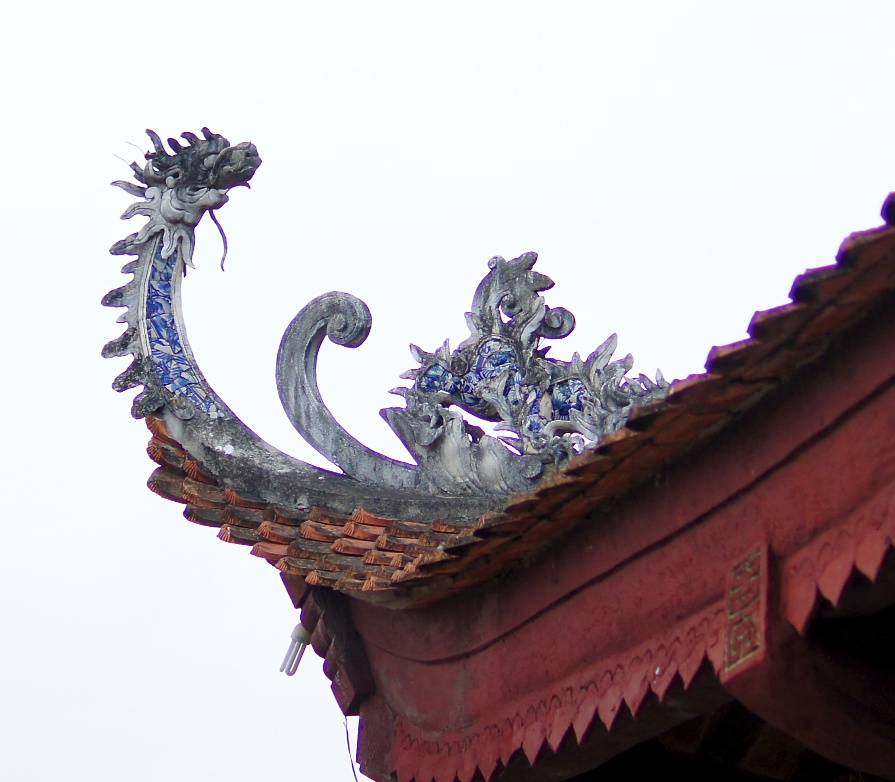
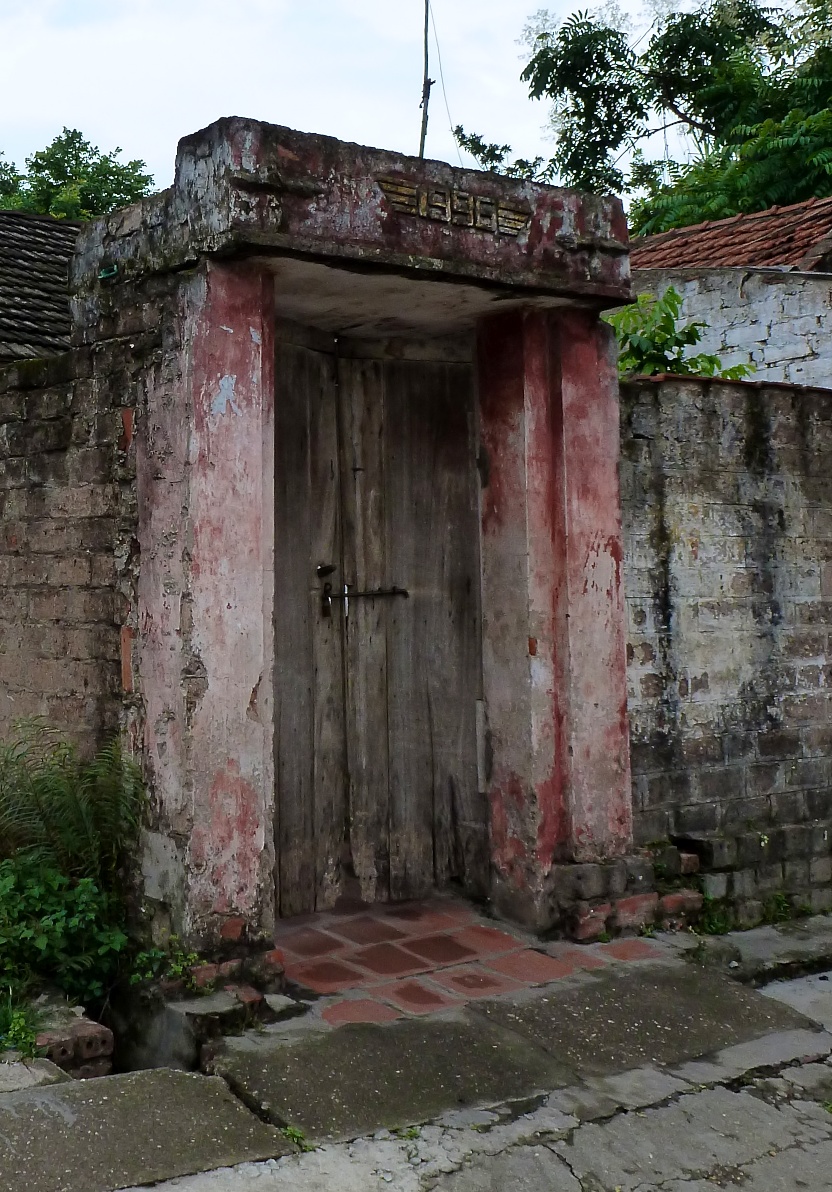
There are around 300 houses still standing in Duong Lam, 50 of which date back 300 years.
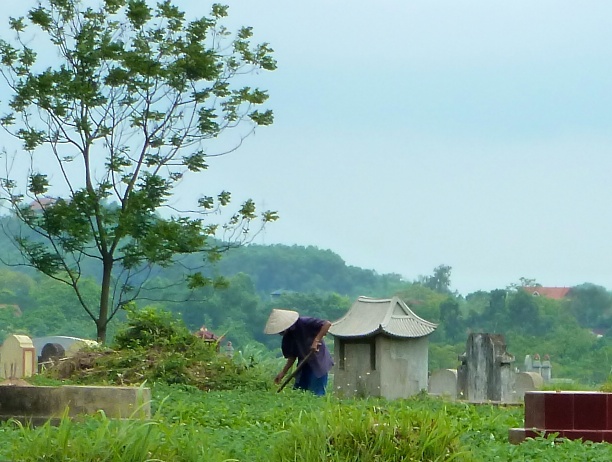
Our guide explained that when a person dies, they bury them in the rice fields for three years then there is a ceremony and the body is cremated. We saw many gravesites in the rice fields.
We visited several temples, pagodas, and shrines during our day tour. We had both a driver and a guide.


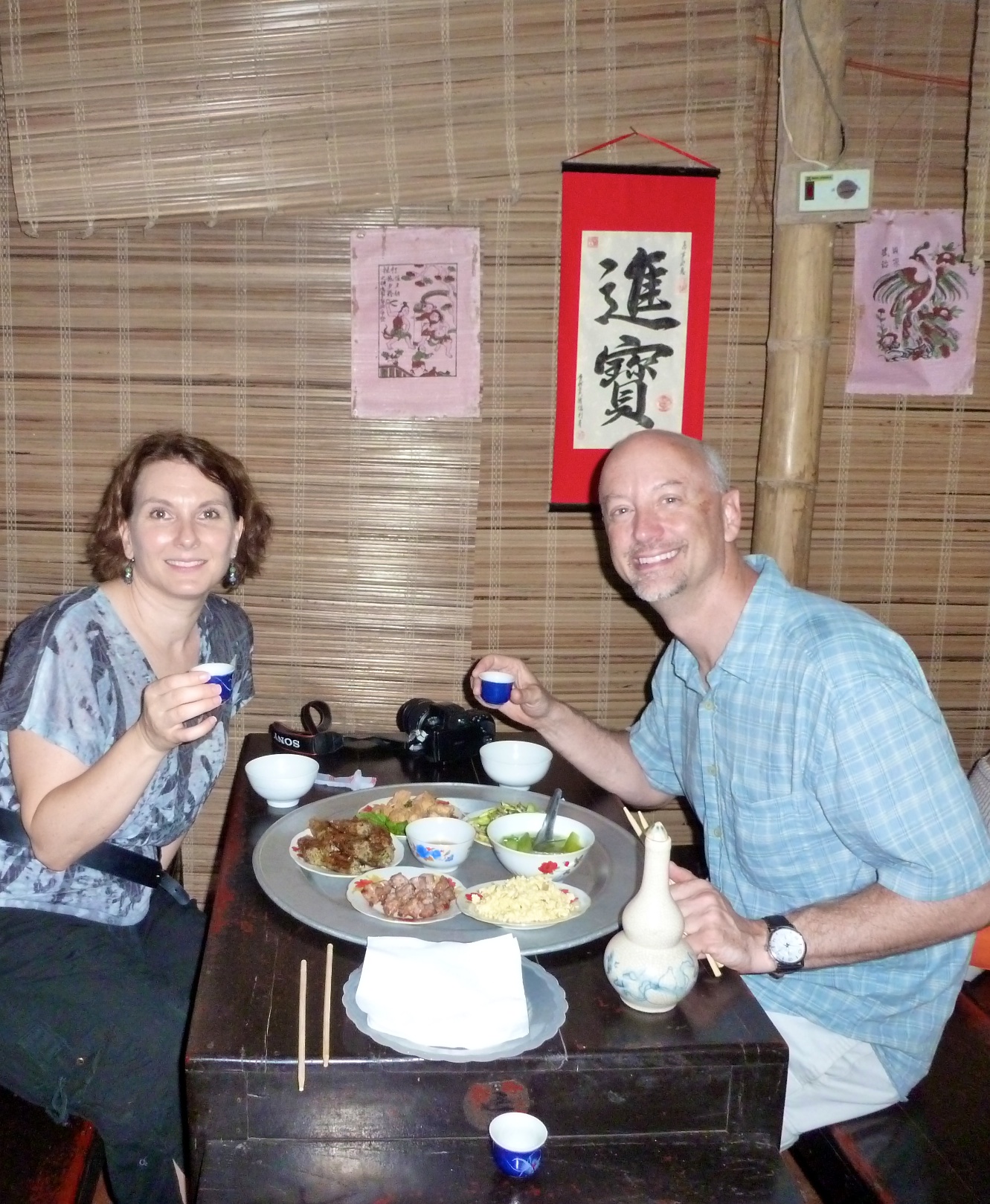
We ate lunch at a local house that was over 800 year old. It is considered a National treasure in Vietnam.

When D was done with his conference, we took a three-day trip to the beautiful Ha Long Bay, which is a four-hour drive from Hanoi. To read all about this trip click here to visit this stunning place.

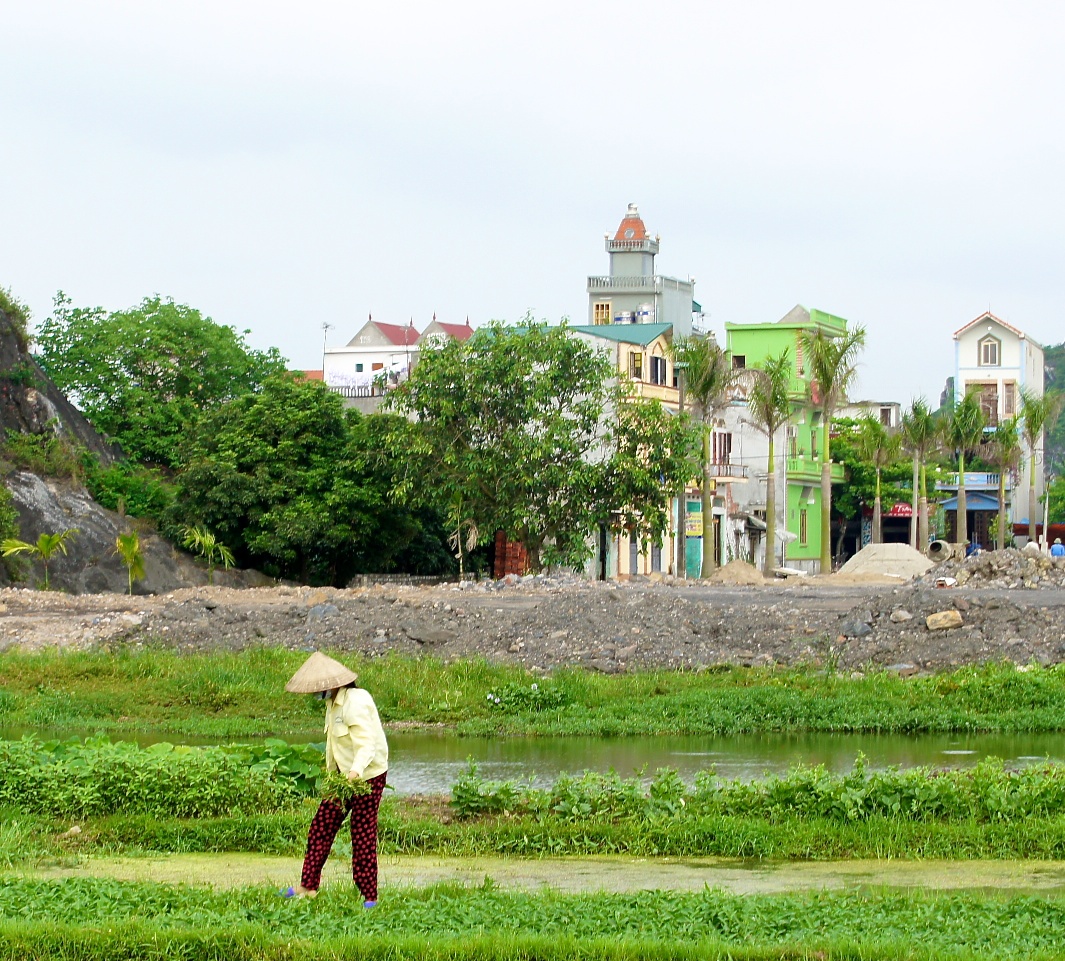
On the way back to Hanoi we visited Yen Duc, an agricultural village producing primarily rice.
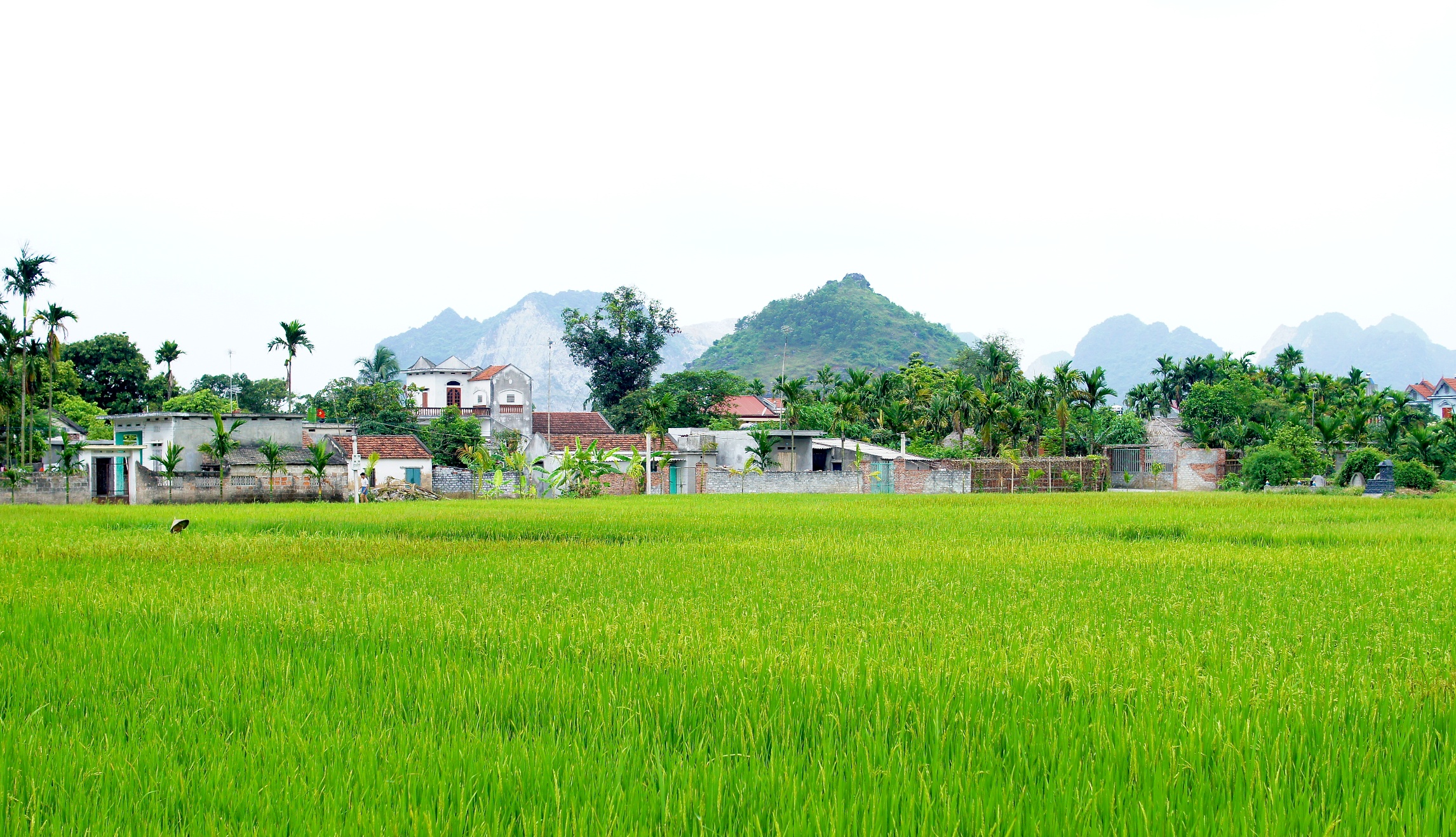


We walked around with a guide and learned about the environment and the rice fields.
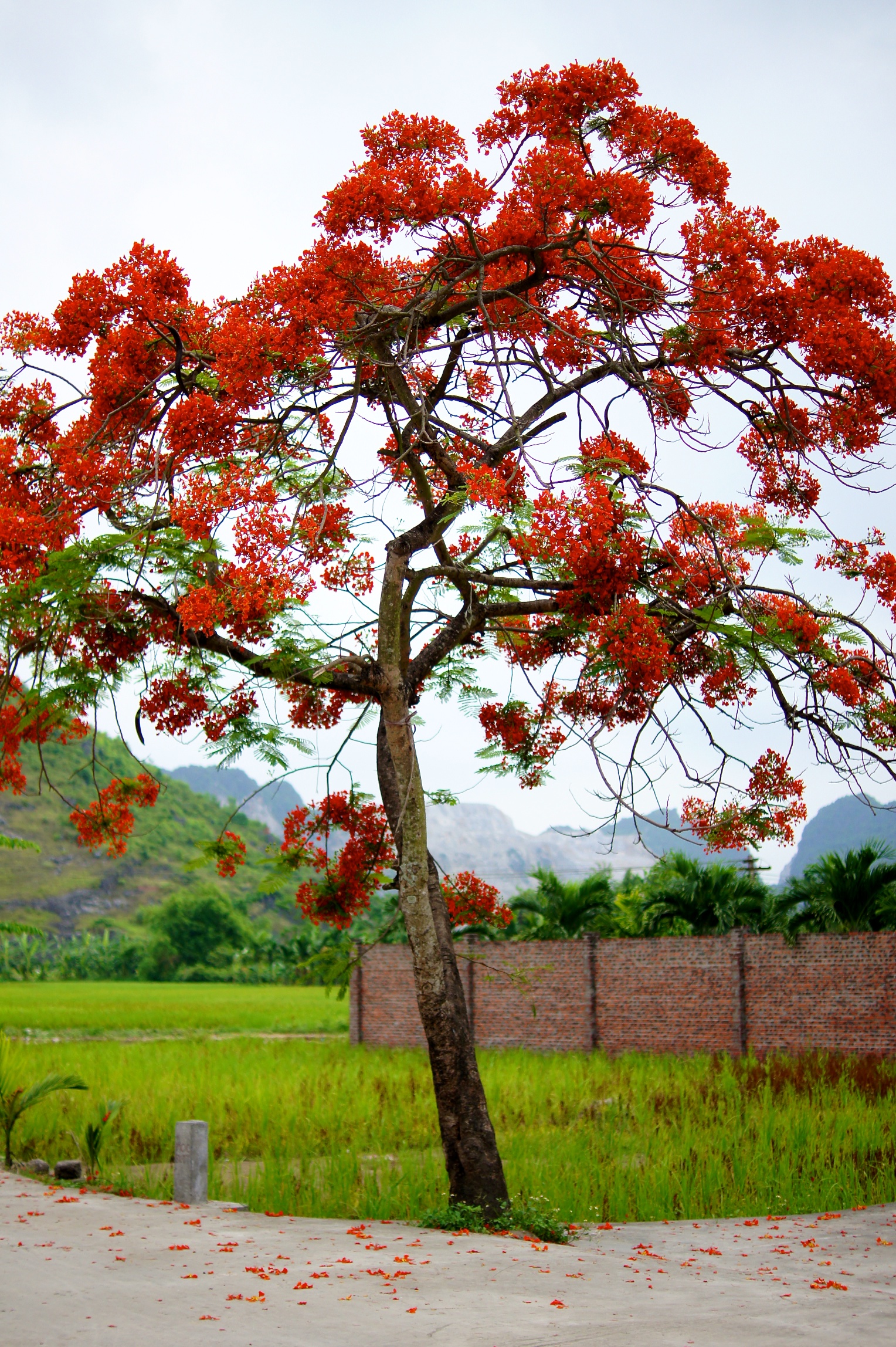
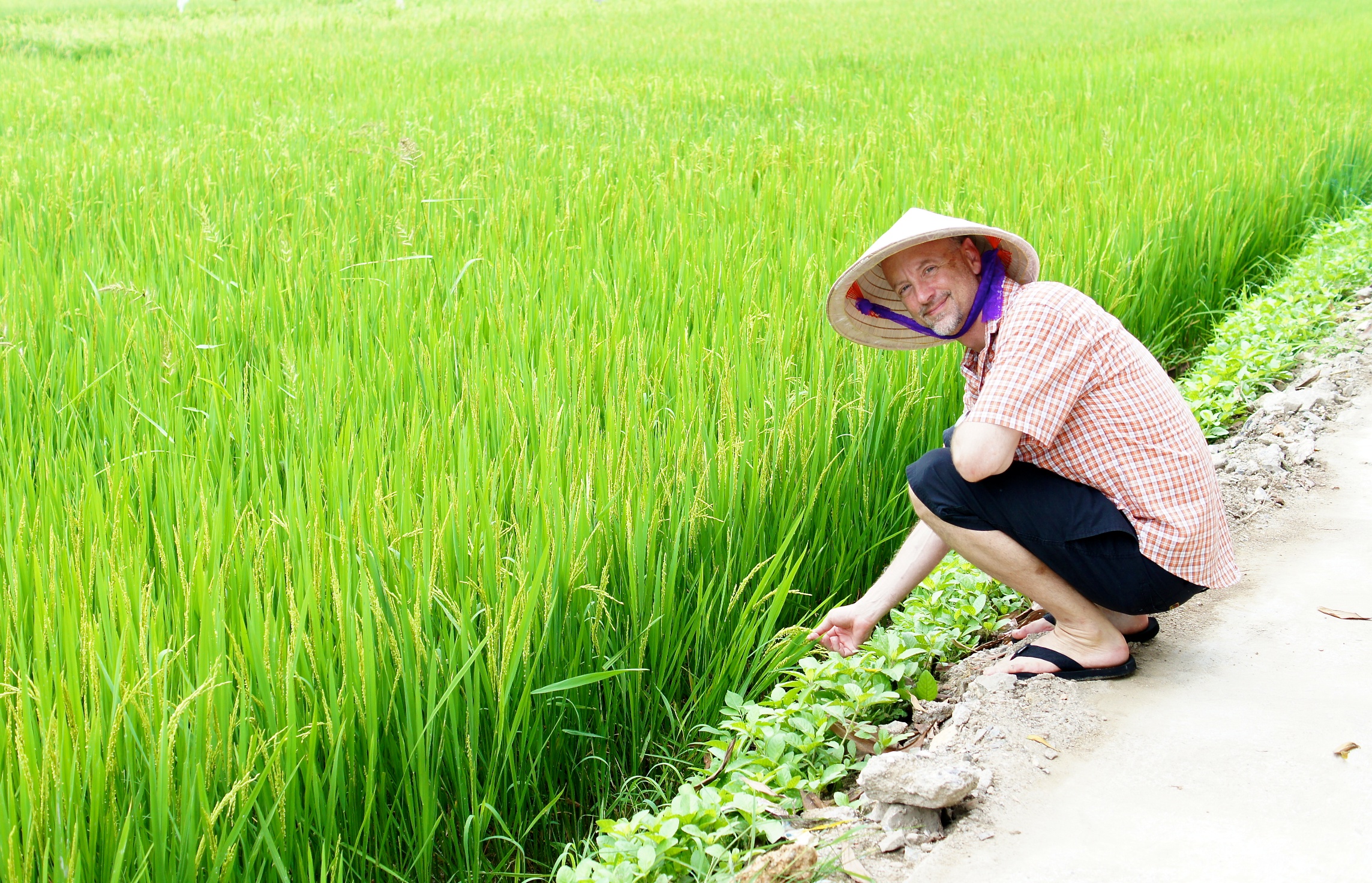
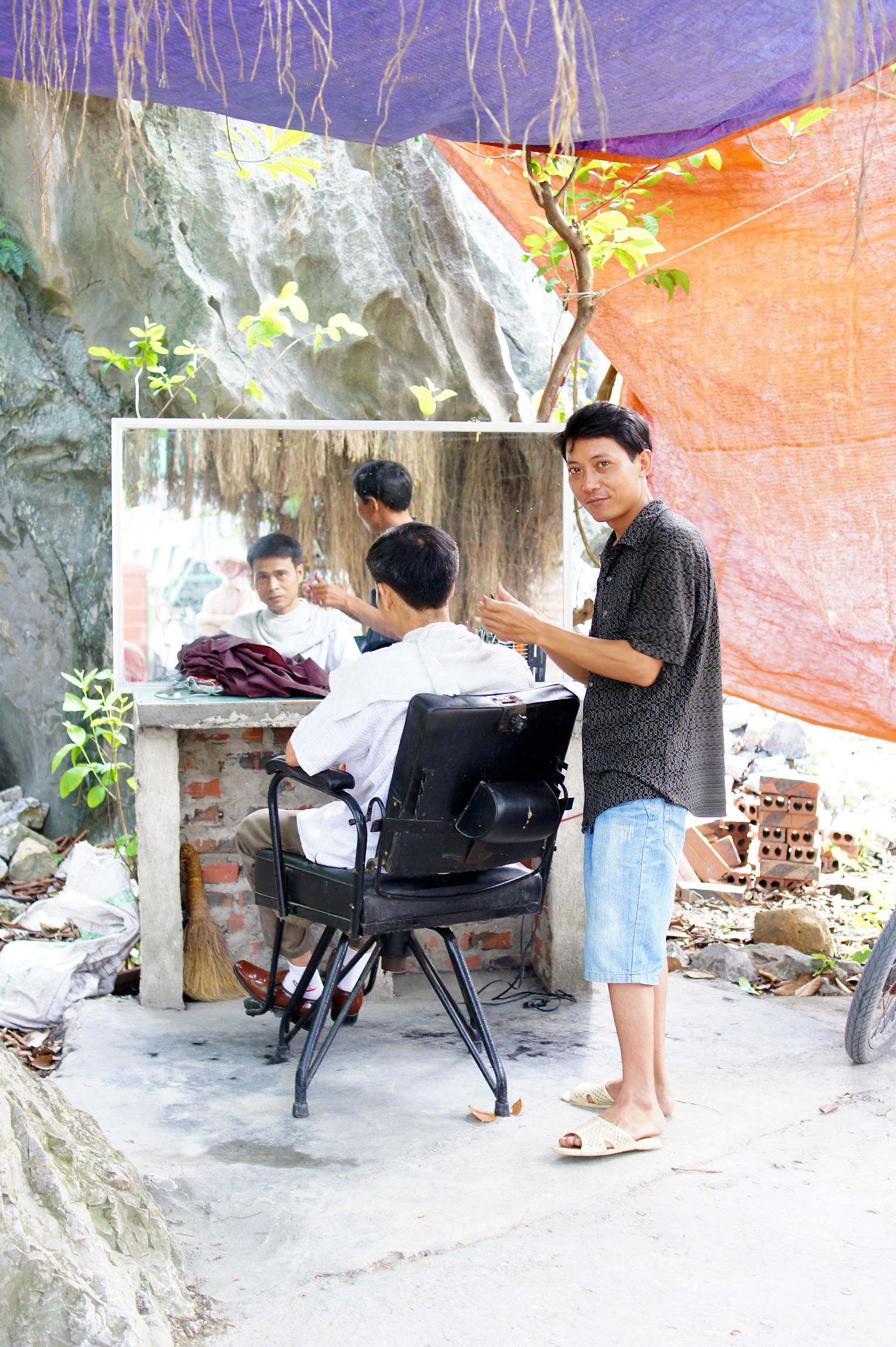
We met friendly locals like the barber – with his outdoor shop.
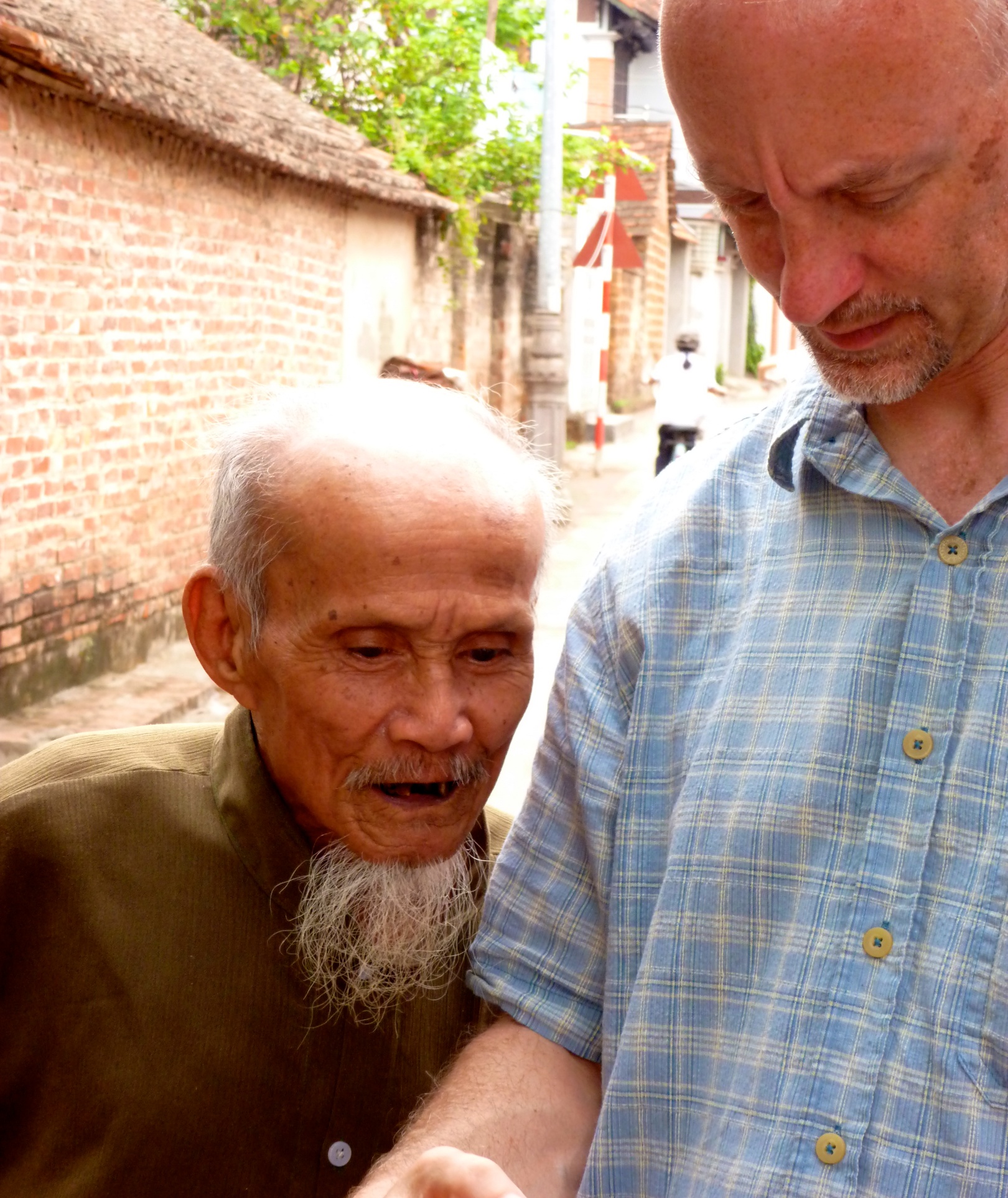
This gentleman was looking at the photo D took of him.
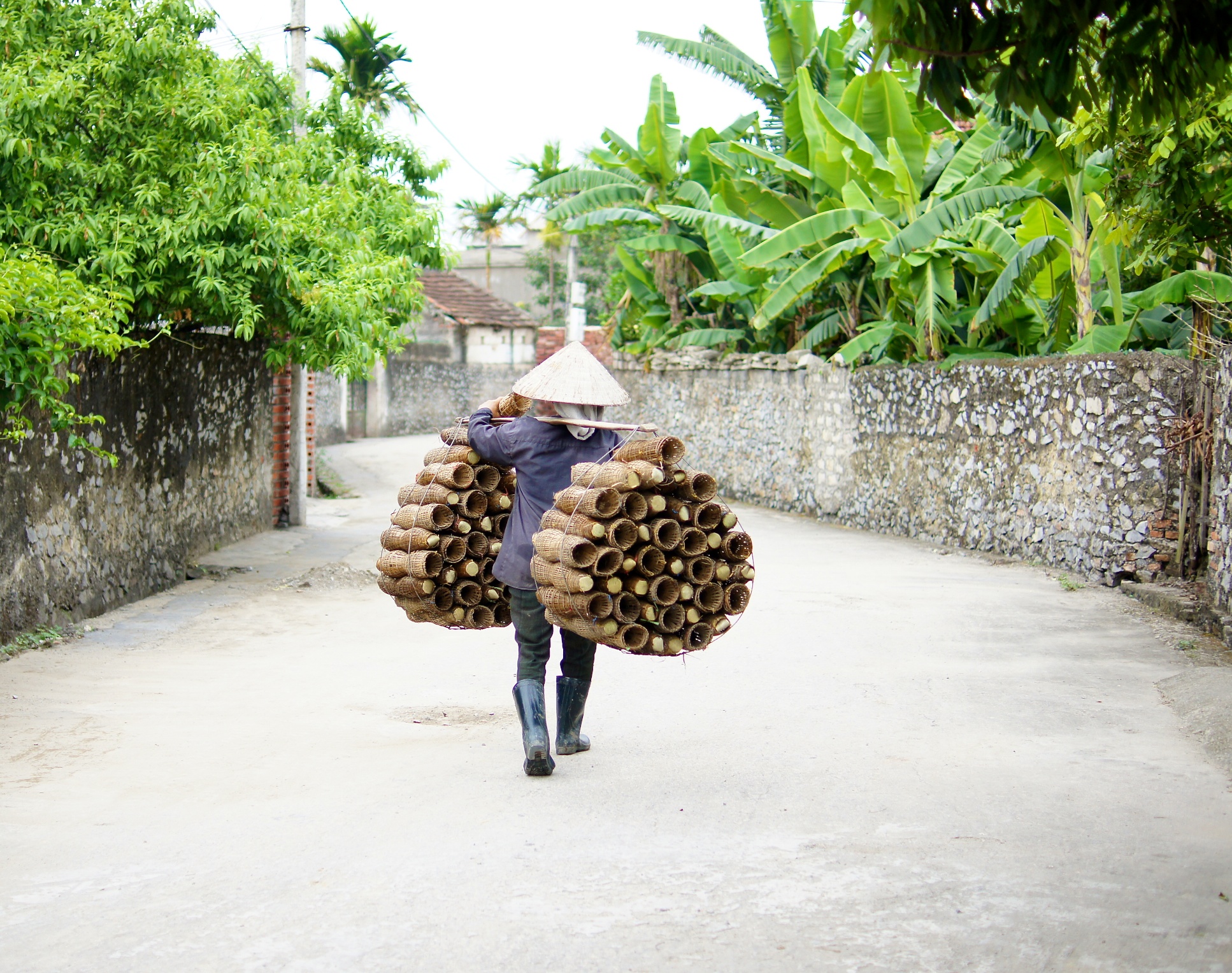
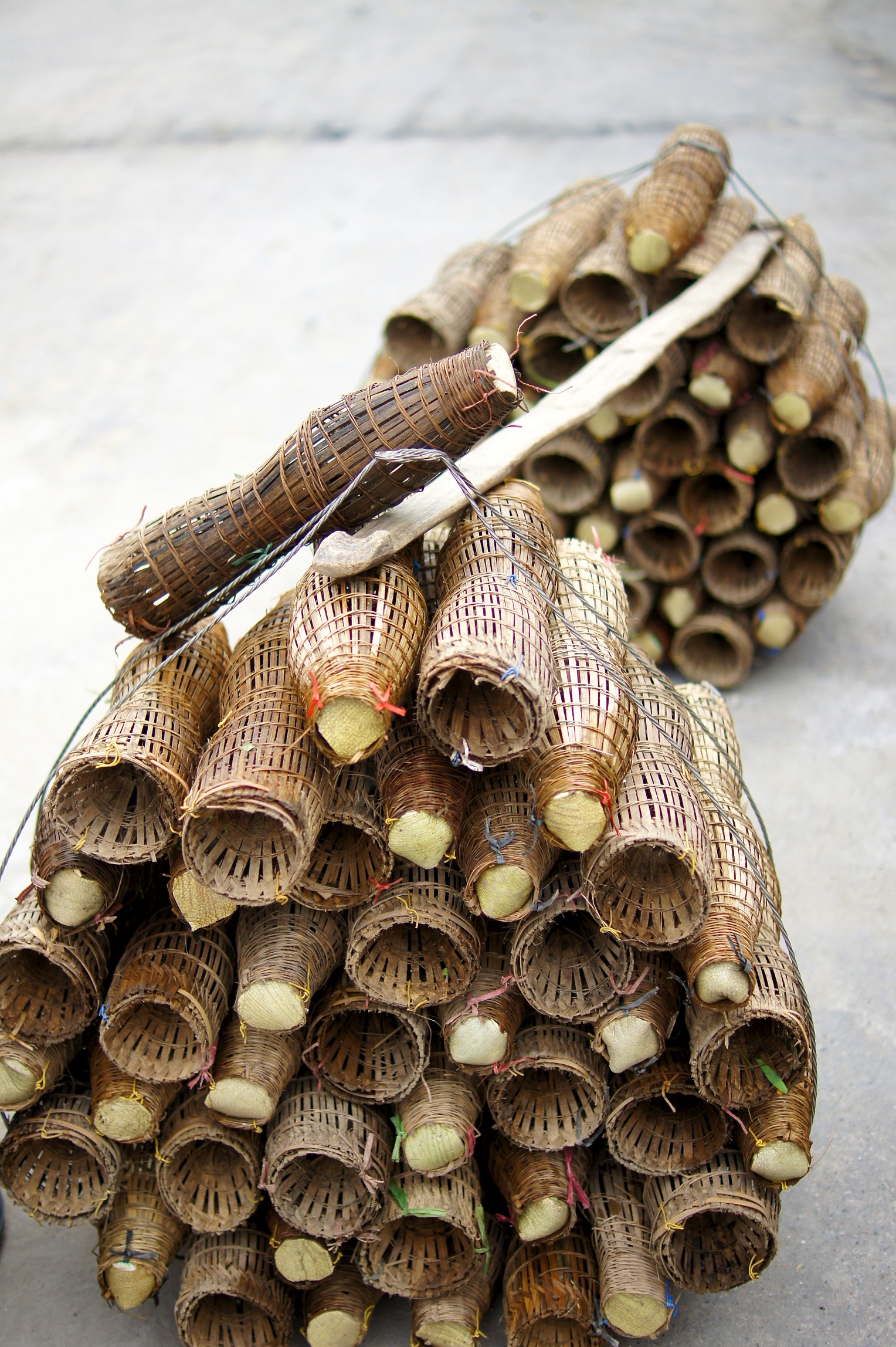
This young lady stopped to show us what was in her little baskets – crabs. They were so tiny and scooted so fast, it was impossible to get a photo of them.
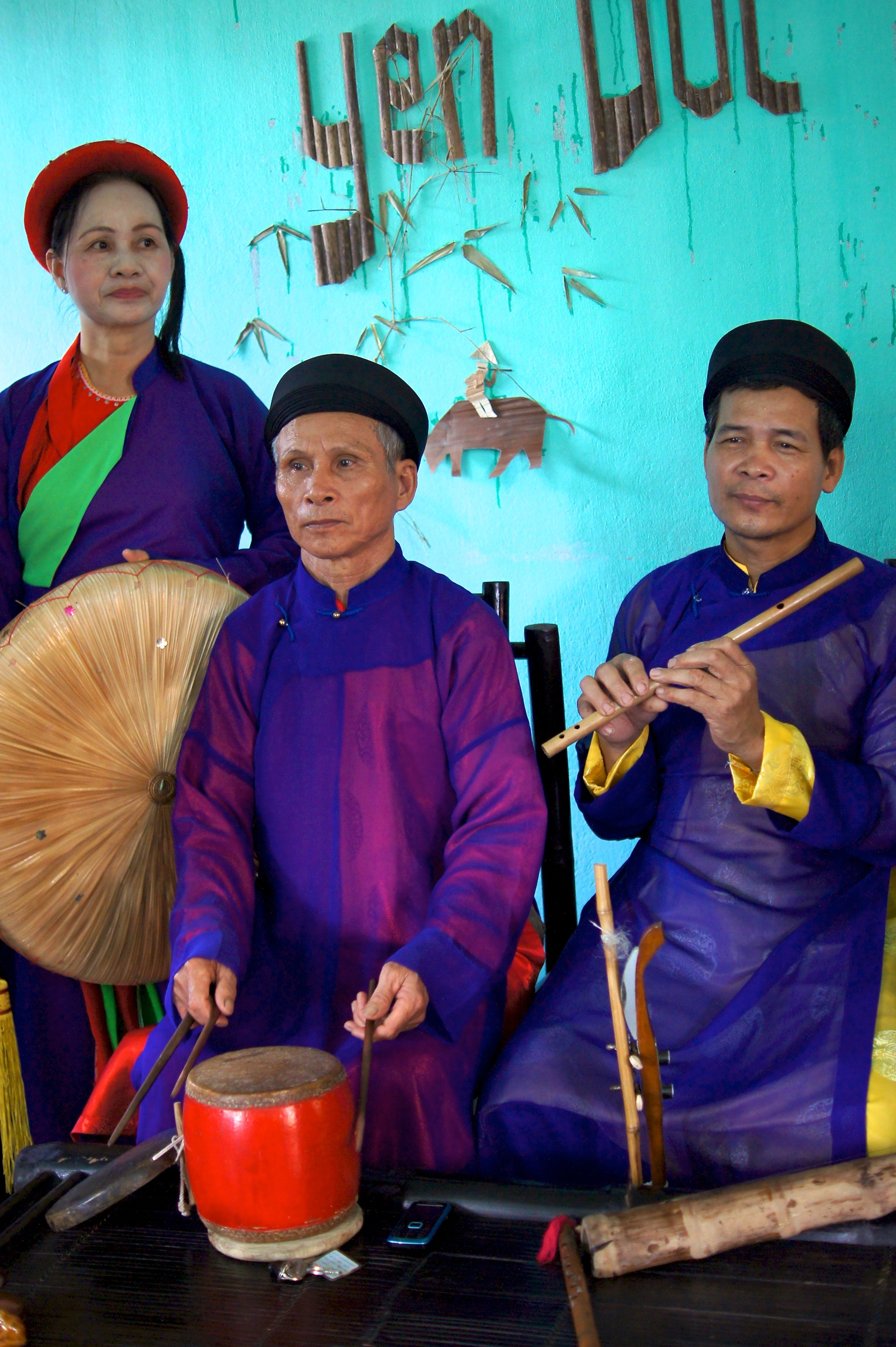
Last but not least, we were given a singing performance called Quan Ho.

This type of singing is Vietnamese folk music with songs about love with young adults.
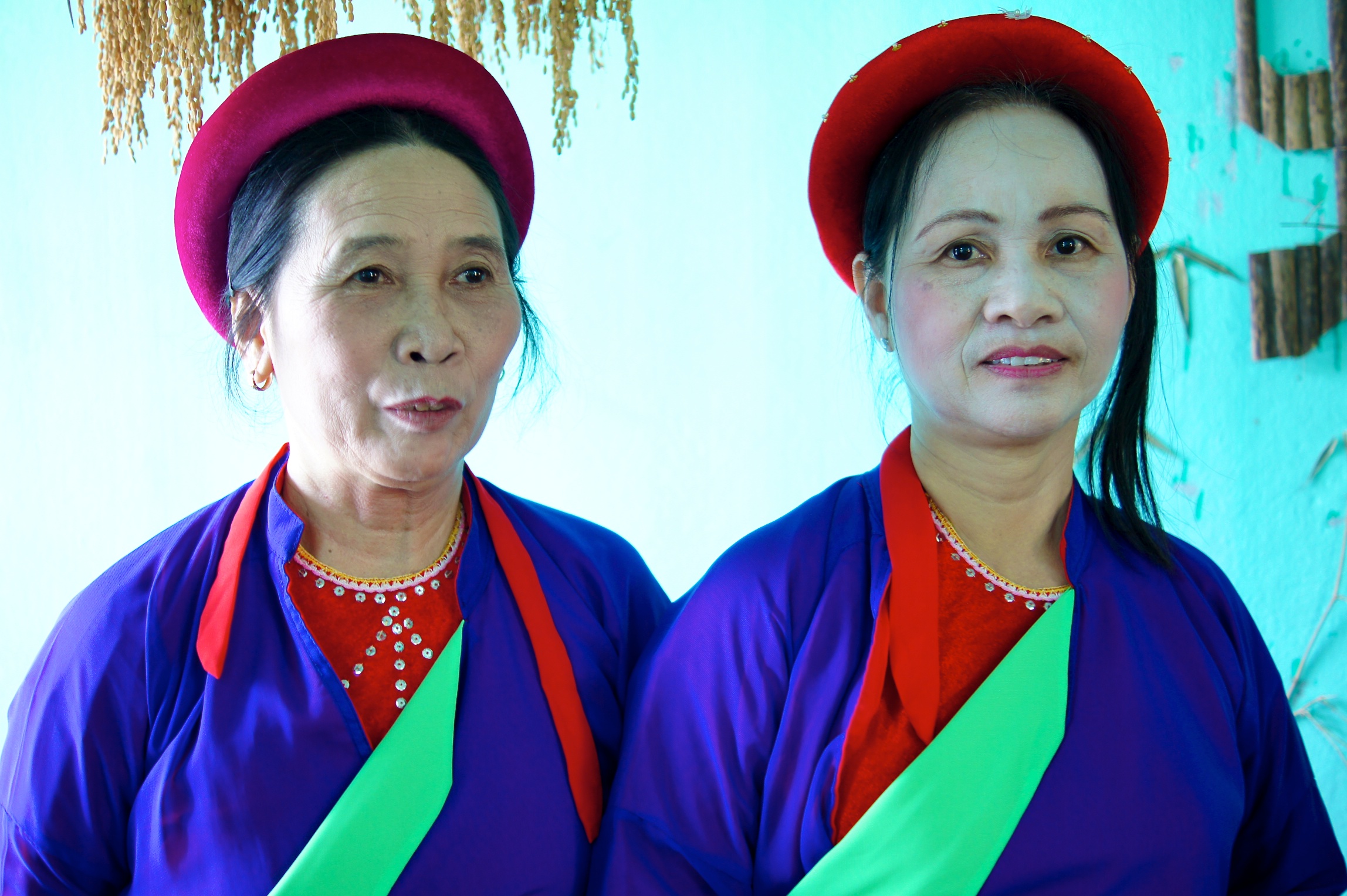
The Quan Ho singing style originated was first recorded in the 13th century. In 2009, Quan Ho singing was recognized as a UNESCO Cultural Heritage.
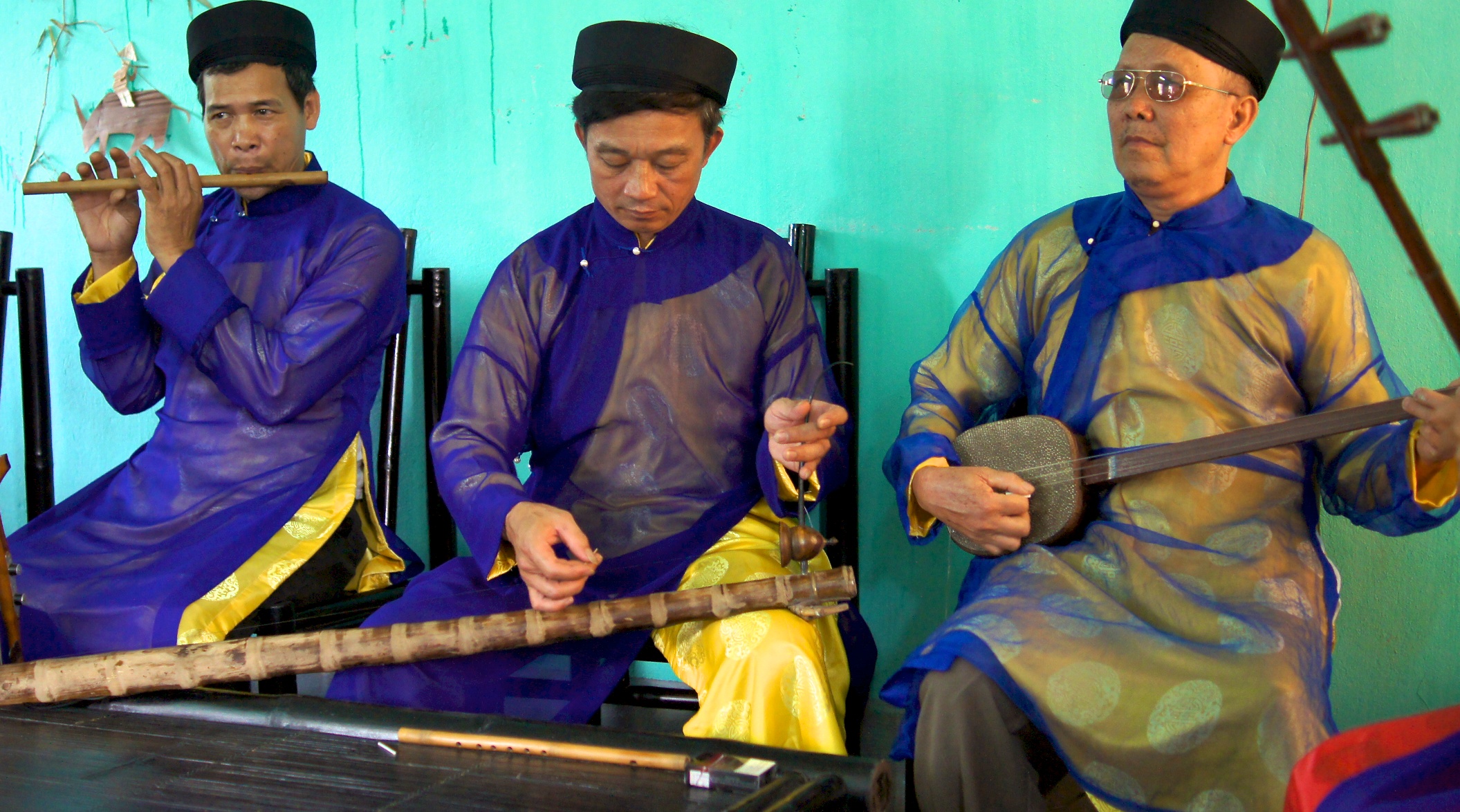
The tour was a little hokey – but it allowed us to see a local village outside of Hanoi. And we did get to meet a few locals. All who were very friendly and enjoyed having their photos taken click here to see more photos of the people.
We look forward to our next visit to Vietnam!
 The XtraSuitcase
Leave a comment