
The great temples of Angkor Wat are situated in the province of Siem Reap Cambodia. These ancient temple ruins are considered the largest religious complex in the world. Interestingly, this area was abandoned for nearly 1000 years, hidden by the jungle. In 1890, a French explorer rediscovered the "lost city".

Designated a World Heritage Site by UNESCO in 1992, Angkor Wat is not just one Wat (temple); it is a large park with over 1,000 temple sites, but most of them are now barely standing. Today, 200 of the temples have been restored in some way to allow visitors to tour.
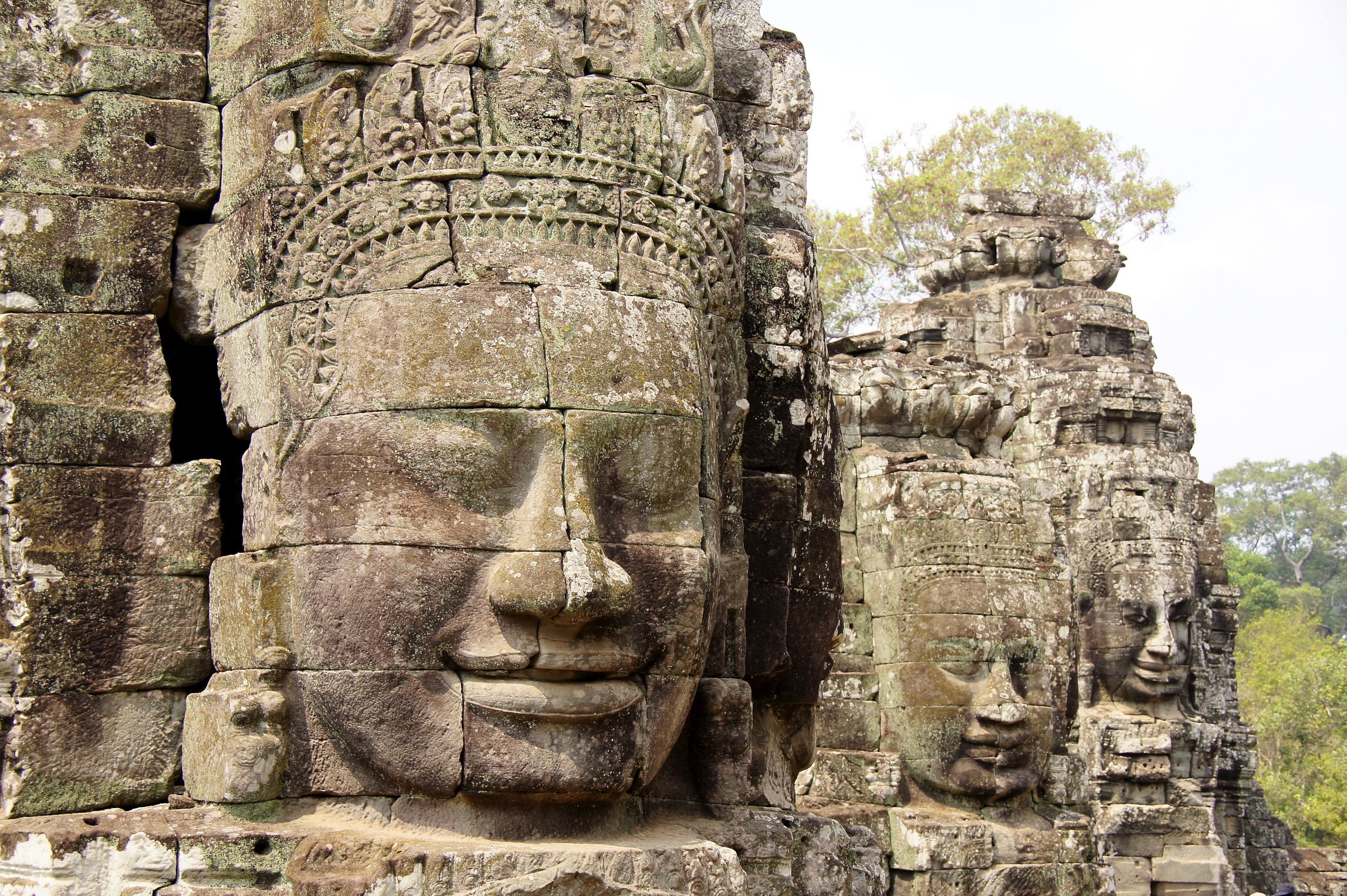
We visited eight temples during our stay. One day we hired a guide and a driver with a car to show us the major temples. The next day, we hired a tuk tuk driver to visit a few lesser-known ones. The Khmer Empire built most of these stunning temples from 879 to 1191 AD while they were at the height of their power. The whole area is about 250 miles, which also includes the surrounding forests.

Wat Athvea
Our first stop was the small temple of Wat Athvea. The temple's design and the distinctive style of its devata (sacred female images) indicate that King Suryavarman II, who also built Angkor Wat, built it in the early 12th century.

Wat Athvea and Angkor Wat are the only two temples that face west. It is thought that the reason was that King Suryavarman intended one of them to serve as his funeral temple.

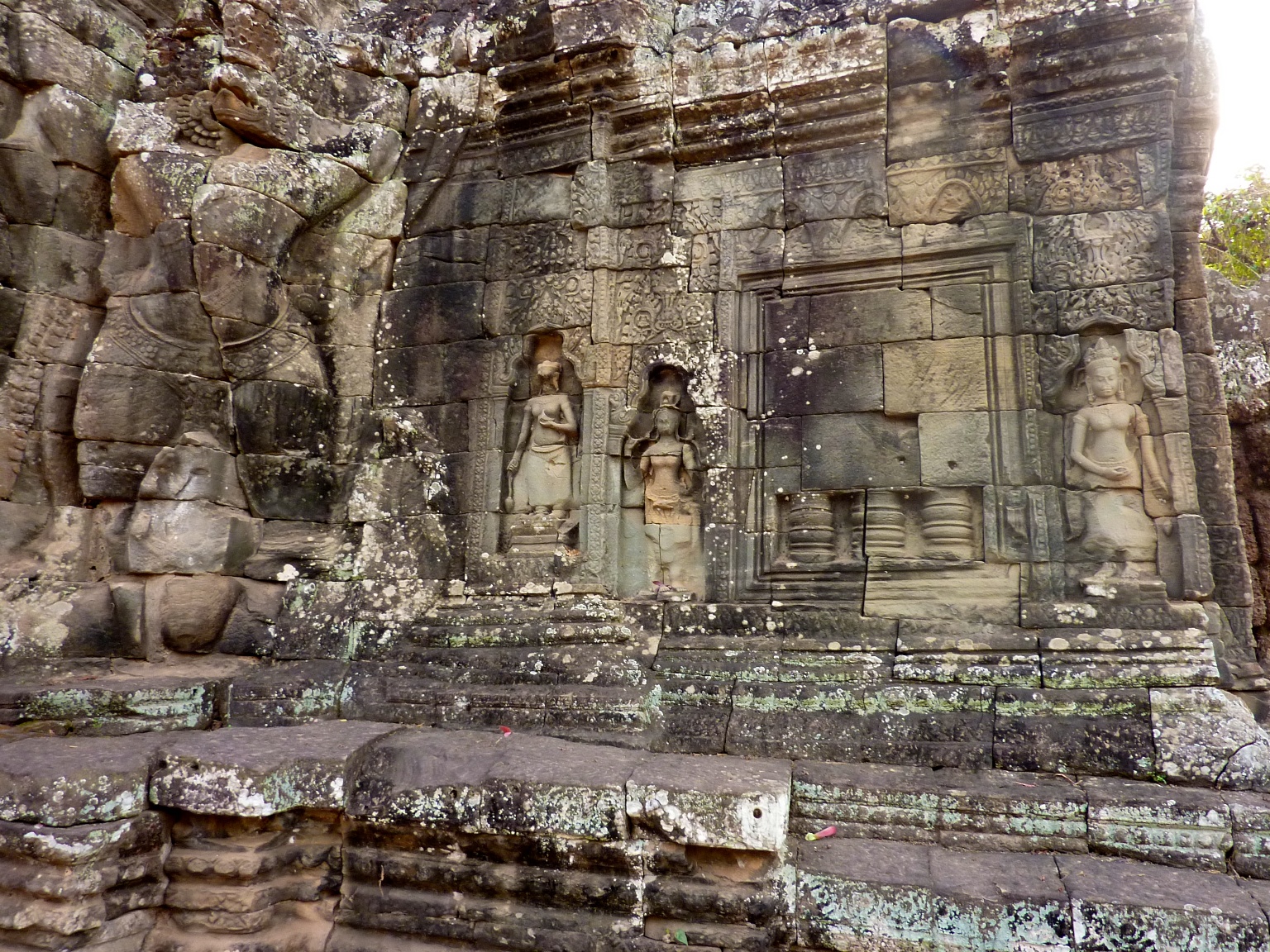
Below is one of three well-preserved devatas, each decorated with lotus crowns, heavy necklaces and belts, armbands, finger rings and rich sampots (Khmer style waist wrap). Their likeness is comparable to women found at the highest level of Angkor Wat, implying that this temple was founded for an important reason.
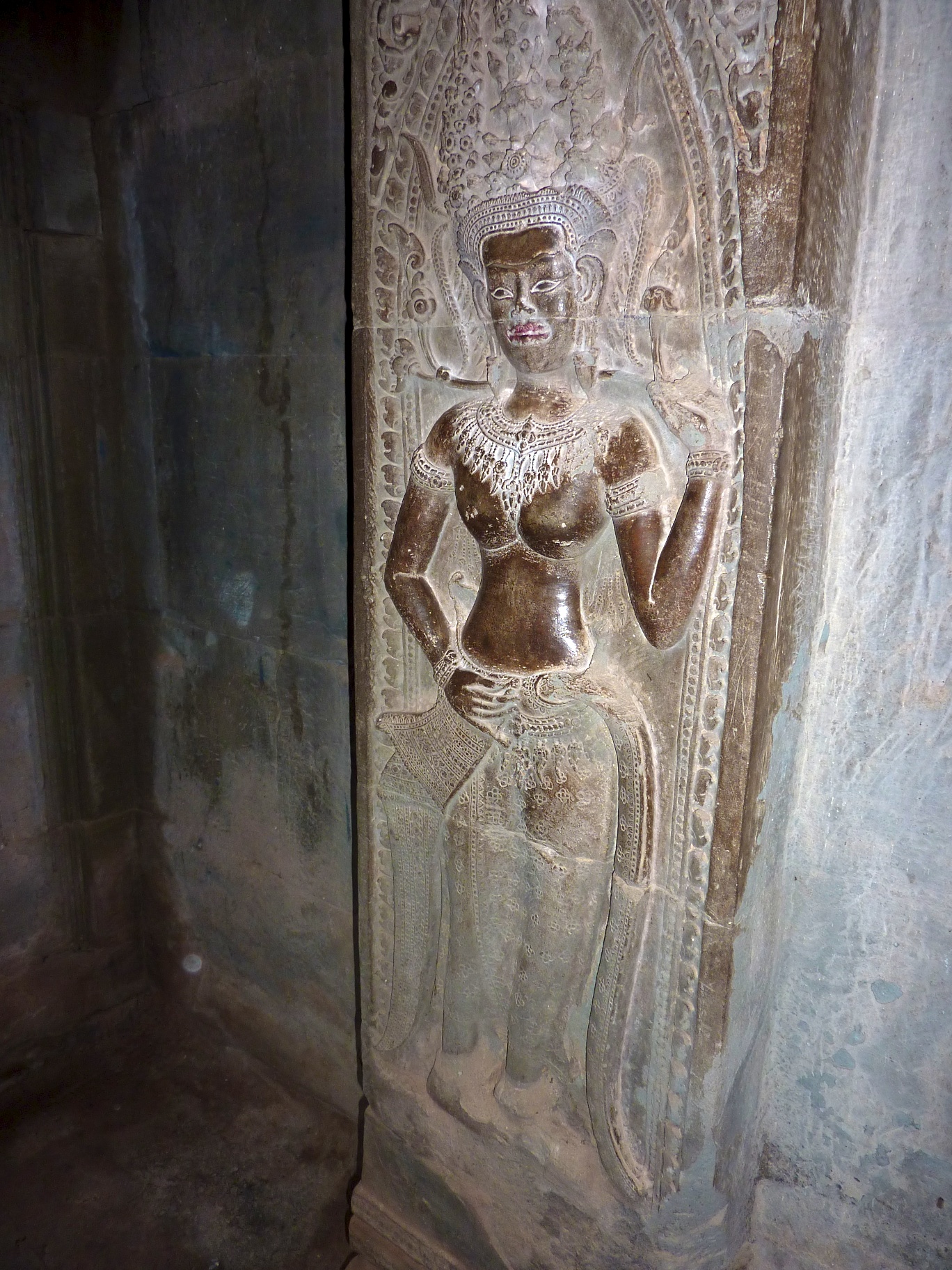
During Khmer Rouge times the temple was shrouded in jungle and the wat was used as a sanctuary from the Khmer Rouge. Today, it is still an active Buddhist temple and cemetery.

It was in the village just across the street from our hotel. Because of the location, this temple is not on the tourist route. We visited it three times as it was part of our daily walk and we never saw any other tourists.
Ta Prohm Temple
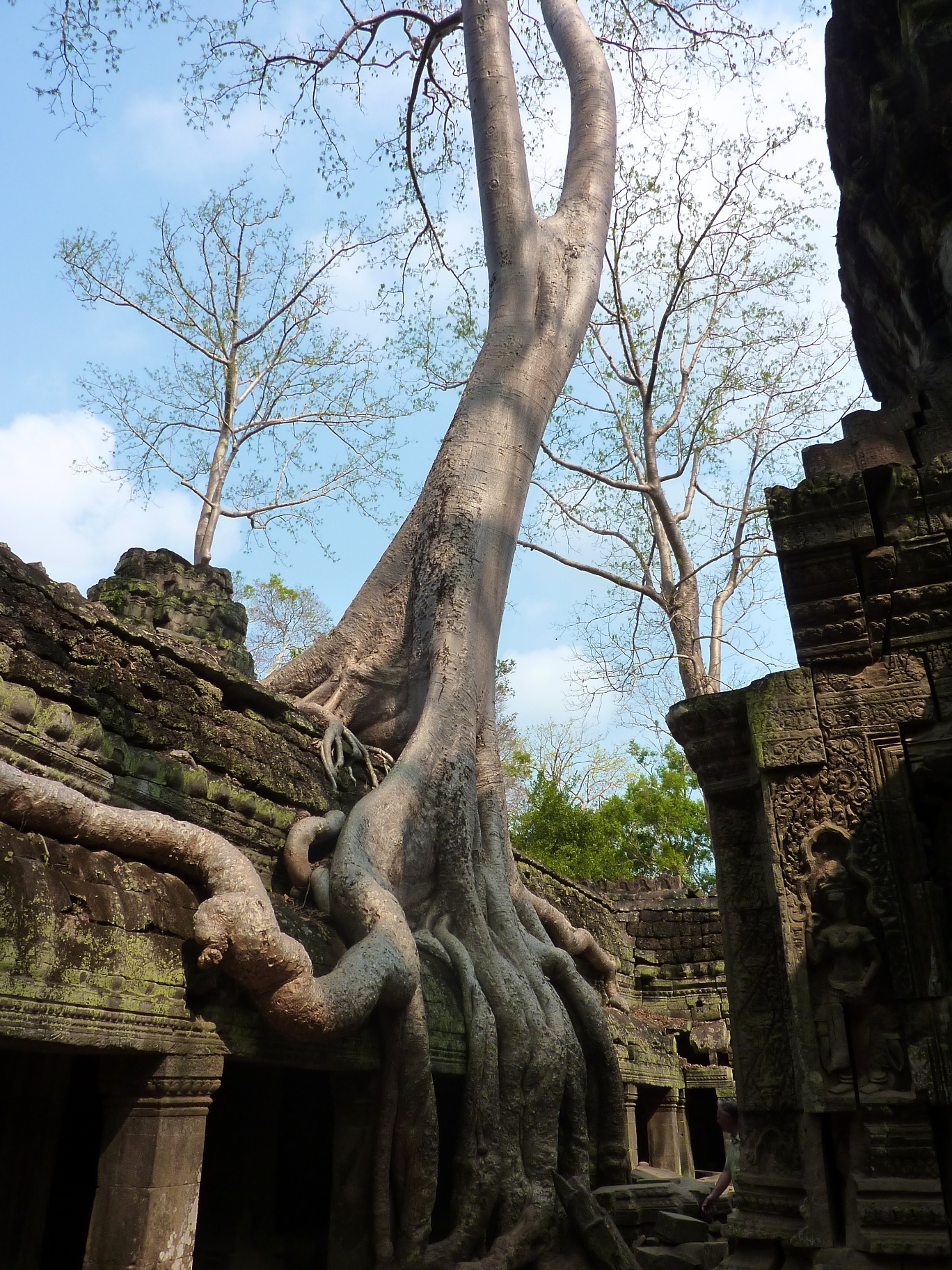
Ta Prohm, the Jungle Temple, was one of our favorite temples, often described as the most magical place in all of Angkor.
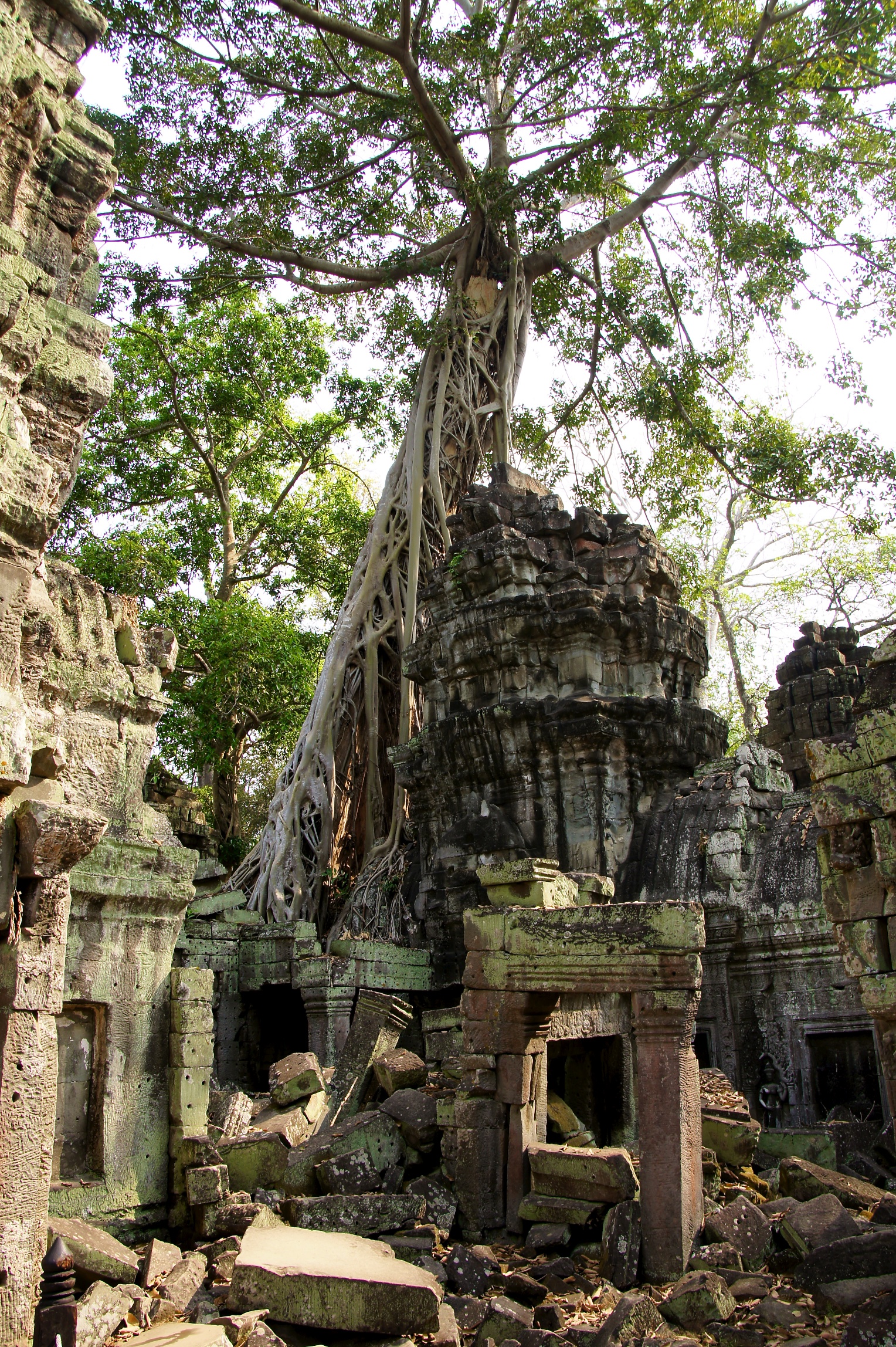
This temple was built about mid-12th century to early 13th century (1186). It was a Buddhist temple dedicated to the mother of King Jayavarman VII.

Fig, banyan and kapok trees spread their gigantic roots over stones, probing walls apart, as their branches and leaves intertwine to form a roof over the structures.

Here is a funny shot of the roots through the doorway. You tell me what this looks like!
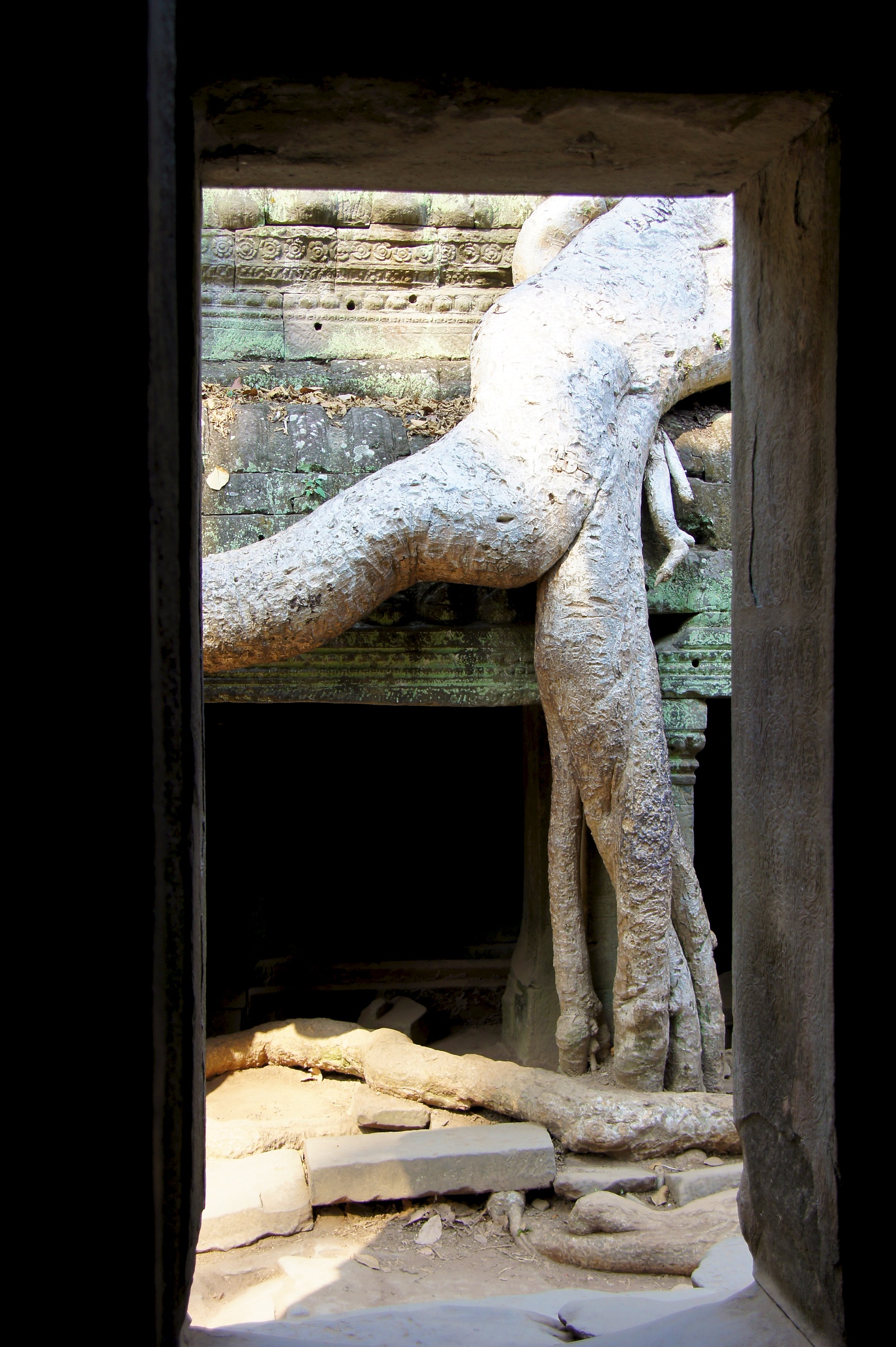
Ta Prohm has been left untouched except for the clearing of a path for visitors and structural strengthening to stop further deterioration. Delicately carved reliefs on the walls sprout lichen, moss and creeping plants giving it a beautiful green glow.
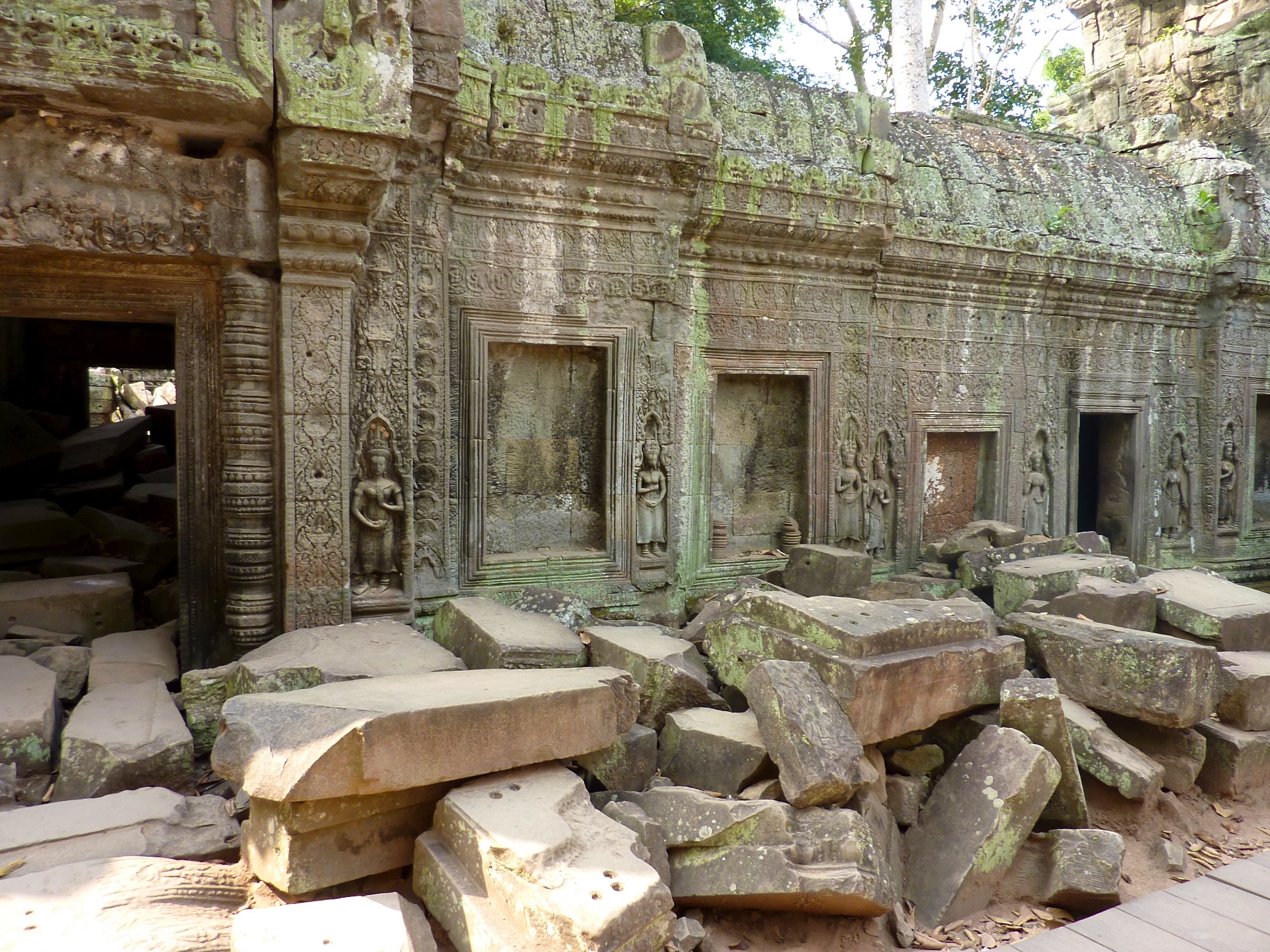
This temple really brings to mind Indiana Jones or Lara Croft (which was filmed here). Visitors are no longer allowed to climb onto the crumbling stones, due to the potential damage to the temple and the safety of the visitors.

Sadly, Ta Prohm was looted quite heavily in recent years due to its relative isolation and many of its ancient stone shrines have been lost.

Bayon Wat

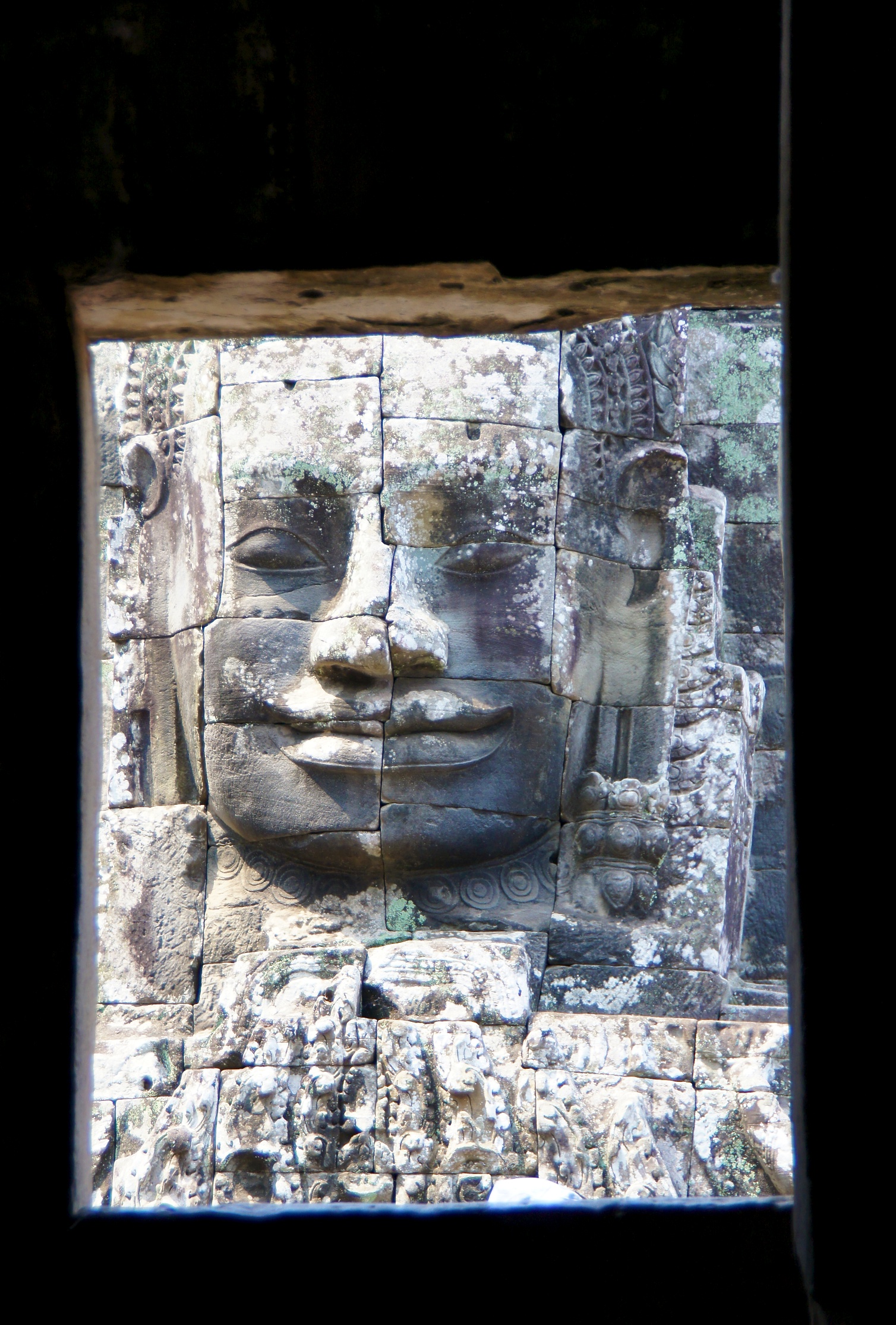
From a distance, Bayon Wat looks like a pile of blurry stones. But as you get closer, the magic appears…
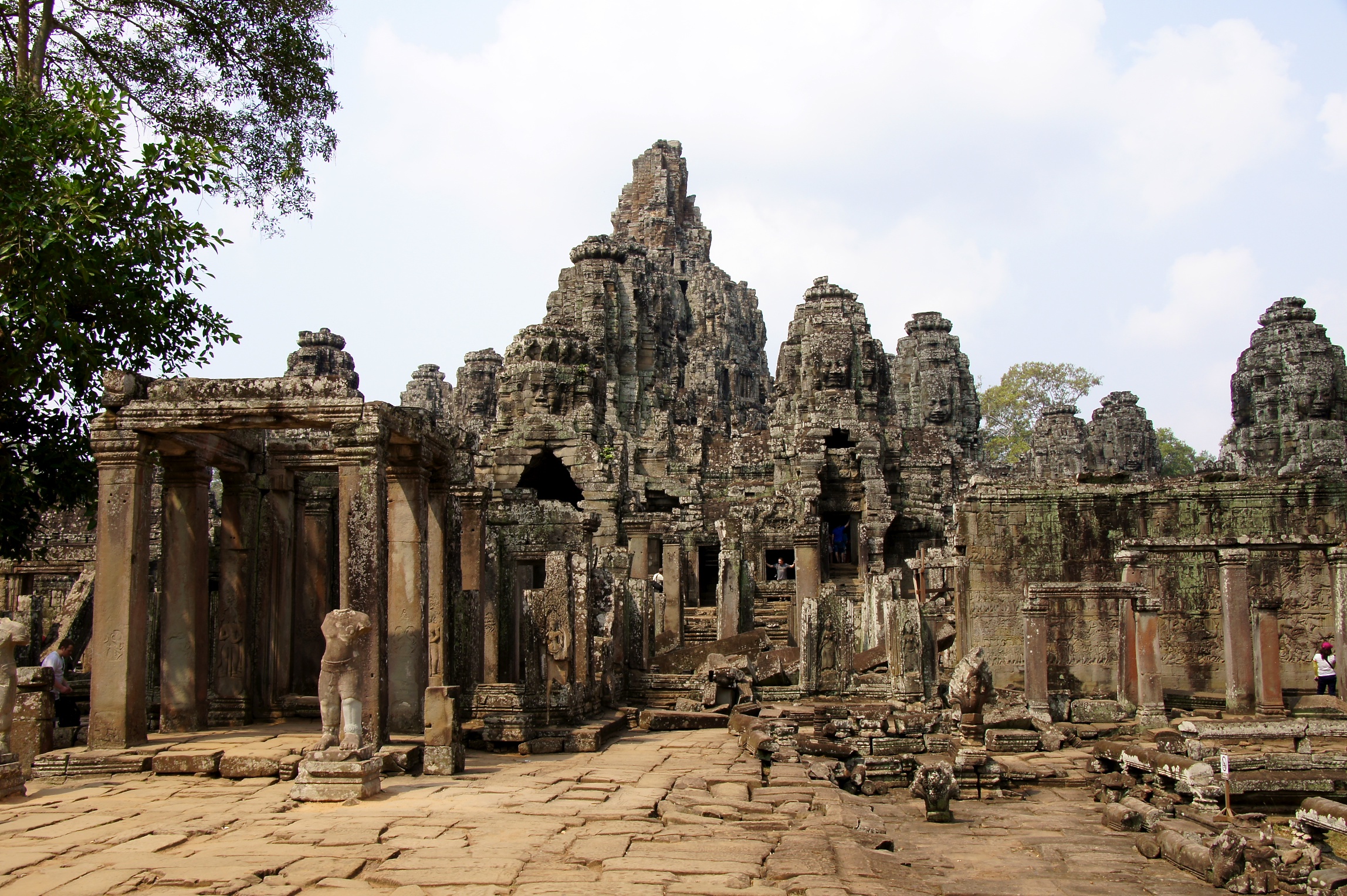
Faces begin to materialize in the stone……
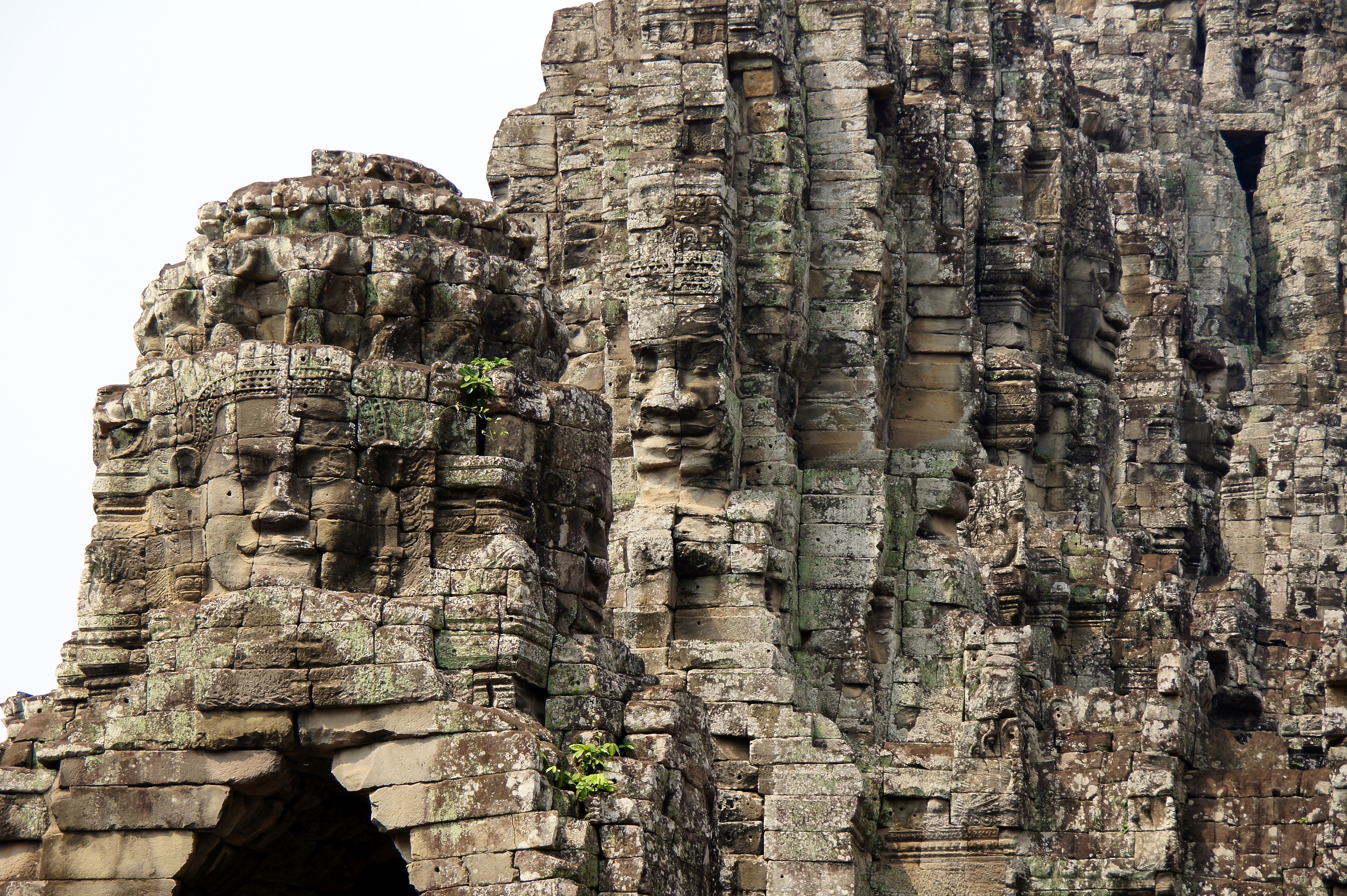
Built by Jayavarman VII the temple has 54 towers and 216 faces. No one knows exactly whom the faces represent.

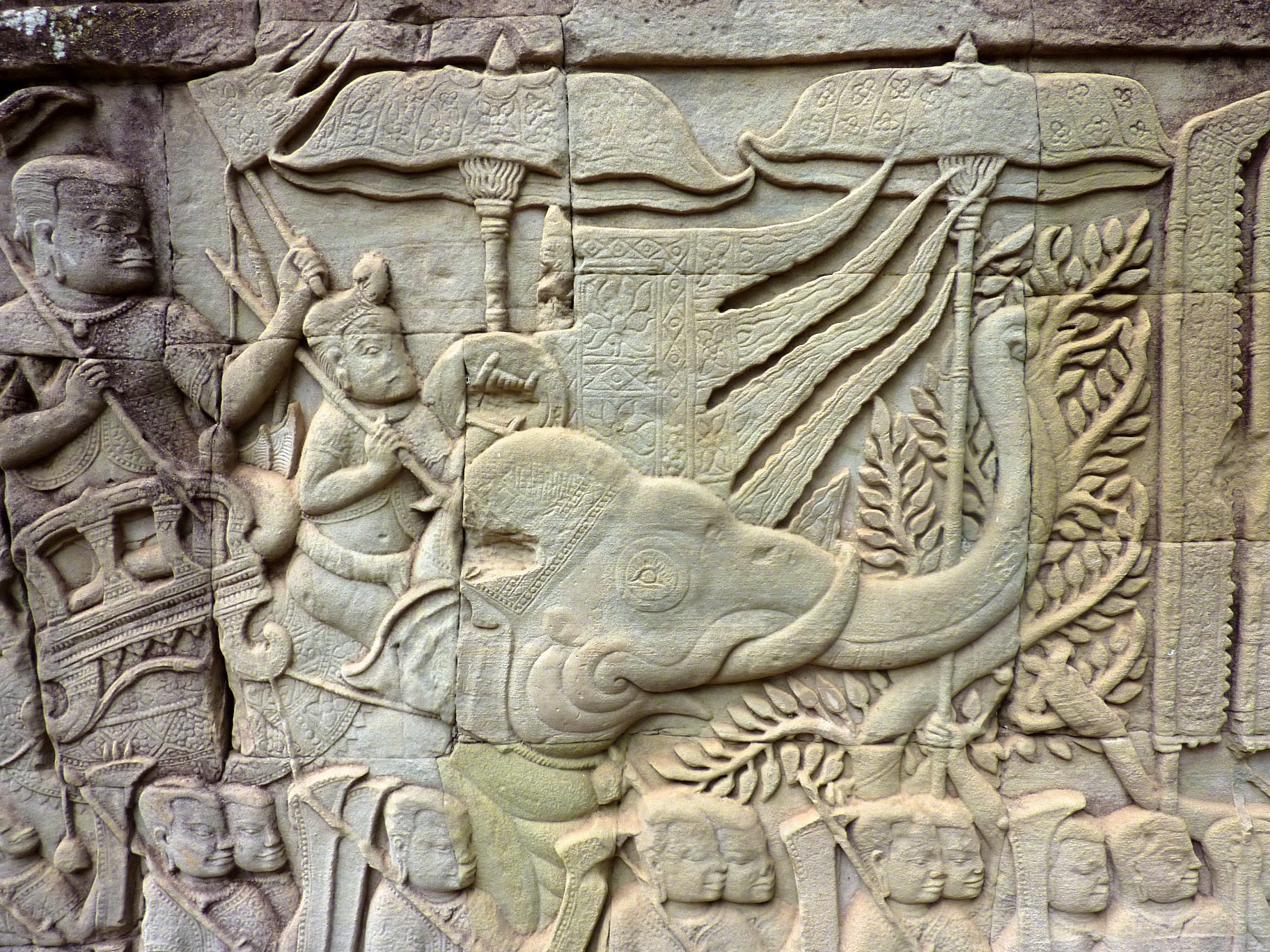
The Bayon also houses very unique bas-reliefs on the exterior walls depicting real-life scenes from the historical sea battle between the Khmer and the Cham.

There are also extensive carvings of scenes showing everyday life, including market scenes, cockfighting, chess games and childbirth. The intricacy and details were amazing.
The Bayon has thousands of female figures carved into the stone. It primarily features two types of sacred Khmer women: Apsara (celestial goddesses) dancing on lotus flowers, usually located on pillars;
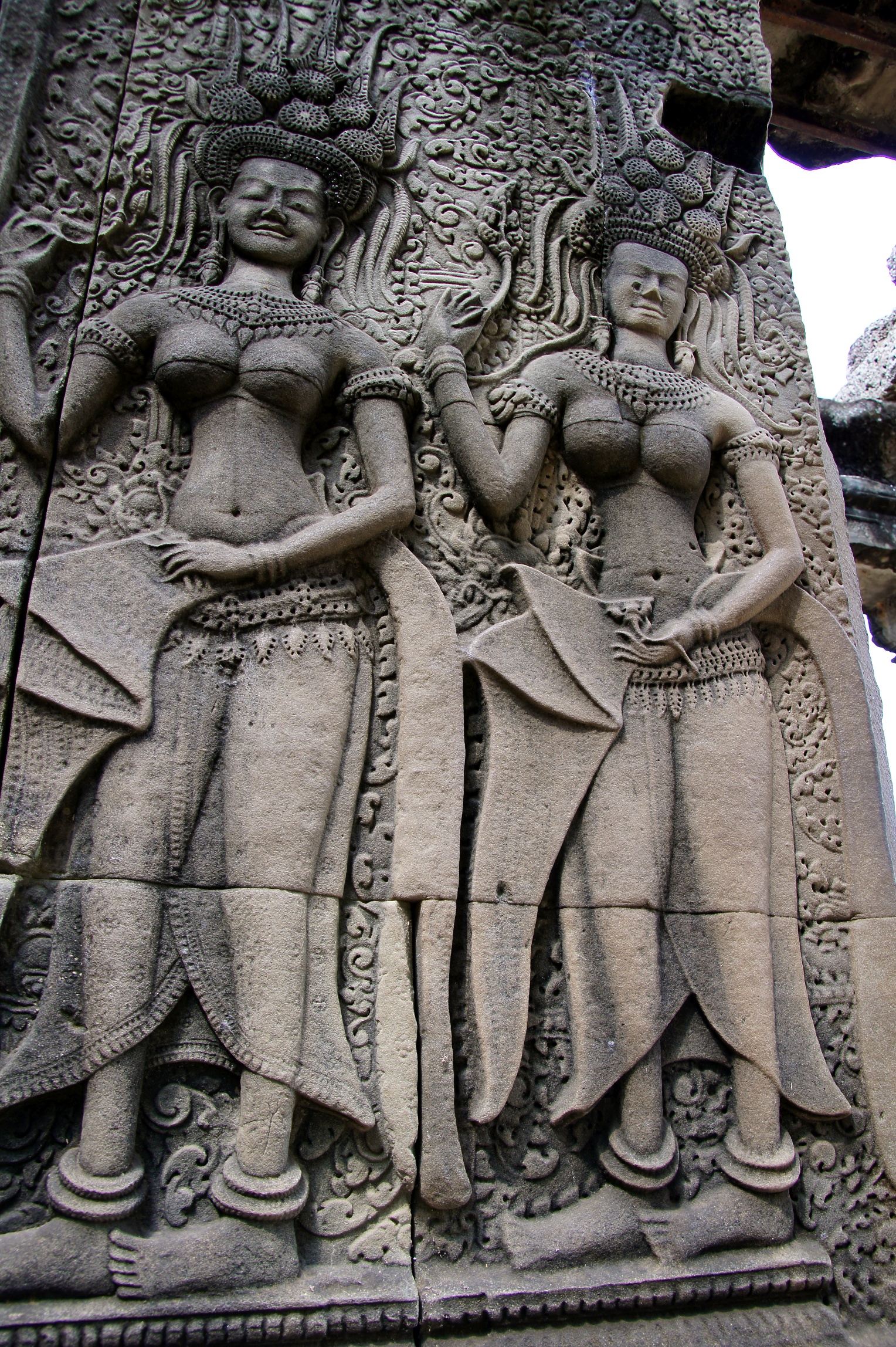
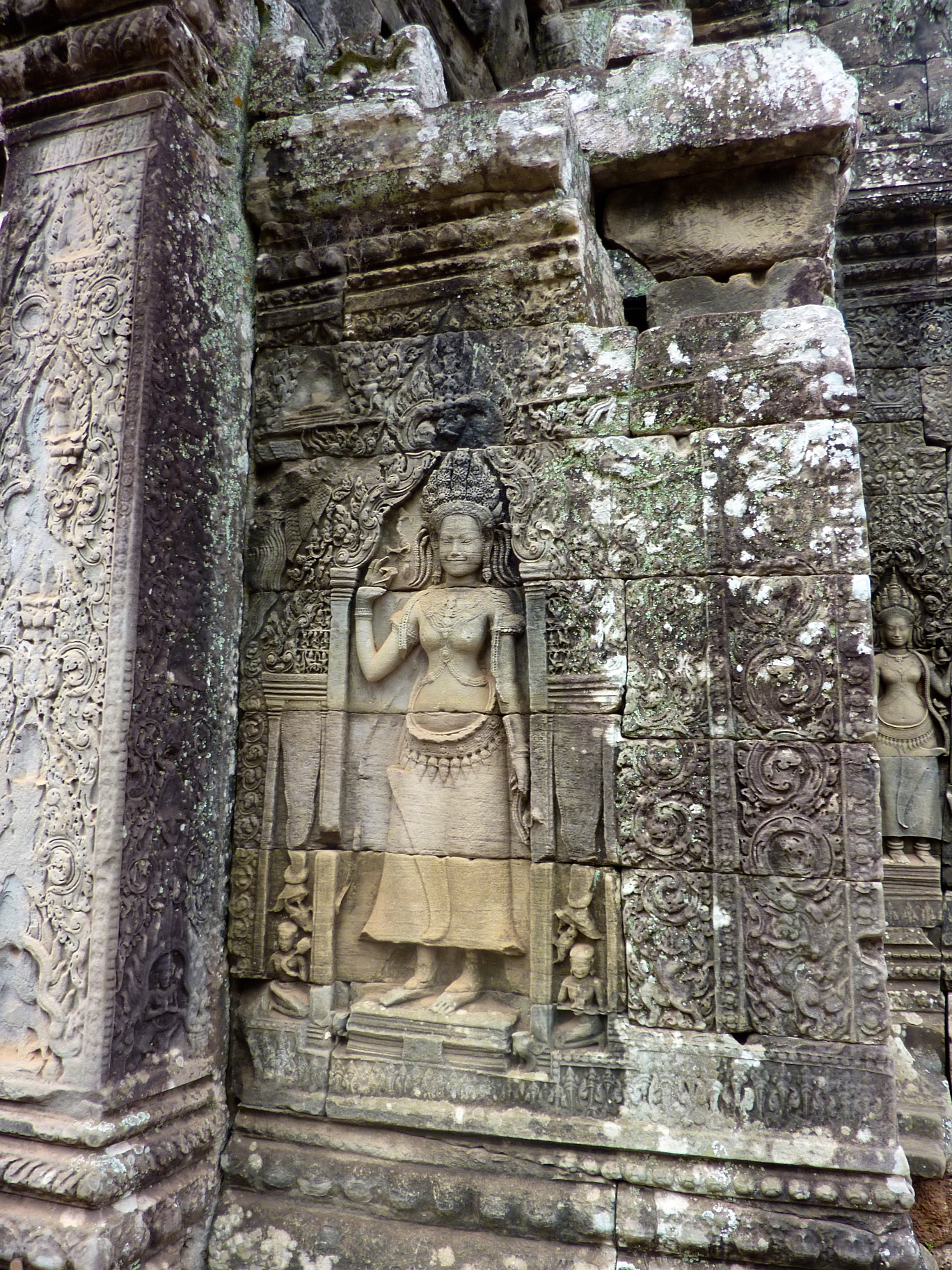
and devatas, who stand gracefully in niches surrounding the structure.
I really liked this temple. It had so many interesting angles to view the faces providing so many photographic opportunities.
Angkor Wat

Angkor Wat, City Temple, is the main temple. It has become a symbol of Cambodia, appearing on its national flag, the worlds only flag which features a building. It was built between 1113 and 1150. Unfortunately it was under construction so all of our photos have green tarps in them.

This 12th century temple was constructed by King Suryavarman II, it was his personal mausoleum (tomb) and as a temple to the Hindu god Vishnu. It was designed as a pyramid representing the structure of the universe: the highest level at the center of the temple represented Mount Meru, the home of the Hindu gods. The moat around the complex represented the oceans that surround the world.

What was so interesting to us (and scary) was how you could walk along the edge and there was no railing. Look down at the people in the photo below to get a good perspective of how high up we were – just hanging off the side!

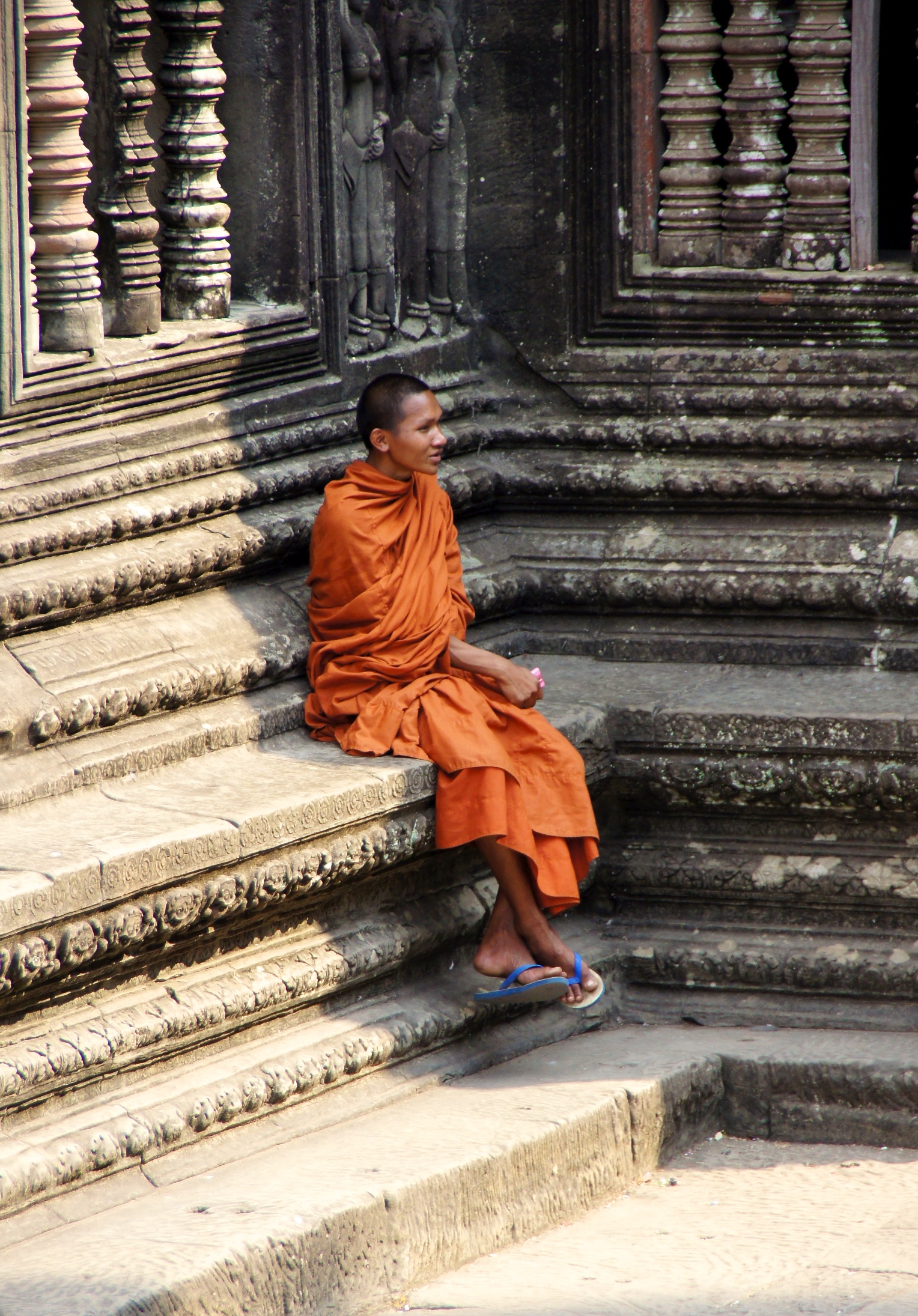
A peaceful photo of a young monk relaxing in the sun.
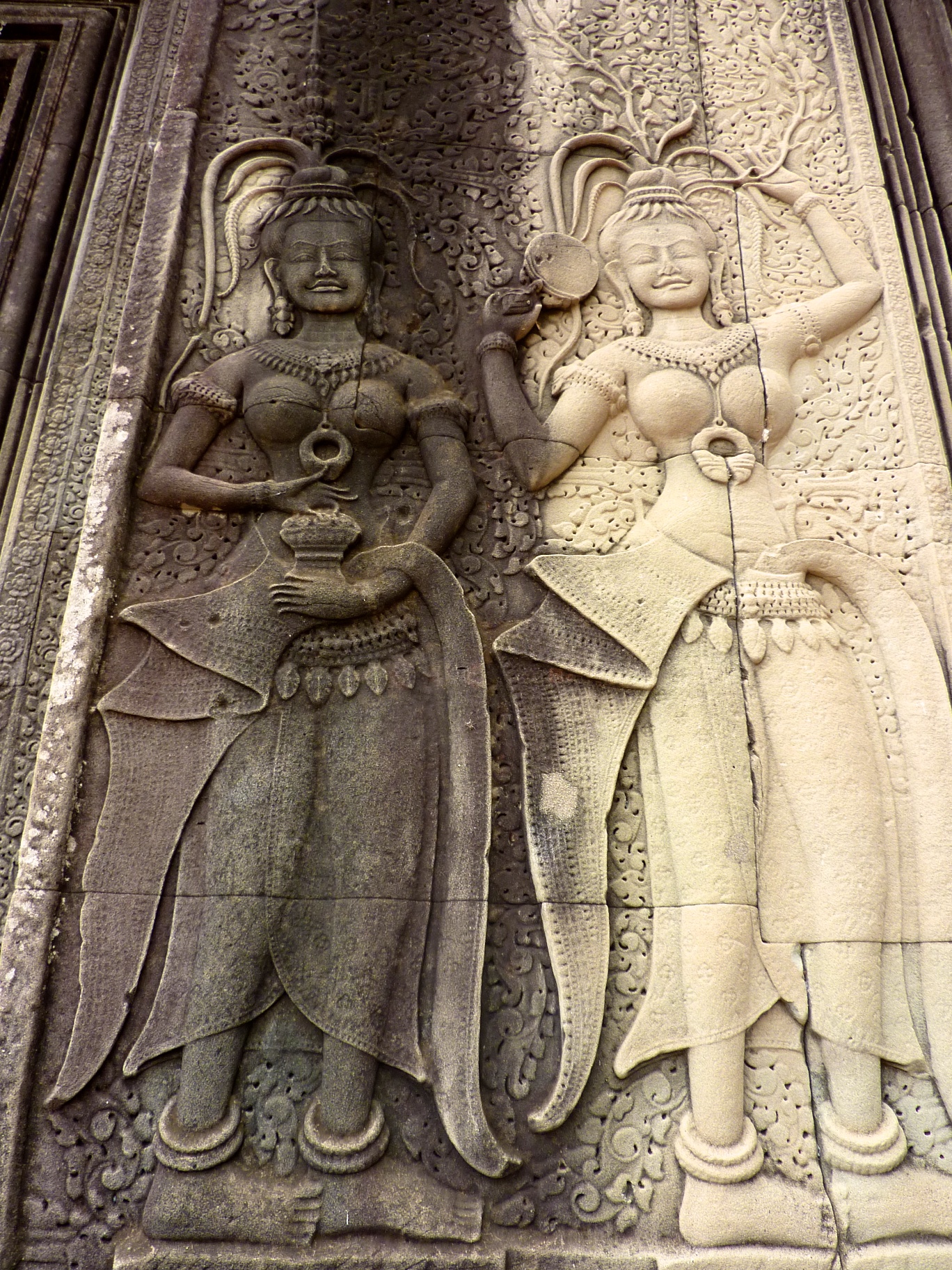
The most famous decorations of Angkor Wat are the Apsara. There are more than 300, always bare-breasted and usually dancing, representing an ideal of female beauty. I was intrigued with these figures with basically the same proportion as Barbie, so I did a little research. History dismissed the women as ”wives to entertain the king in heaven” or ornaments “to decorate bare sandstone walls”. Recent research suggests that these women served much more profound roles than mere decoration. And perhaps these women were the driving force behind the civilization itself.
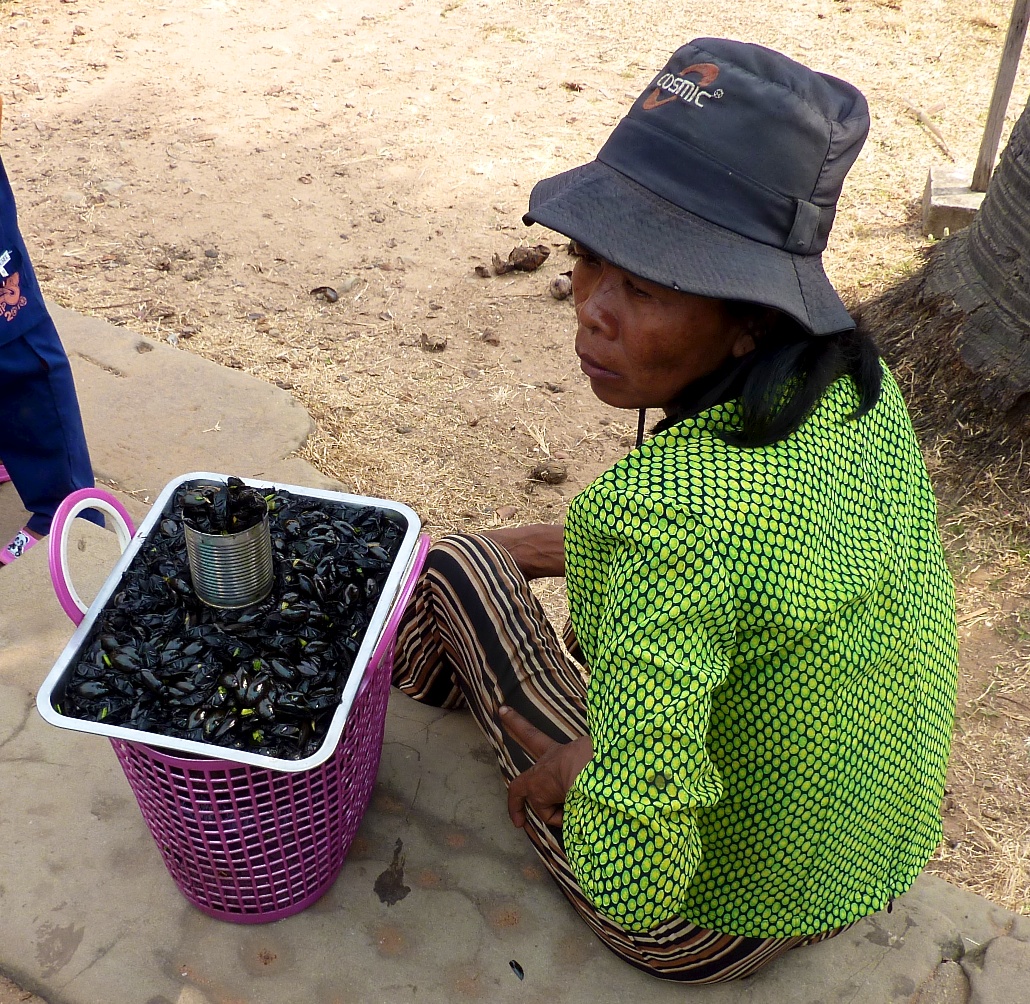
On the temple steps this women was selling a bucket of beetles, supposedly a favorite snack in Cambodia. We did not sample them.

It was an exhausting day seeing all of these temples and hearing so much history. But we really enjoyed seeing such mythical and spectacular structures. We were very pleased with our guide and our driver.
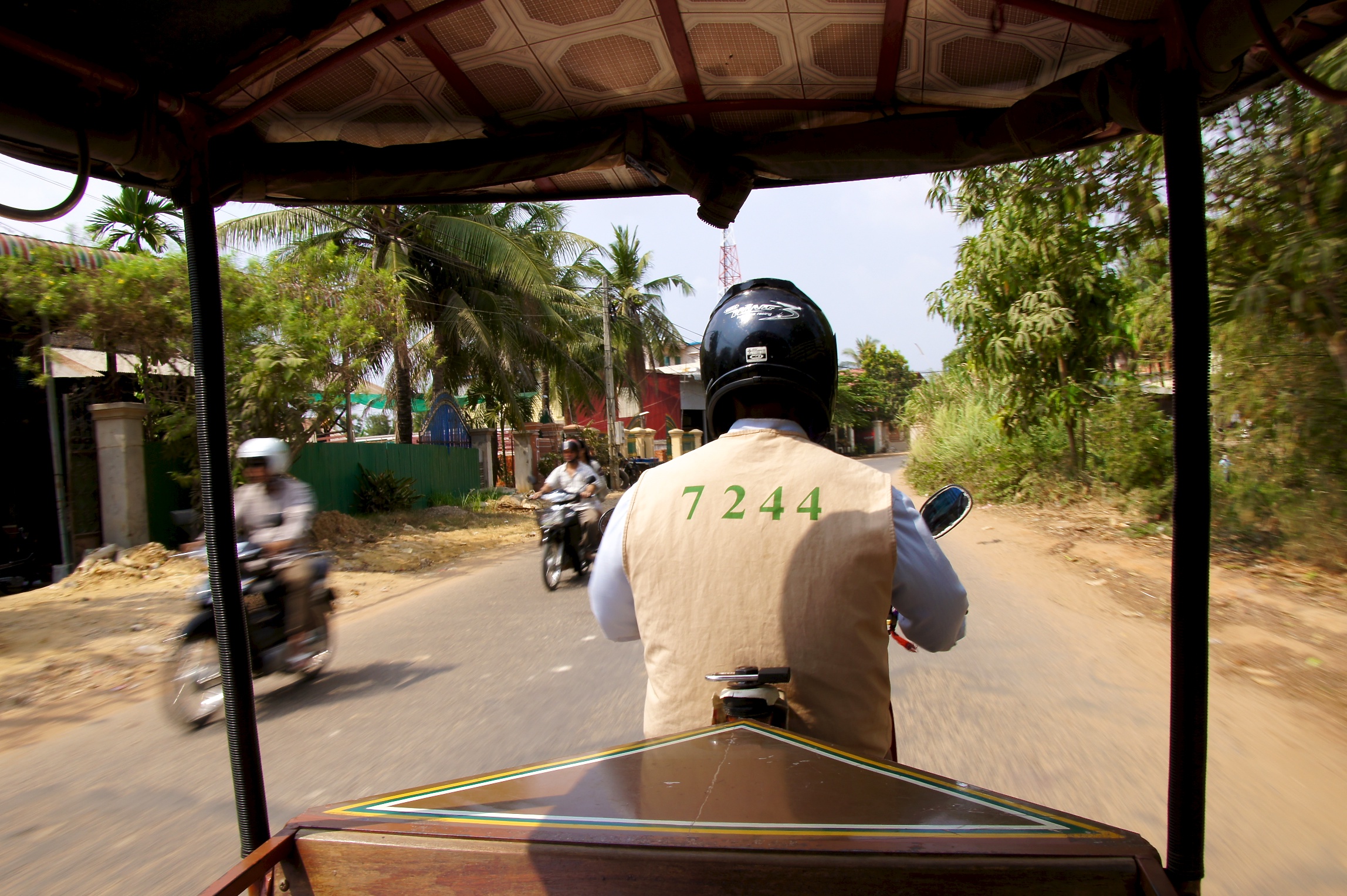
The next morning we decided to rent a tuk tuk instead of a car to take us to some of the lesser know temples. Above is the view from the inside of a tuk tuk. Not sure how safe they are……but we thoroughly enjoyed the ride.

Passing all kinds of other motorized vehicles including a moped with three girls pulling a fourth girl on a bike.

Banteay Srei
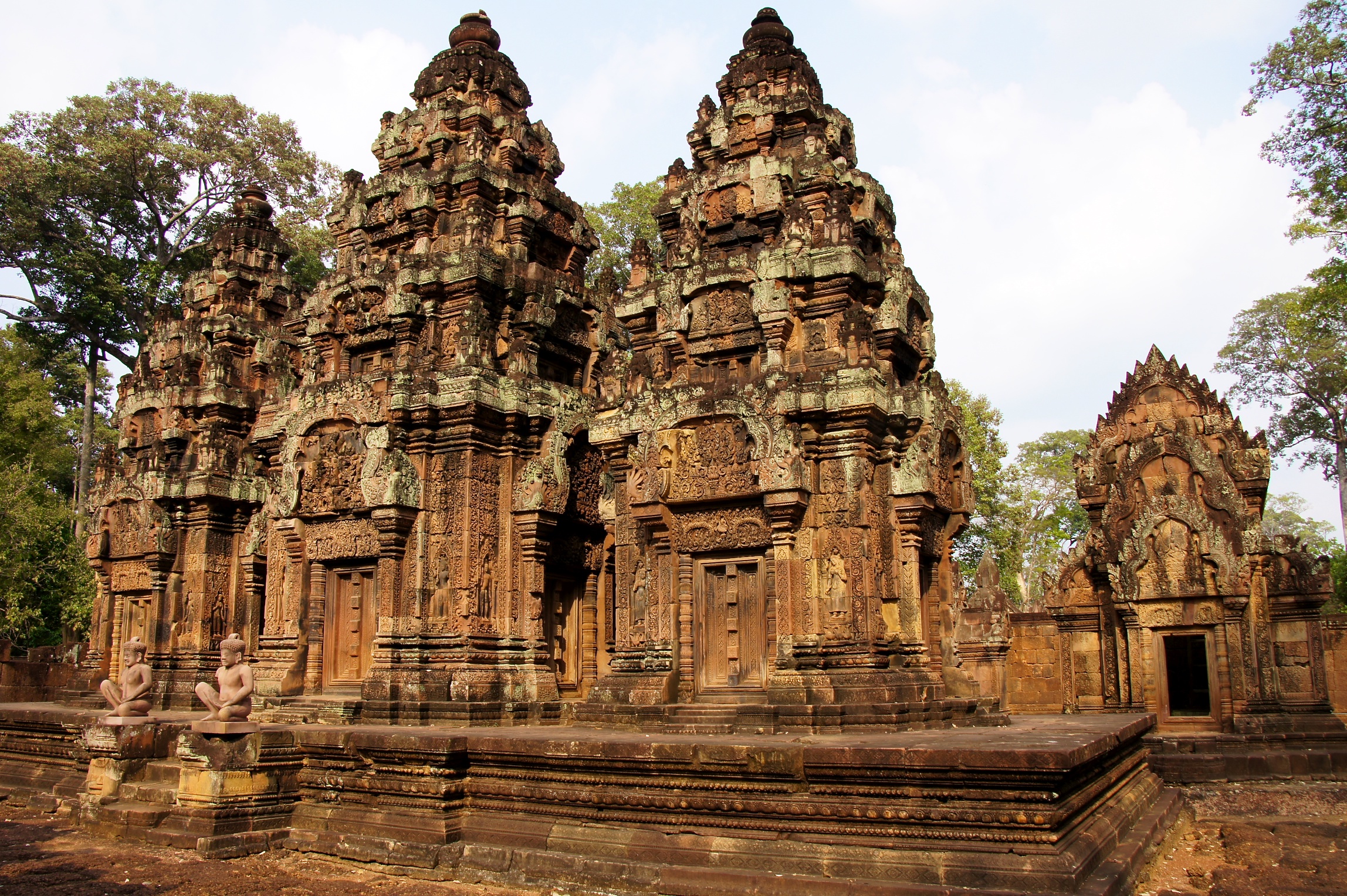
Banteay Srei is 23 miles from the main village and on a tuk tuk it took about 2 hours to get there. The name Banteay Srei "citadel of the women" or "citadel of beauty" is referred to as the lady temple, not because of the carvings, but the fact that the reliefs on this temple are so delicate that the hand of a woman could only have carved them. It is built of red sandstone, which can be carved like wood.

What I was referring to as the monkeys are actually called Dvarapalas (temple guardians). Their function is to protect the temples.
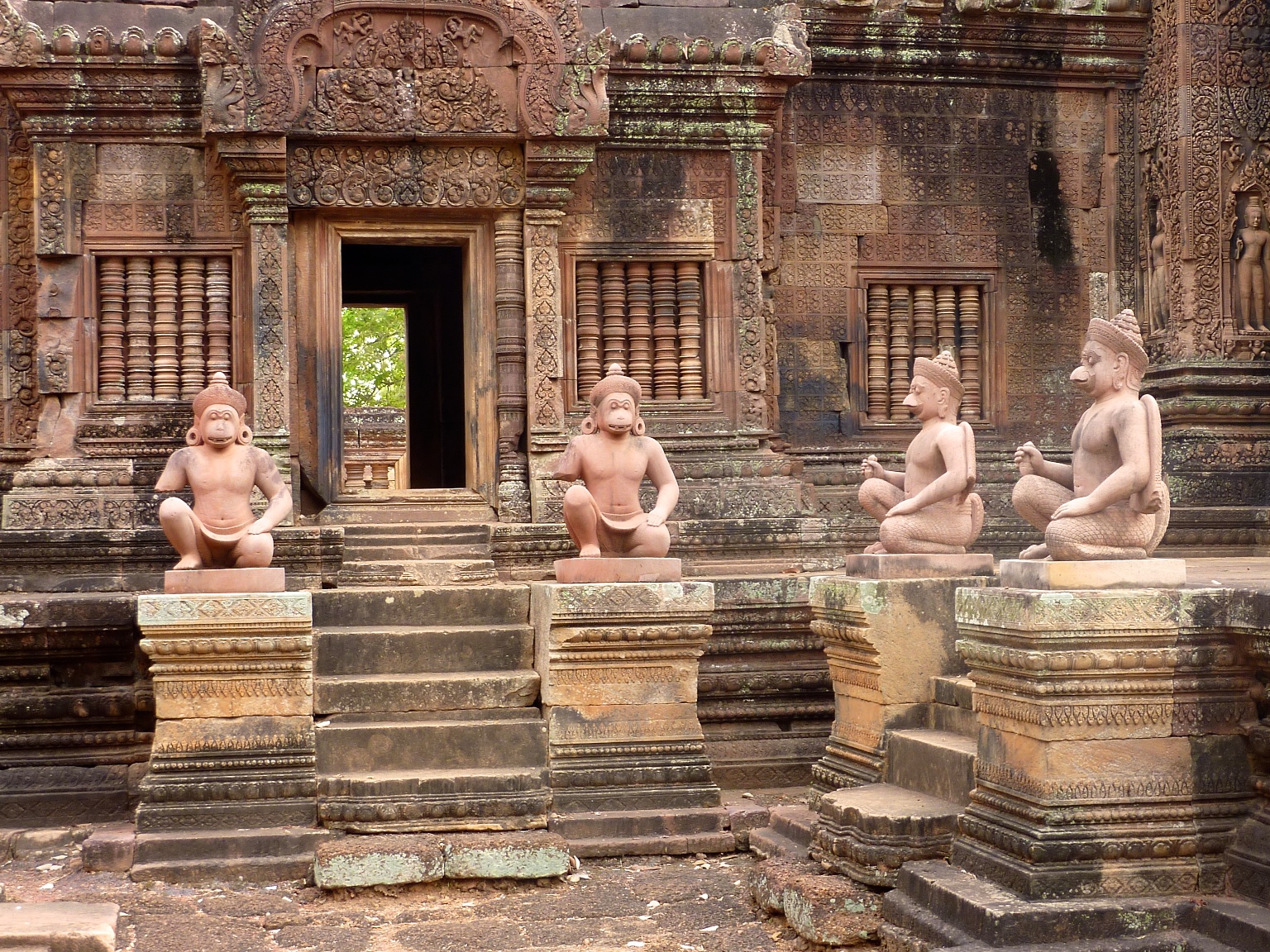
Banteay Srei is the only major temple not constructed by a monarch, but by a courtier. It is known for its small scale and the extreme refinement of its decorative carvings, including several famous narrative bas-reliefs dealing with scenes from Indian mythology.
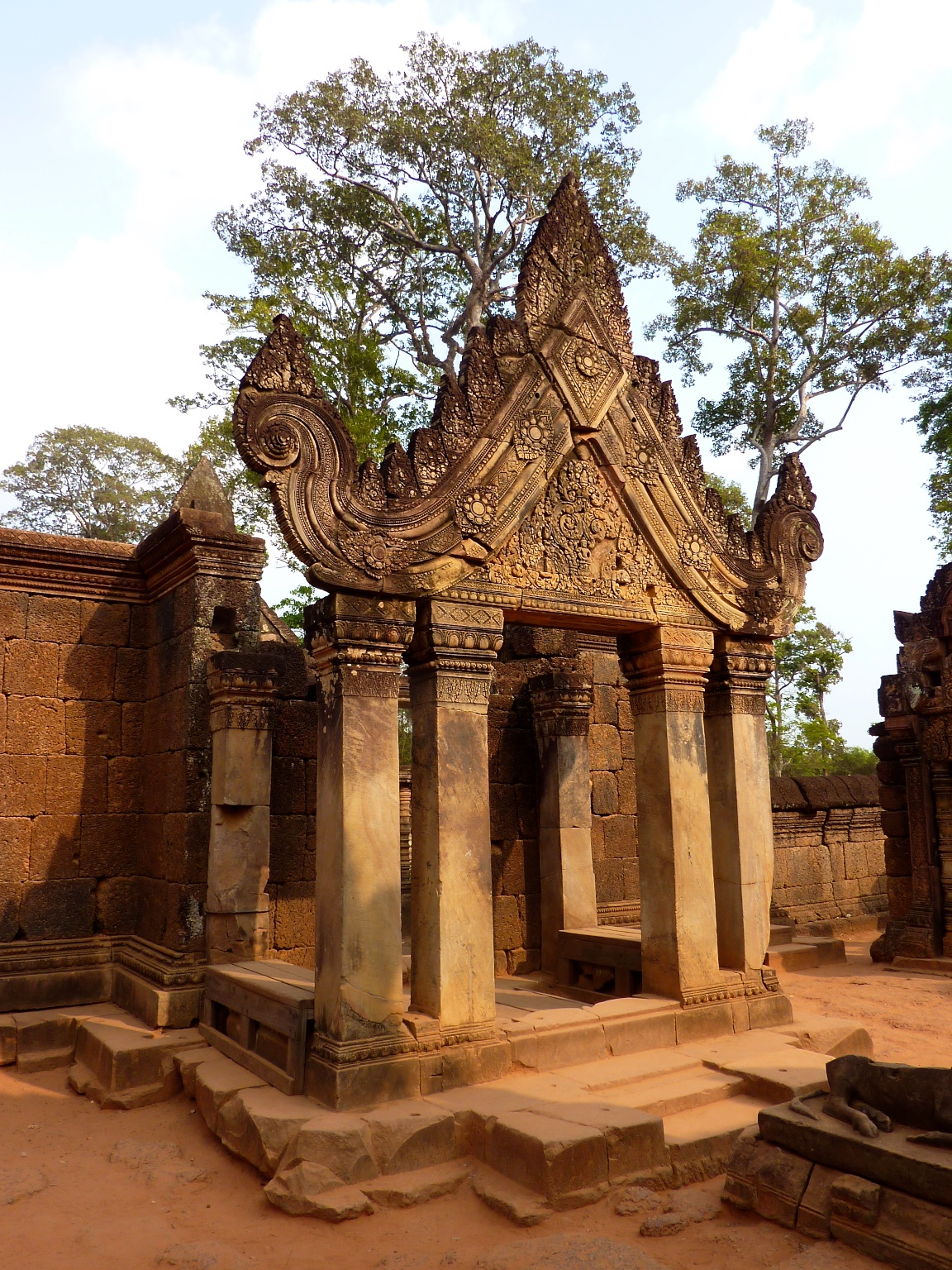
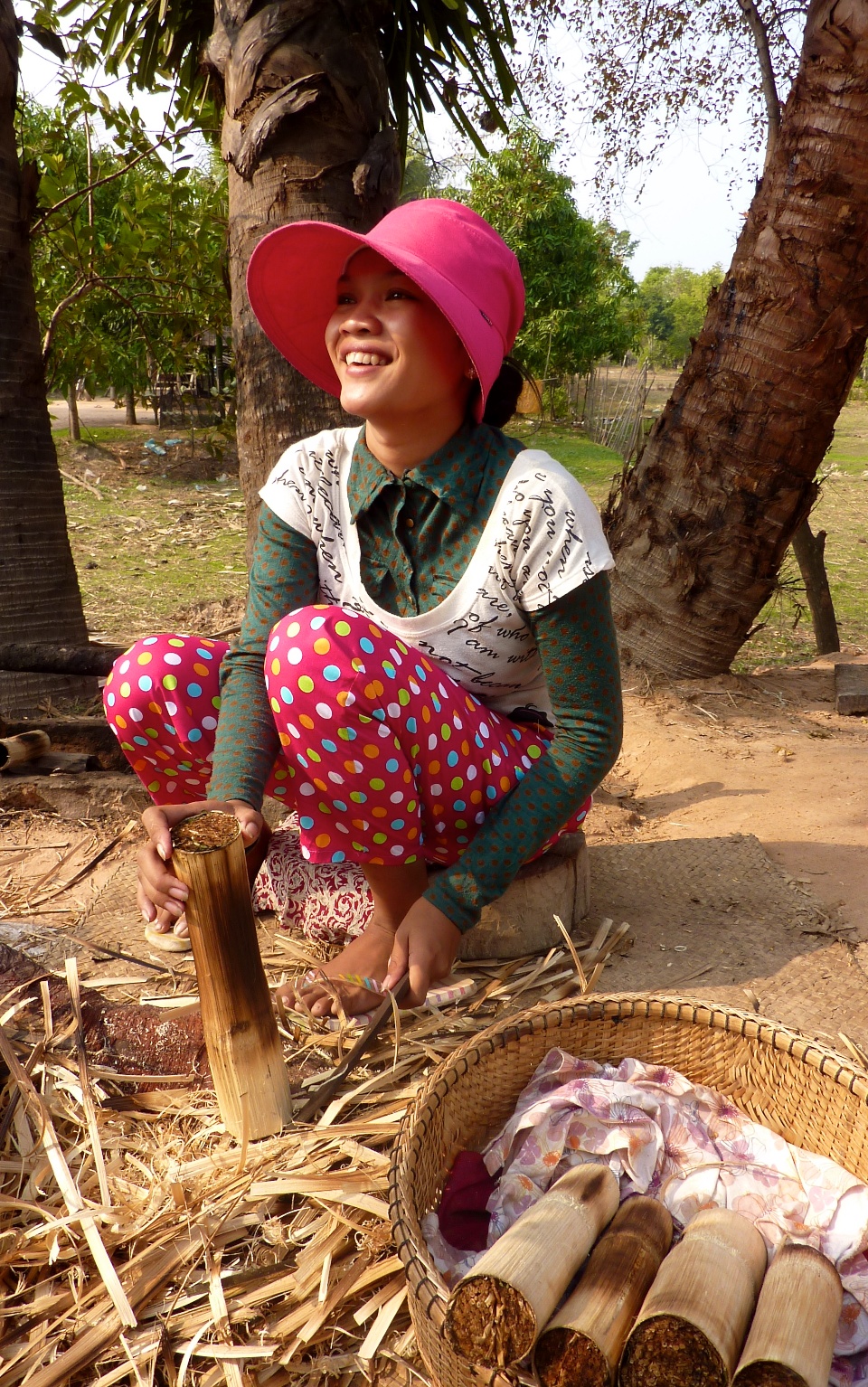
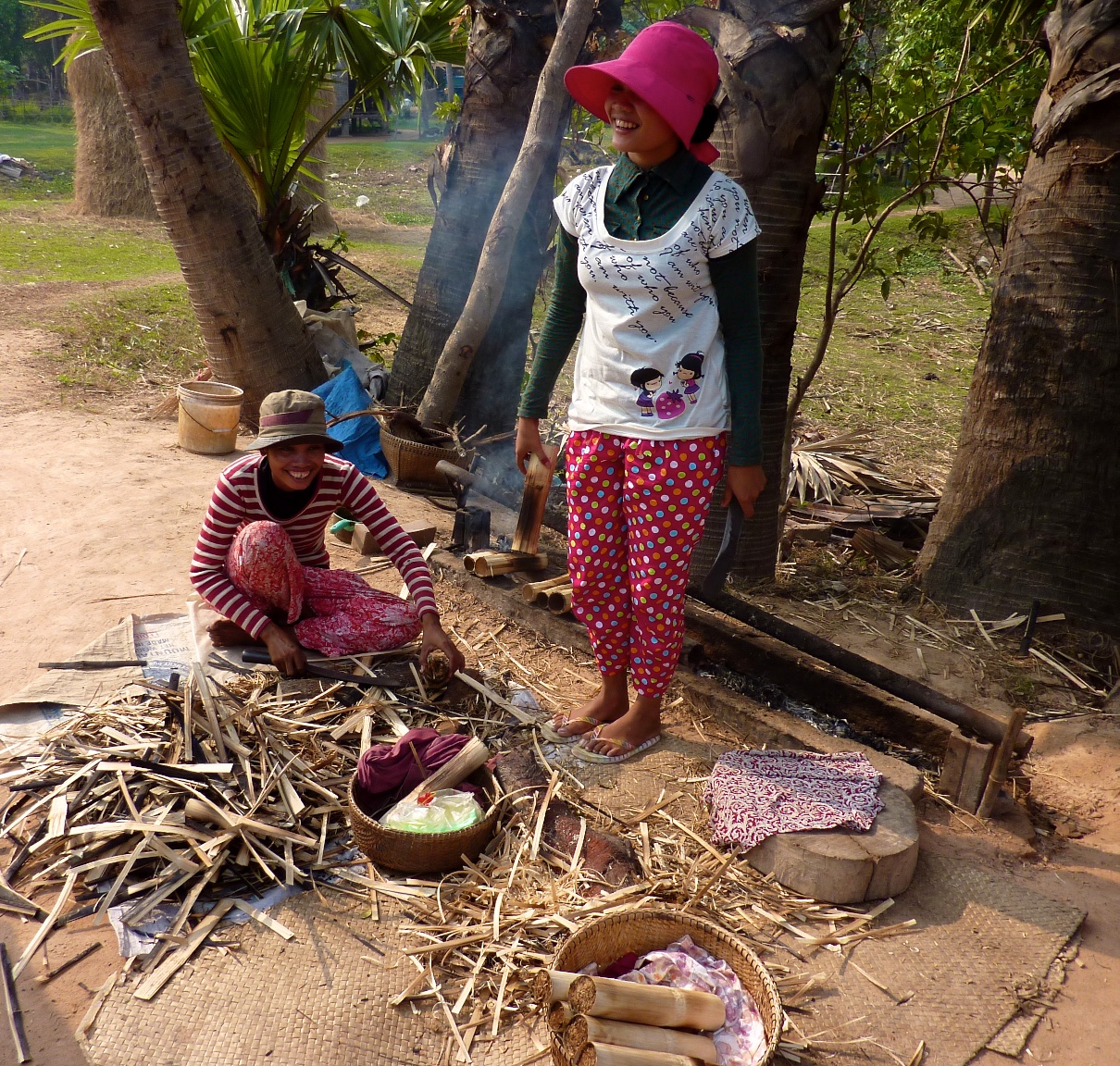
The ride on the tuk tuk through the villages was as fun as visiting the temples. Many women were making and selling sweet sticky rice in bamboo along the roadside. This first photo shows a woman melting the sugar cane for the rice.
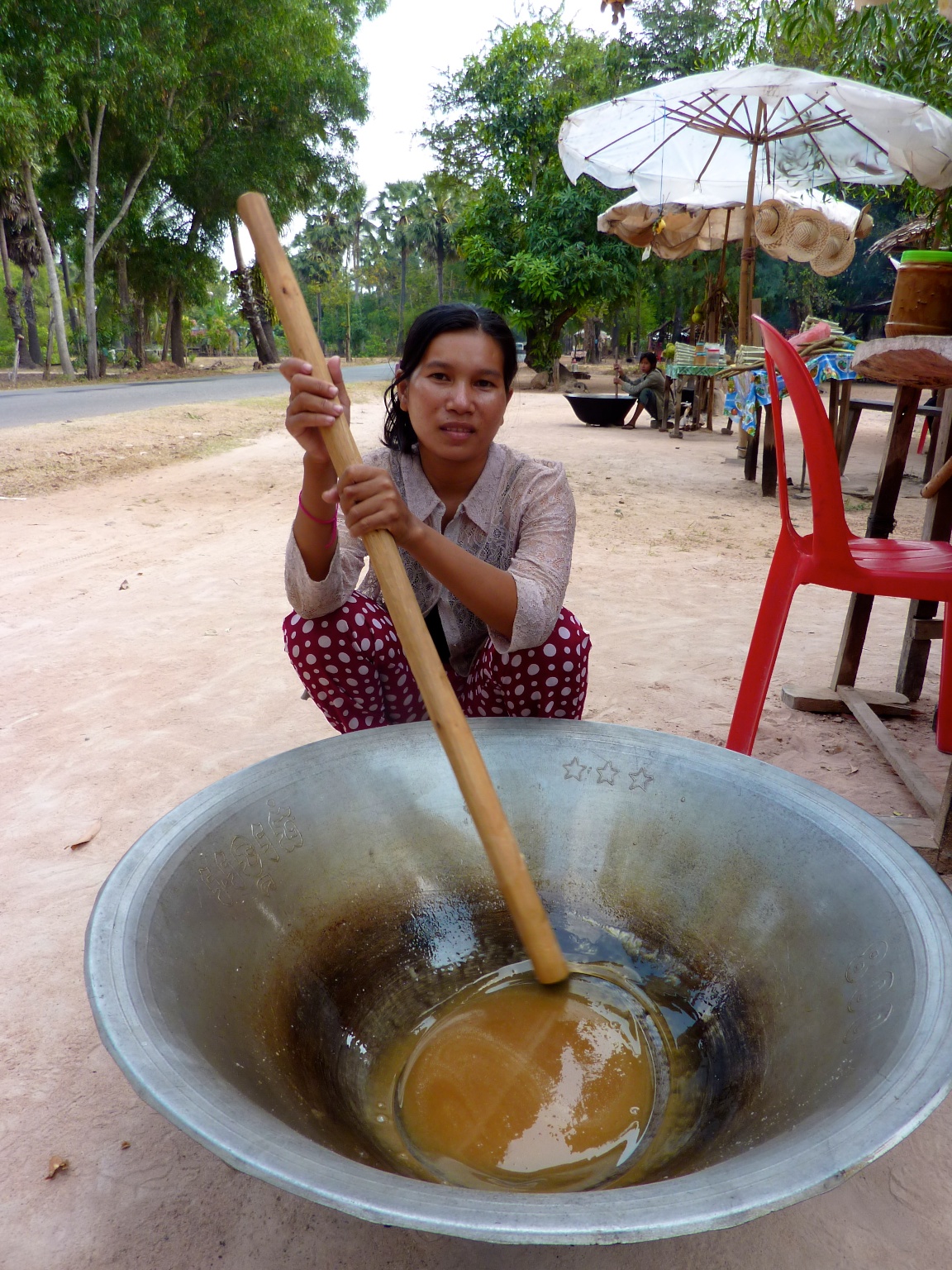
The rice is then placed in a bamboo tube and the end is plugged with a piece of coconut husk wrapped with banana leaf to keep in the steam so the rice will cook (see basket below).
To cook the rice, the bamboo tubes are placed over charcoal.
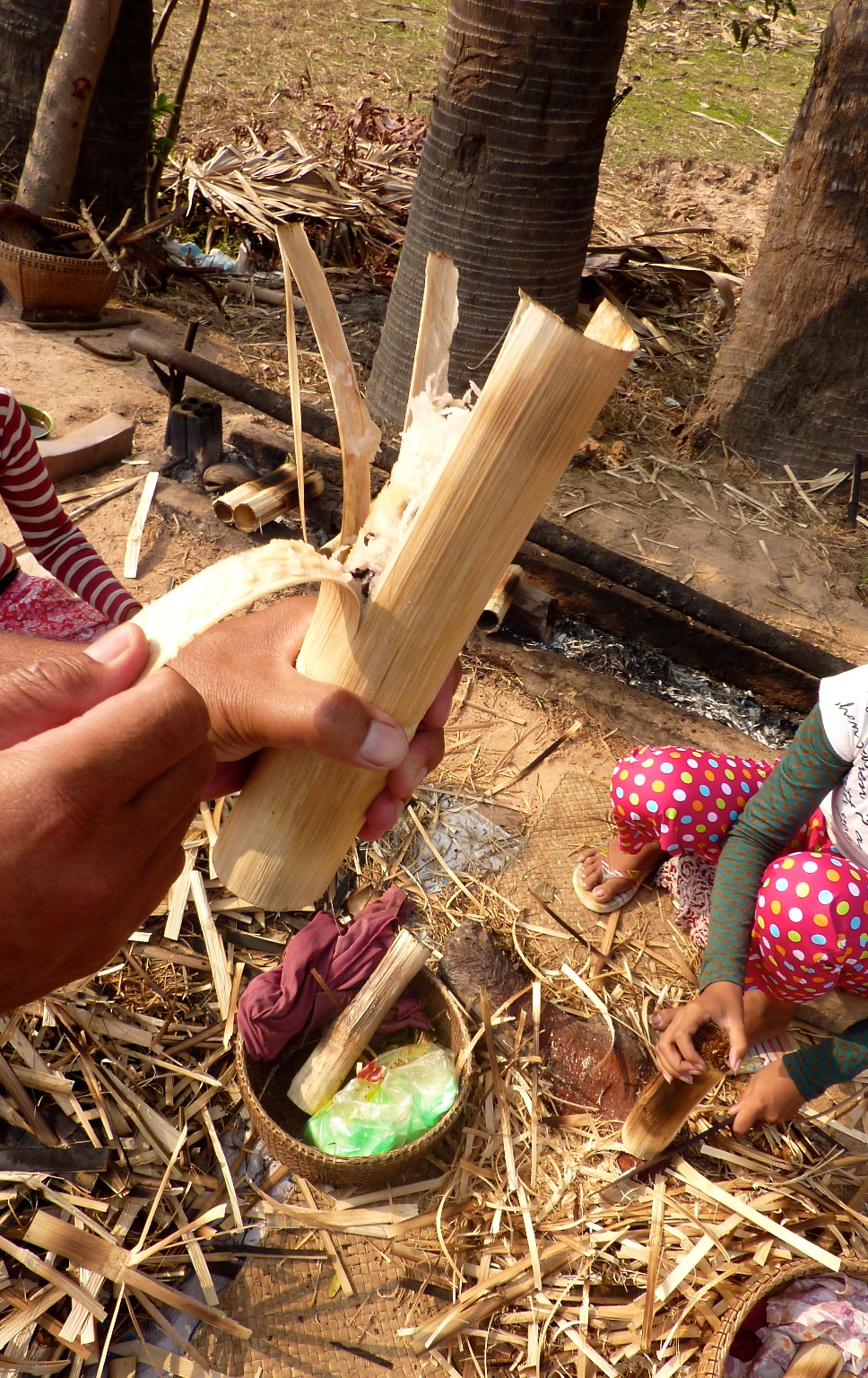
Our driver showed us how to peel open the bamboo to get to the sweet treat. The rice was very sweet and had a handful of black beans in it.
Banteay Kdei

Banteay Kdei appears much as it did when early explorers first discovered it. It was built in the late 12th to early 13th century during the reign of Jayavarman VII. It was originally erected as a Buddhist monastery.

What I loved about this temple were the colors. We were there in the early evening and the setting sun cast a glow that created beautiful rich purple and green tones.

This temple was built of soft, inferior sandstone and many of the galleries and porches have collapsed. It is in a state of ruins. But this ruined appearance doesn’t take away from the temple’s charm and beauty.
The back entrance has a spectacular tree, which is spreading its roots over the ruins. For years it was difficult to reach this temple, but recently a road was built to get to the complex.

We found that we really preferred the more ‘ruined’ temples, as opposed to the neatly preserved ones.
Pre Rup
Pre Rup was one of those monuments that was more beautiful from afar. The temple’s name means "turn the body". Cambodians believed that funerals were conducted at the temple, with the ashes of the body being ritually rotated in different directions as the service progressed, hence the name, Pre Rup.

Our tuk tuk driver was very good about stopping along the way for us to take photos of everyday life. In the distance we saw several young girls fishing for something in the water.

They were laughing and having such a good time. We walked to the marsh edge to talk to them… well our tuk tuk talked to them. Of course D wanted to take off his shoes and go in the water. I convinced him that this might not be the most sanitary thing to do – he calls me his "joy smasher" when I tell him not to do things like this.

This girl was very shy and she never came up to us.
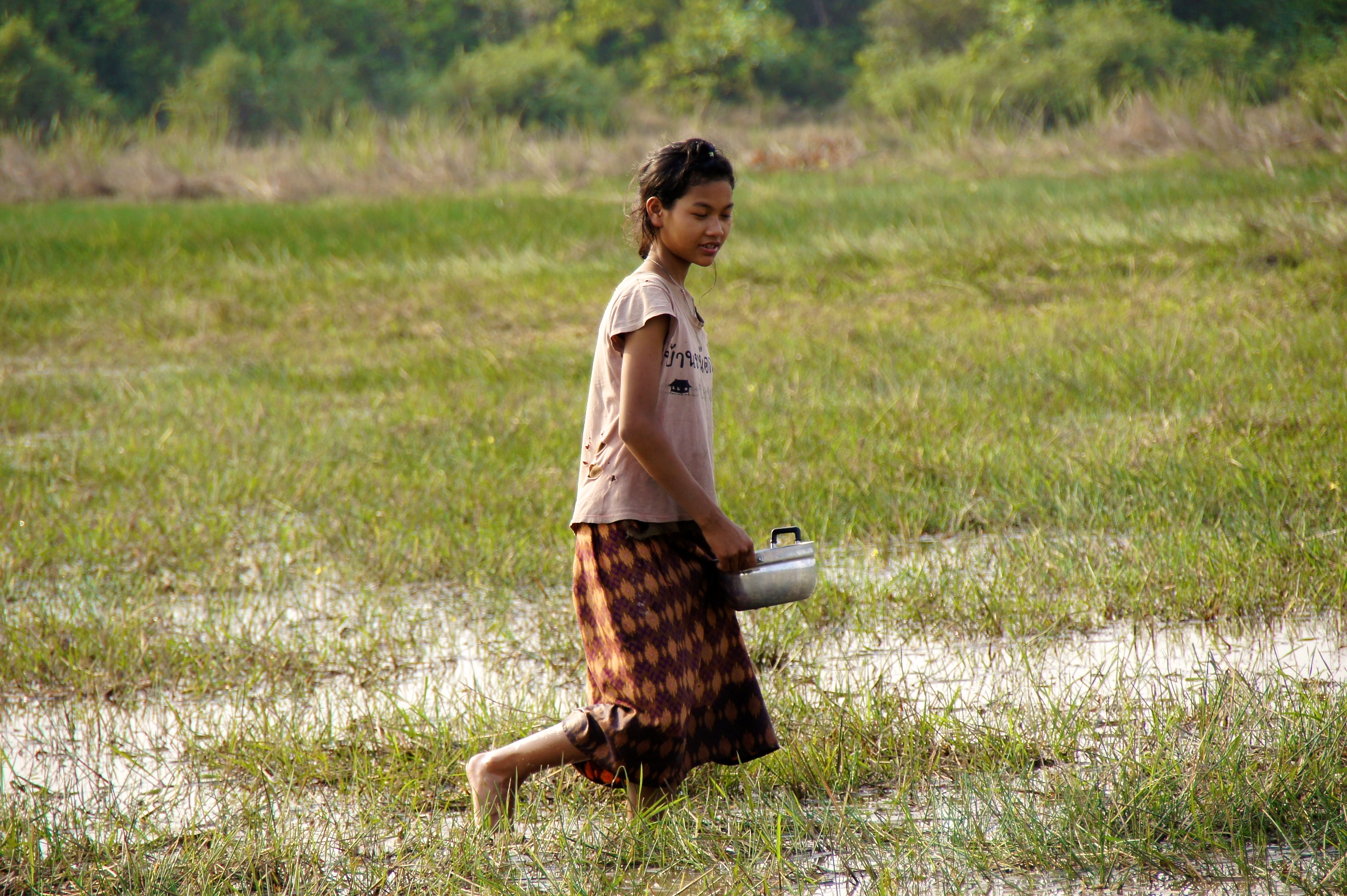
What were they catching? Snails.

Like the children of the village, the girls got a kick out of seeing their own image on D's camera. Except for the shy one.

The late afternoon sun cast a delicate glow on this oxen in the field. It makes the scene look like a painting.

Beng Mealea

You would think after visiting so many temples they would all start to look a like, but this was not what we experienced. Each one was so different, so spectacular and interesting in its own way.

Beng Malea was special because it is one of the only temples that has been completely left alone. It has not been restored in any way, they do not even prune the trees.
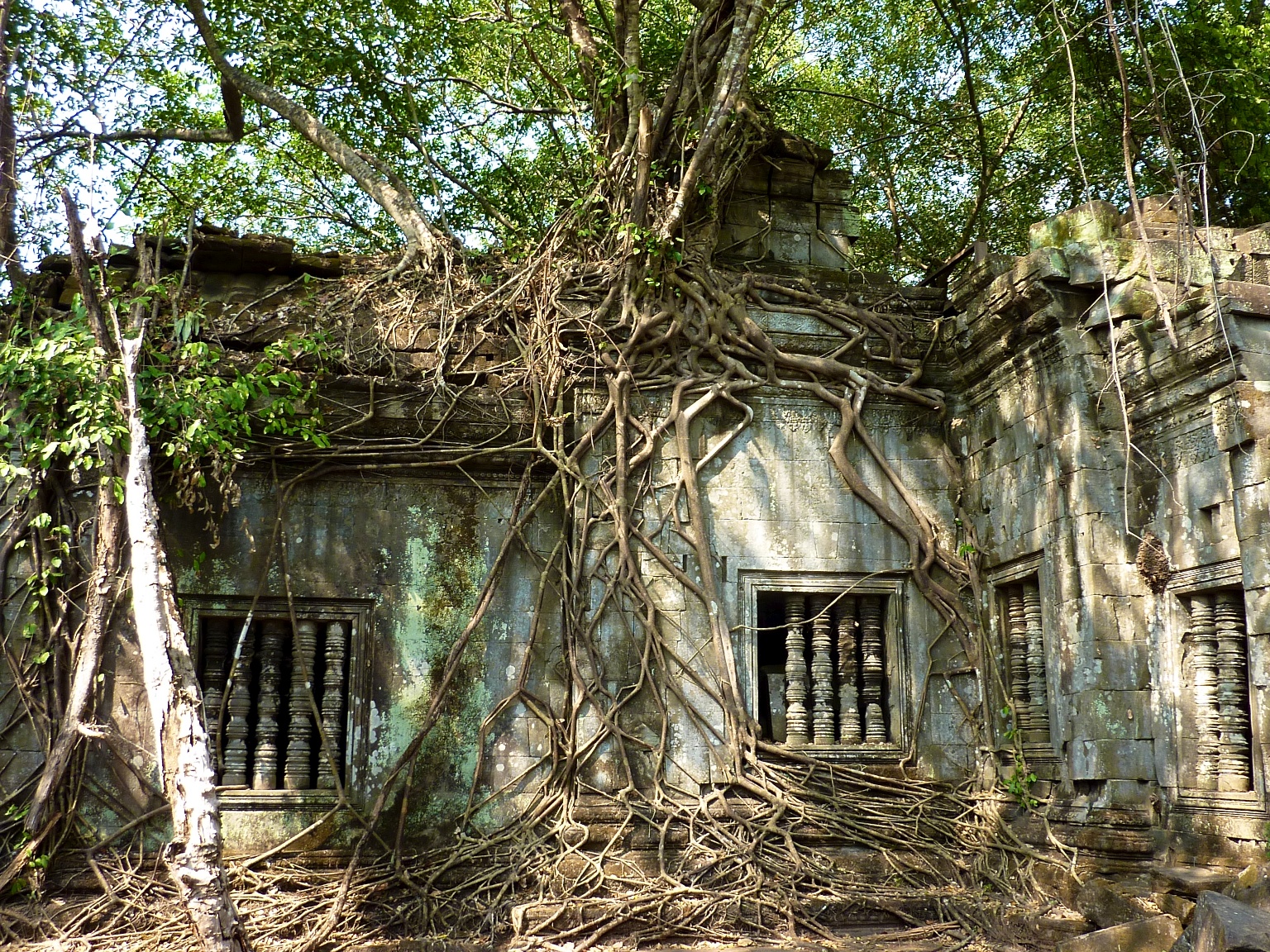
The history of the temple is unknown and it can be dated only by its architectural style, similar in style to Angkor Wat, historians think it was built during the reign of king Suryavarman II in the early 12th century. The roots of the trees were taking over their ruins.
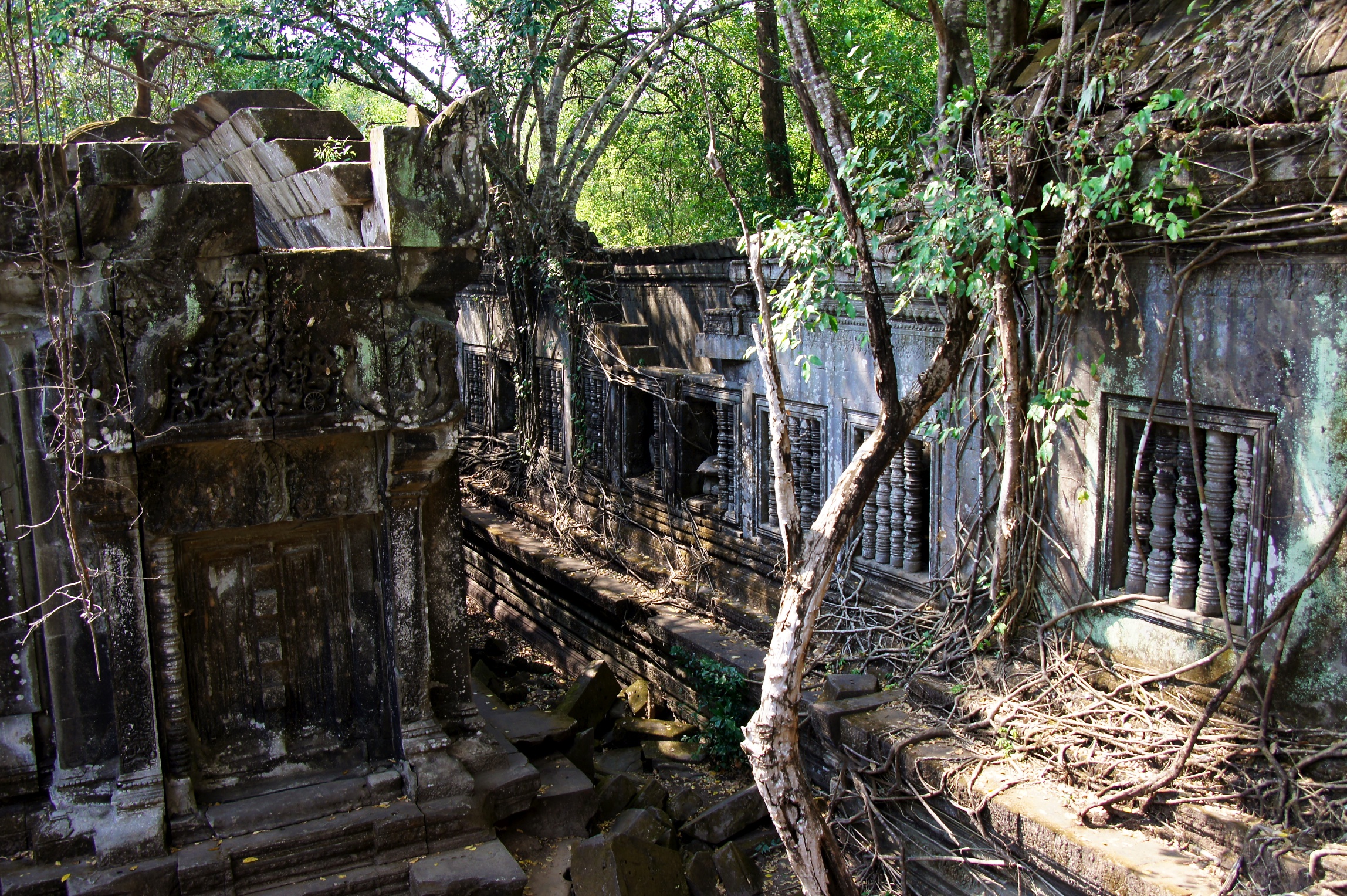
This temple had such an erie feeling to it. Again, we were amazed at how we were allowed to climb all over the ruins – no railing to stop us from falling of the edge!
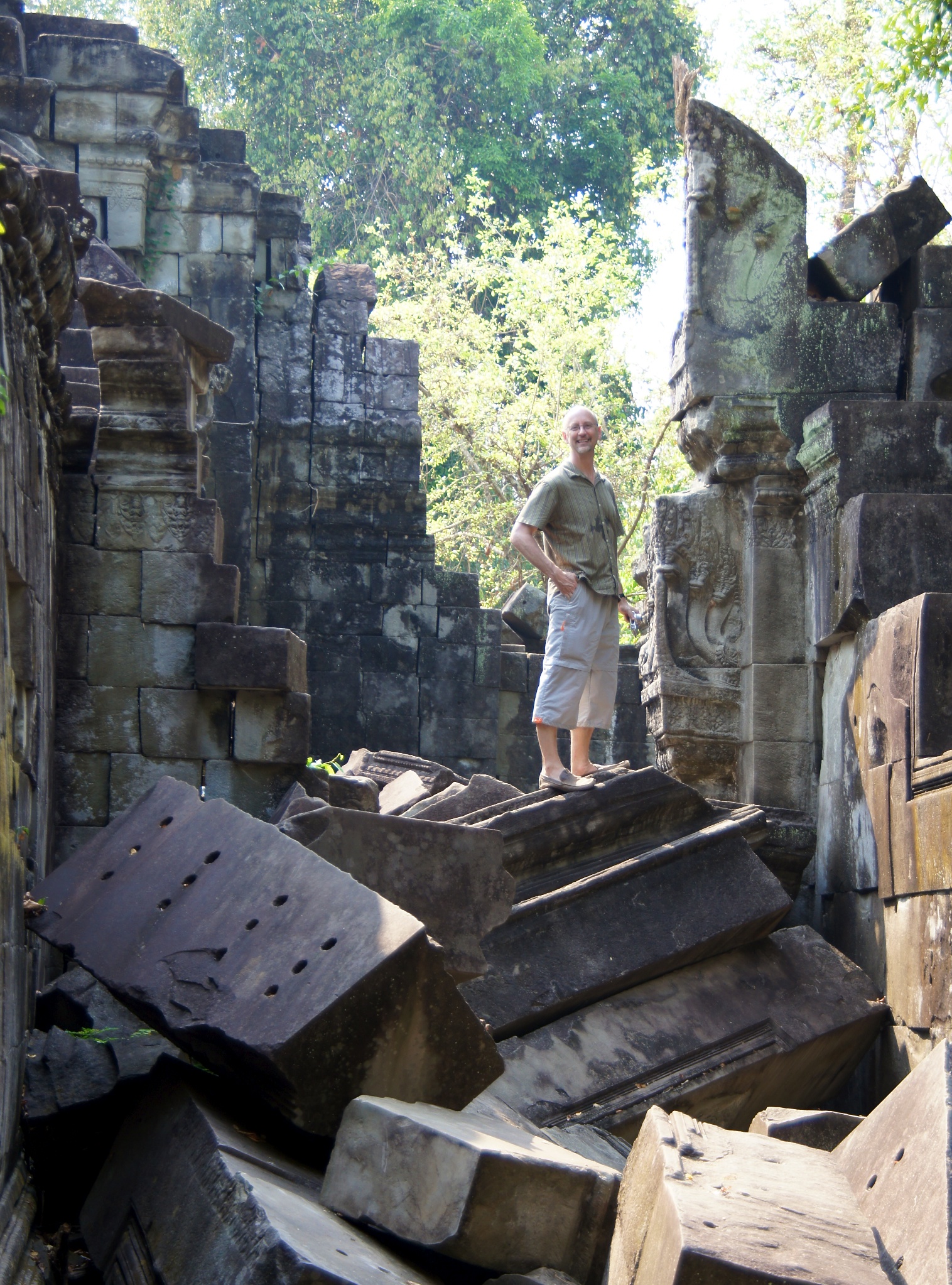
I felt more comfortable sitting down when I was near the edge.

There were many beggars, both adults and children wanting to be our guide. This was the only temple were we experienced this.

We kept saying no to their offers, but one man just started following us around pointing at things – giving one word descriptions and telling us what direction to go in. He became our unofficial guide.
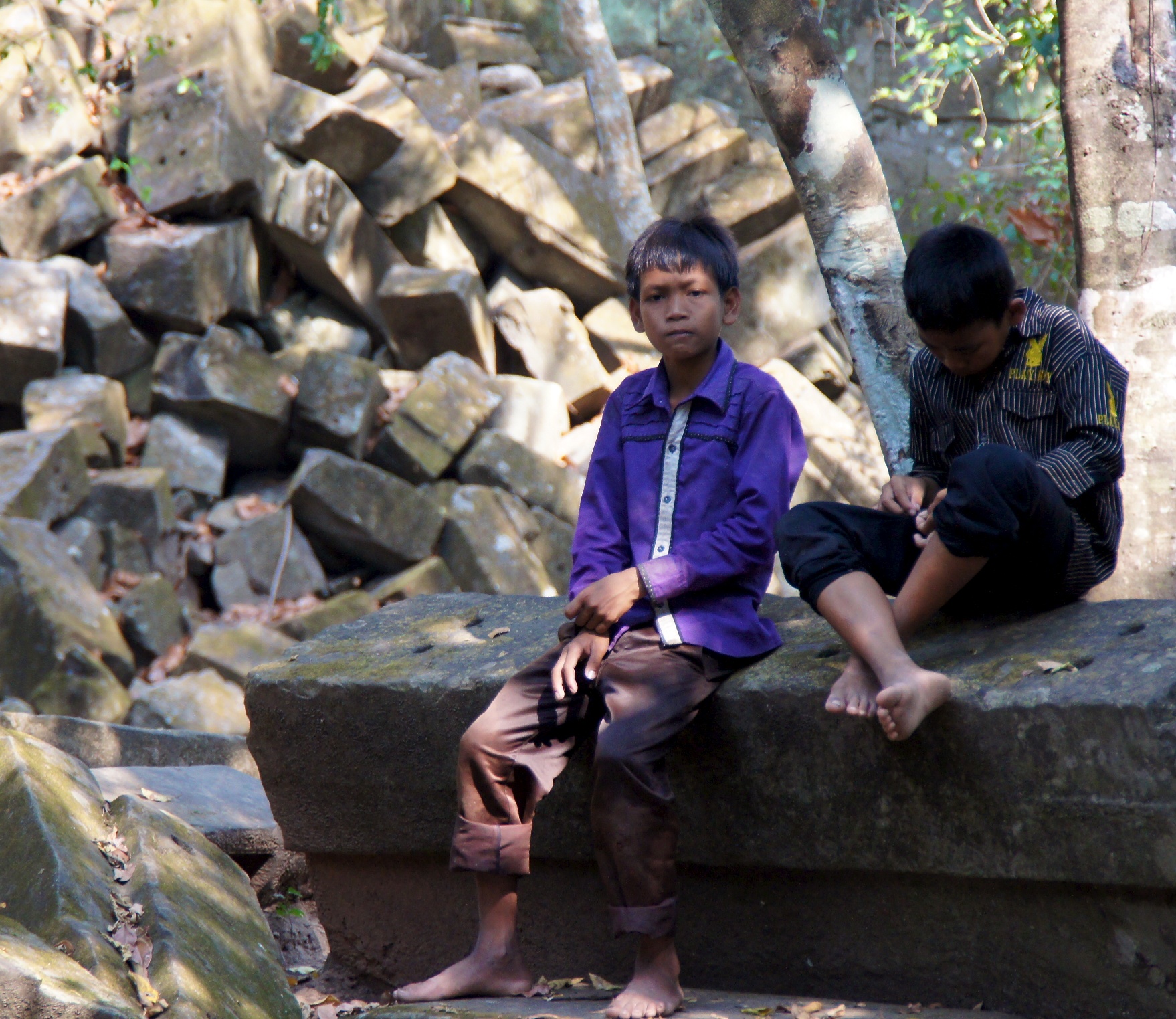
At first we were annoyed but then we embraced him as he would not leave. At this point, it became humorous. And in the end, the temple was so complex, he was actually helpful so we gave him a tip.

An interesting sign at this temple. We all have heard about land mines, but to see this sign was pretty eye-opening. And the area we were walking on was cleared just four years ago.

As usual we took too many photos 4000 in Cambodia. I put a few more of my favorite temple shots in a slide show.
And a handful on my art blog ma vie trouvee.

To end this blog……more crazy moto bike shots. How is she keeping that shoe from falling off?

Out of curiosity I looked up the law for helmets on moto bikes in Cambodia – as of 2009 it is a law for only the driver to wear one.

But what about all that precious cargo! How cute is he?

We hope you enjoyed all of our photos of Cambodia. This is a country we truely fell in love with!


 The XtraSuitcase



Leave a comment