October 2014 – Sapa, Vietnam
Sapa is a charming mountain town, surrounded by picturesque mountains and rice terraces and the most colorful ethnic minority hill tribes. Our niece, Erin visit from New York and we took her to Vietnam as her side trip.


Sapa is located in the Lao Cai province of Vietnam, close to the border of China. The easiest and most popular way to get there is by overnight train from Hanoi (there are no flights).

What an adventure it was! There are four beds in each car and you have to pay for each individually. We wanted the car to ourselves so we purchased all four beds. It was cozy enough with family… I can't imagine it with a stranger. It was a rough ride and very little sleep took place!

Day one: A walk in the rice fields
The journey was worth it as the area is stunning. The terraced rice fields are often ranked as some of the world's most beautiful.
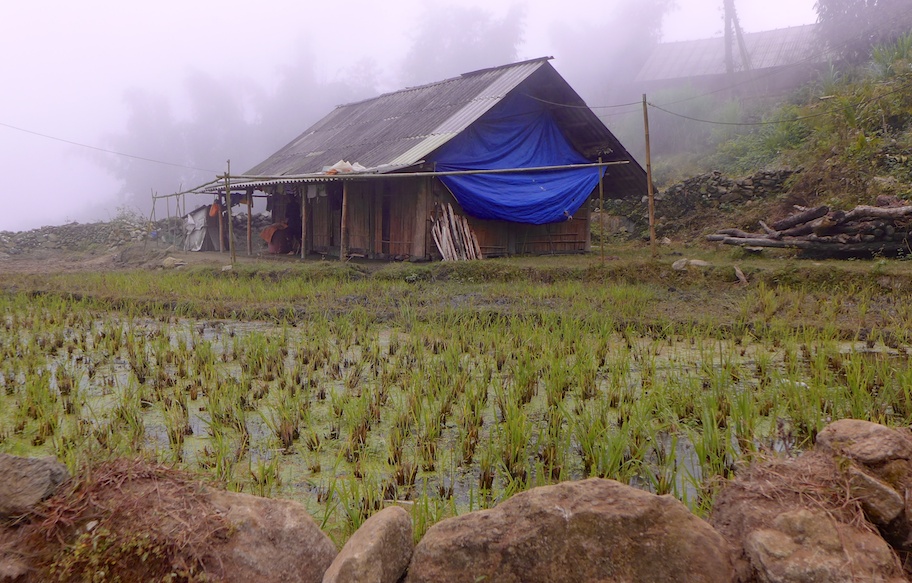
Before the 1990s, the town's economy was mainly based on growing rice. Now, they rely heavily on tourism. Sapa’s entire population is less than 36,000 people but is visited by over 200,000 tourists.
Erin's first encounter with a water buffalo!

Most of the people who live in Sapa are of ethnic minority groups. There are mainly 5 ethnic groups: Hmong, Dao, Tay, Giay and Xa Pho. Most live in nearby villages around Sapa, coming to town mainly to shop or to sell their products.
Mee, our guide for the day, is from the Black Hmong tribe. The Black Hmong are famous for their dark bluish-black indigo fabrics and embellished embroidery.

In the photo below, it shows Mee preparing thread for dying and weaving. She did this non-stop as she walked and told us about the area. Now that is multitasking!

Erin is tall US standards, but she is VERY tall by Asian standards. Wait a minute….. I am tall by Asian standards – all 5'3" of me!

The three ladies on the right followed us the entire day. They spoke very little English. You can try to shoo them away, but they hang on. It is unspoken that you just adopt them for the journey and buy small tokens from them at the end. It is a gentle way of begging.

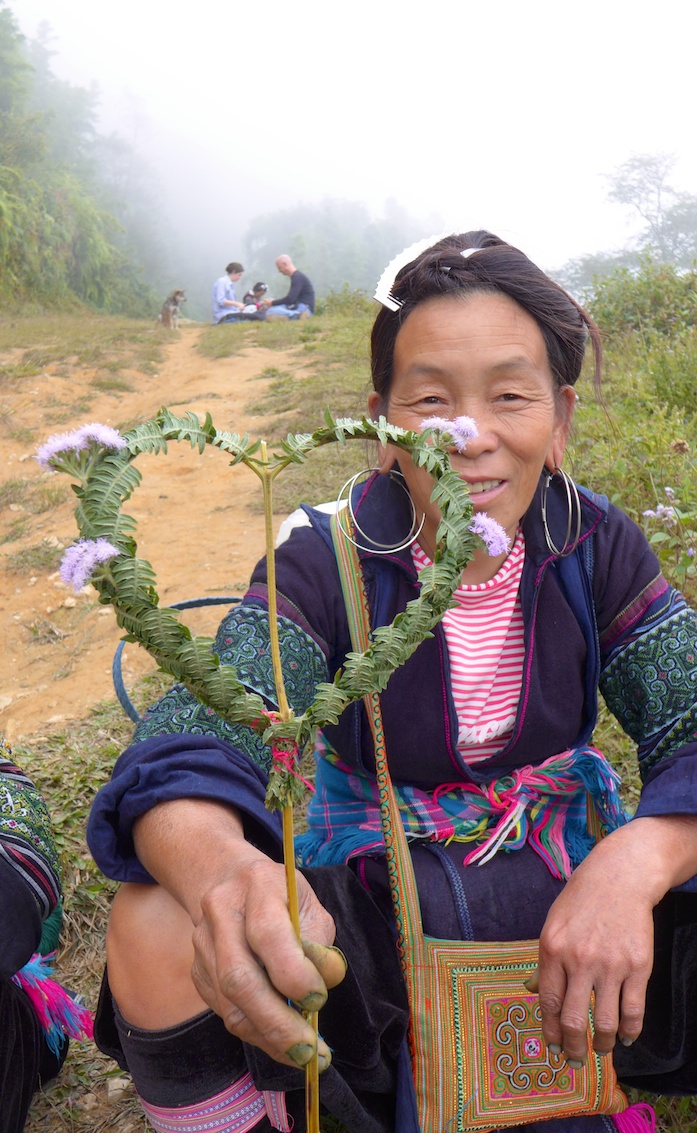
They created little presents for us along the way, which were quite creative and resourceful using natural supplies.


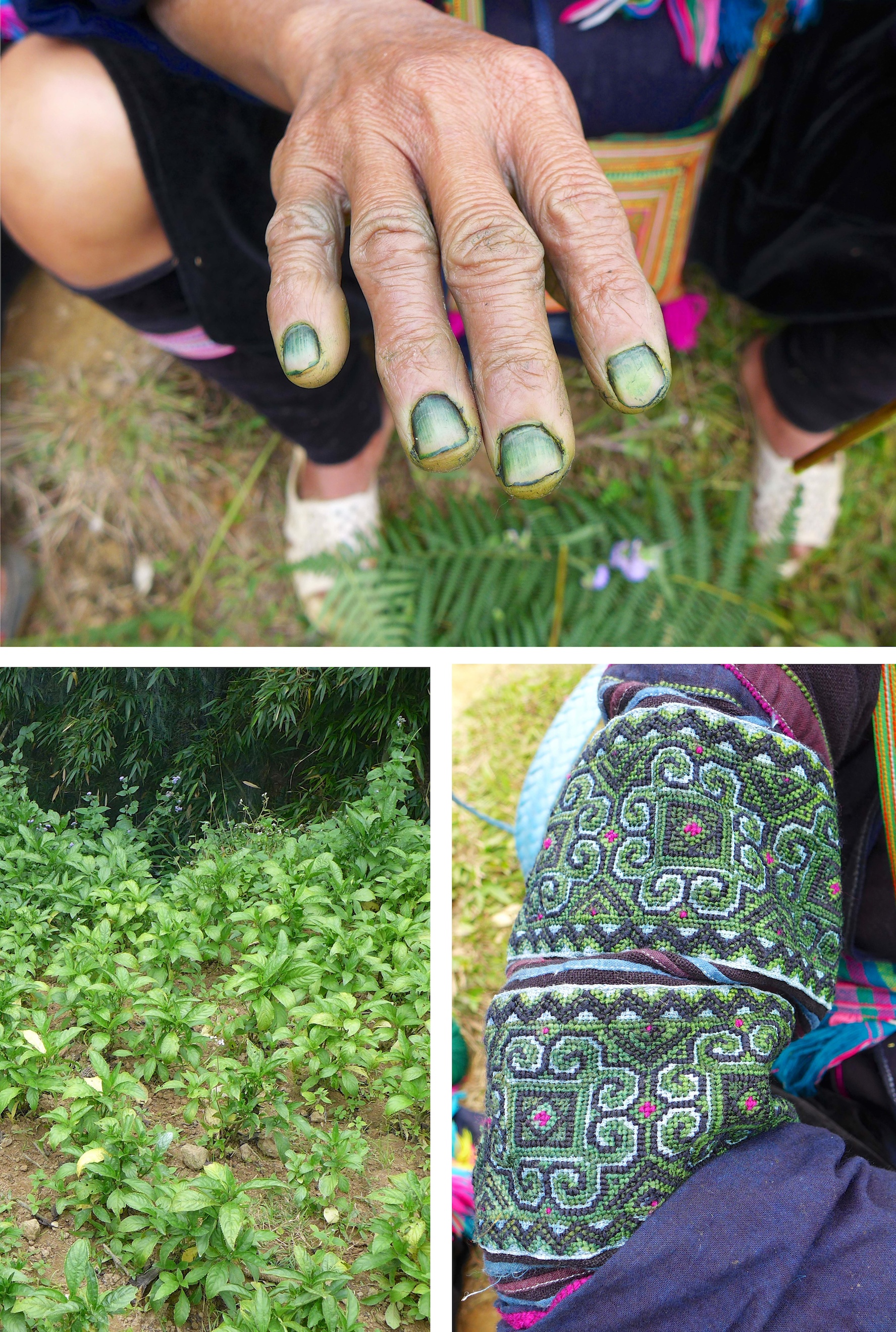
The indigo plant is native to the Sapa region and is still used today to dye the deep blue fabric of their costume. Her hands are dyed from the green grass she used to create out little gifts.
The Children
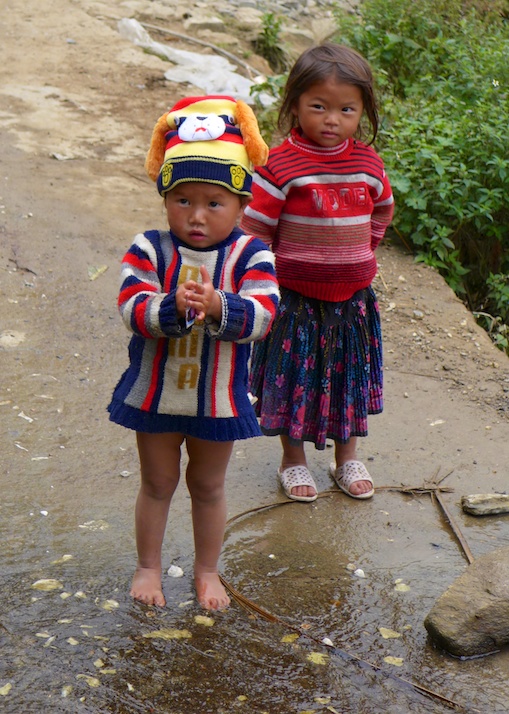
Unfortunately, many of the children do not get formal education in Sapa, their families are too poor to send them to school. They learn to speak English from the tourists. Gotta love that crazy outfit he has on!
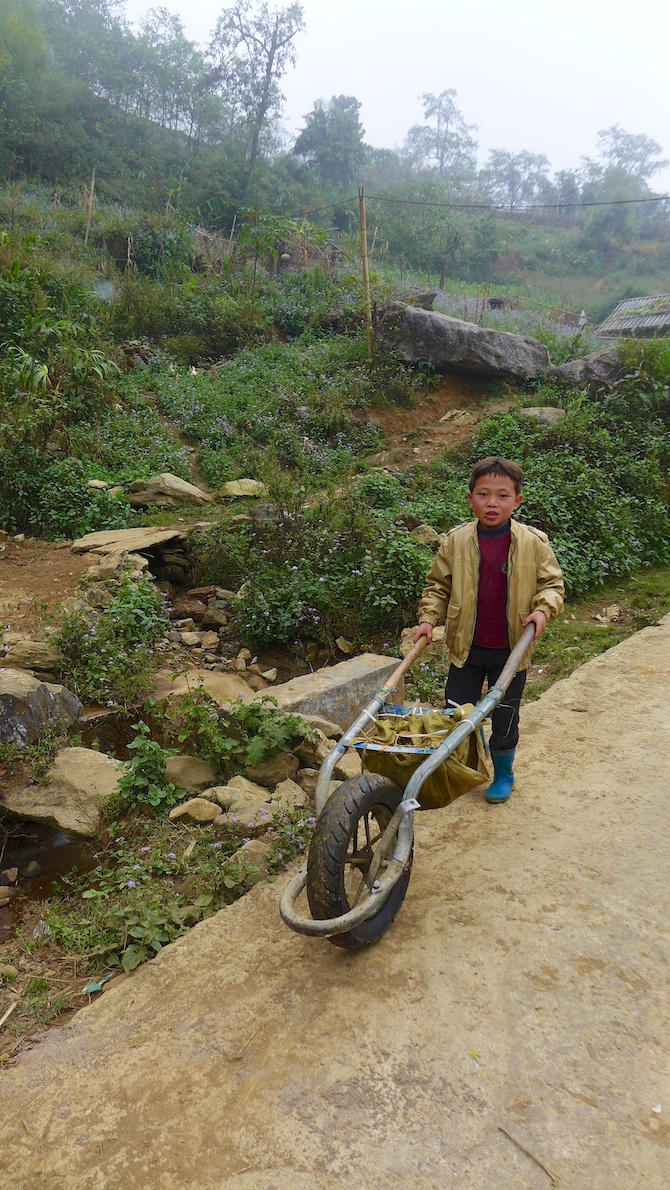
These boys look like little men going off to work for the day. Such a determined look on their faces.


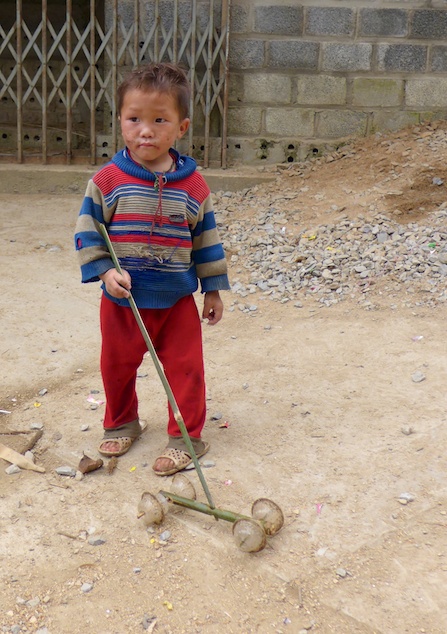
"Geez – he is trying to eat my food again"

Look closely at the photos below, where the little girls are swinging on the vines on the side of a hill… the one has a baby strapped to her back.
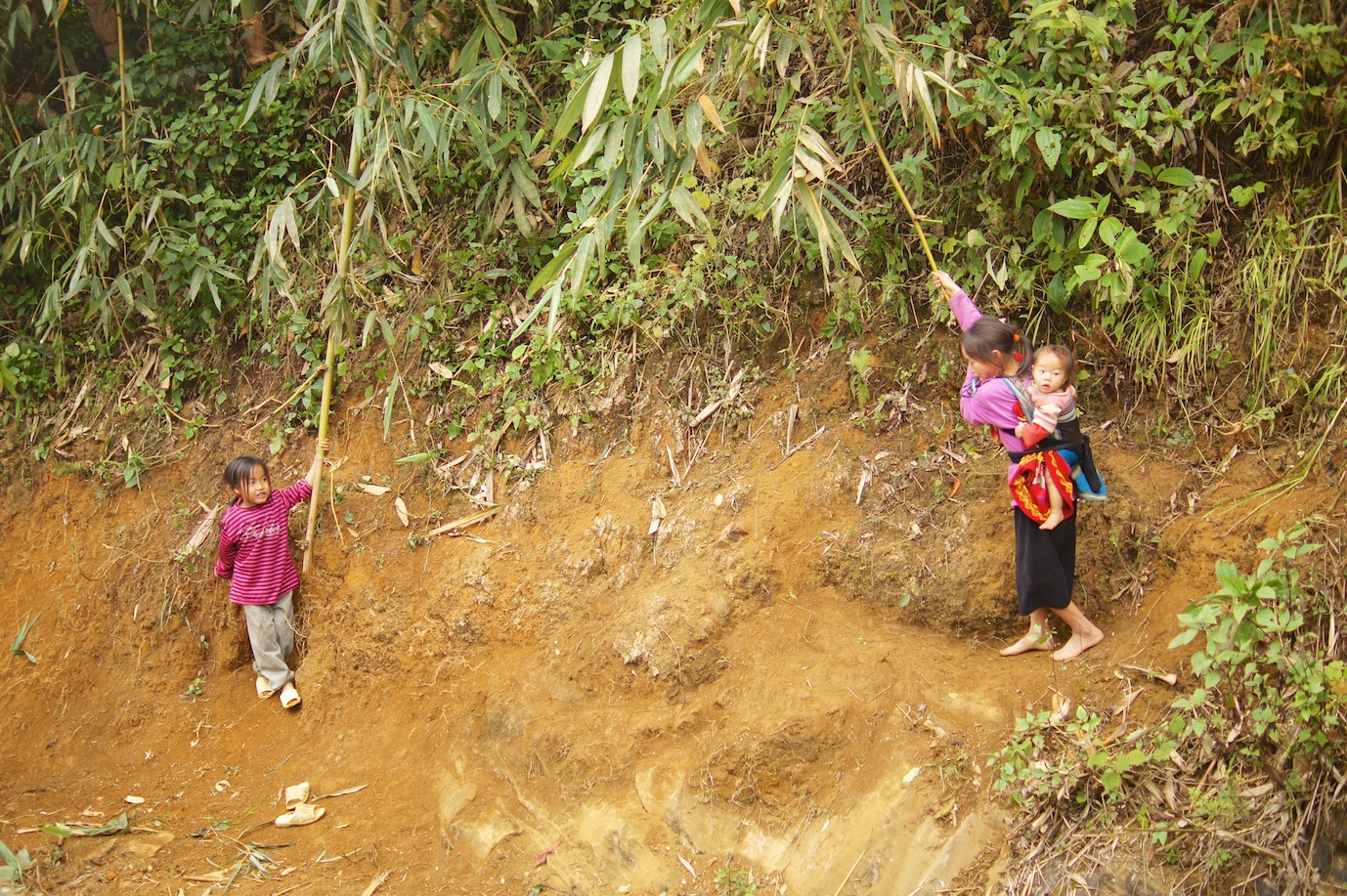

Happy little girls!

Always fun to share photos with the children.

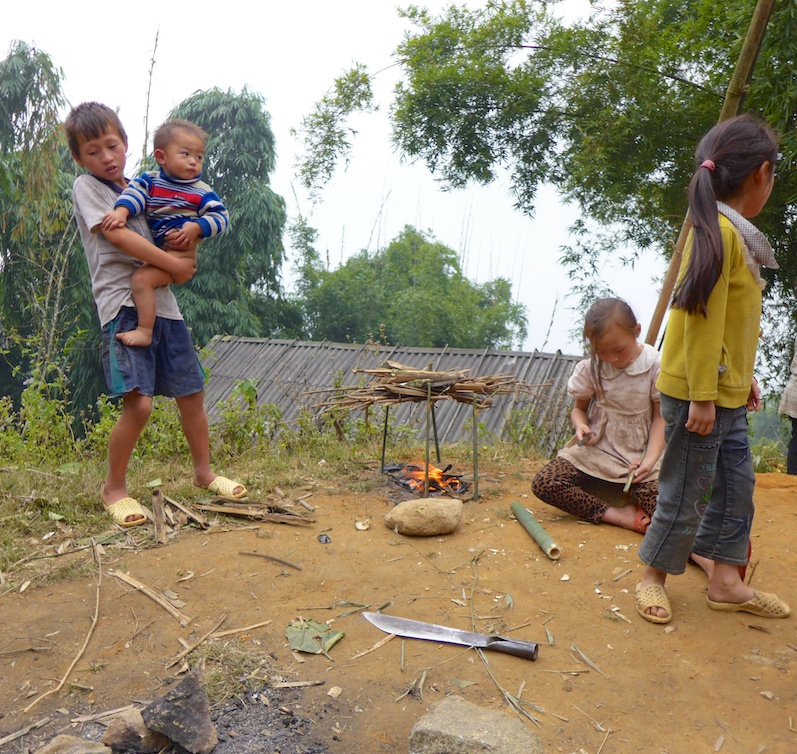
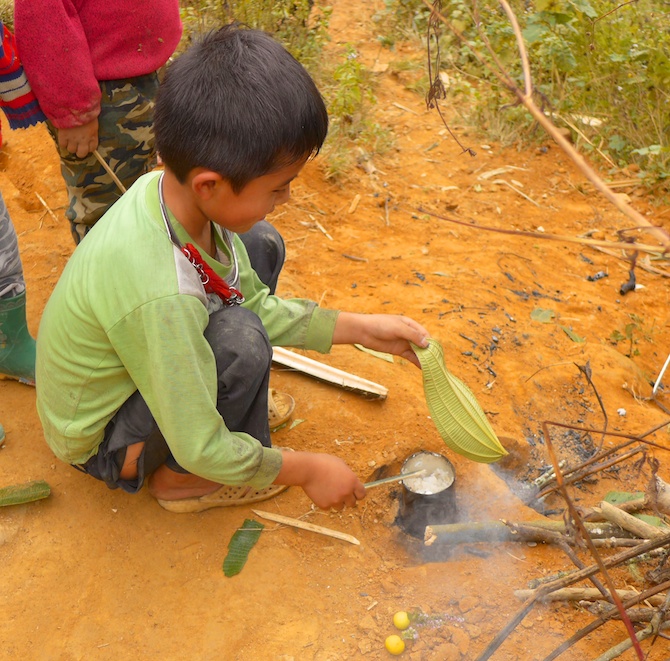
This was an interesting event we came upon. It was almost like a little educational camp. They were playing with fire and knifes, but not an adult in sight. Was it for tourist? We did not think so as they never asked for money.

Below is a young girl sewing a traditional fabric pattern. From a young age, Hmong girls are taught how to sew from their mothers and grandmothers. The better a young woman can sew, the more attractive they are for marriage.

Erin and Mee are the same age.

Day two: The Bac Ha local market
Bac Ha Market is held every Sunday and is the biggest minority market in Northwest Vietnam. It is a 2.5 hour drive from Sapa, but we felt worth the drive as the colors of the costumes were spectacular.
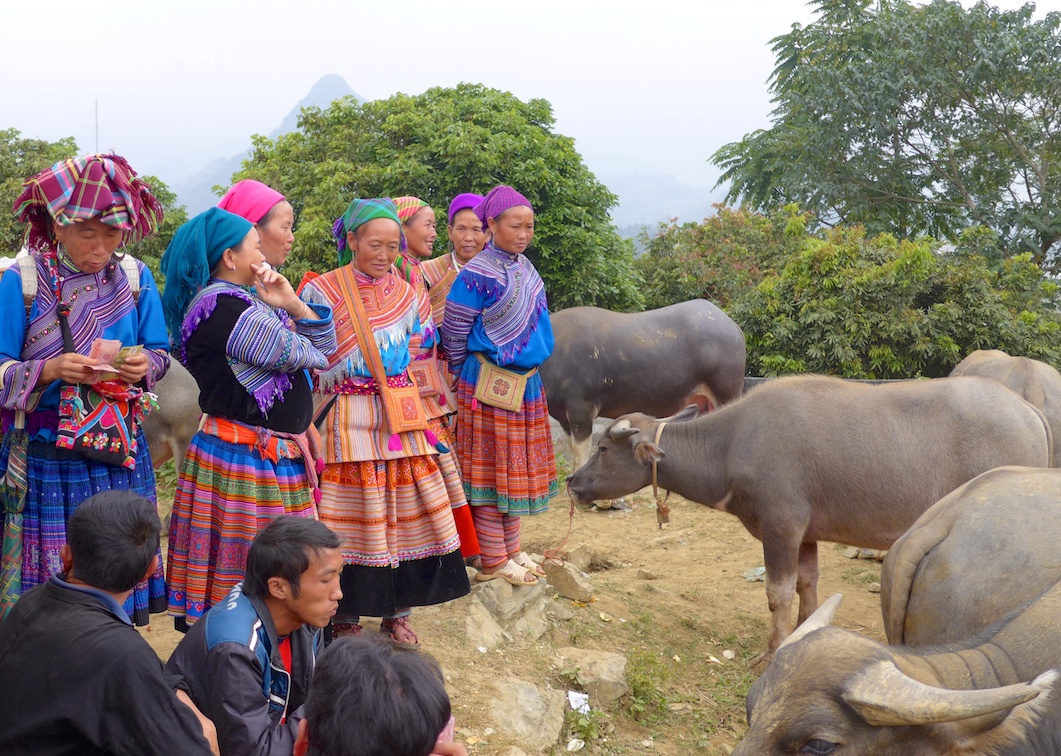
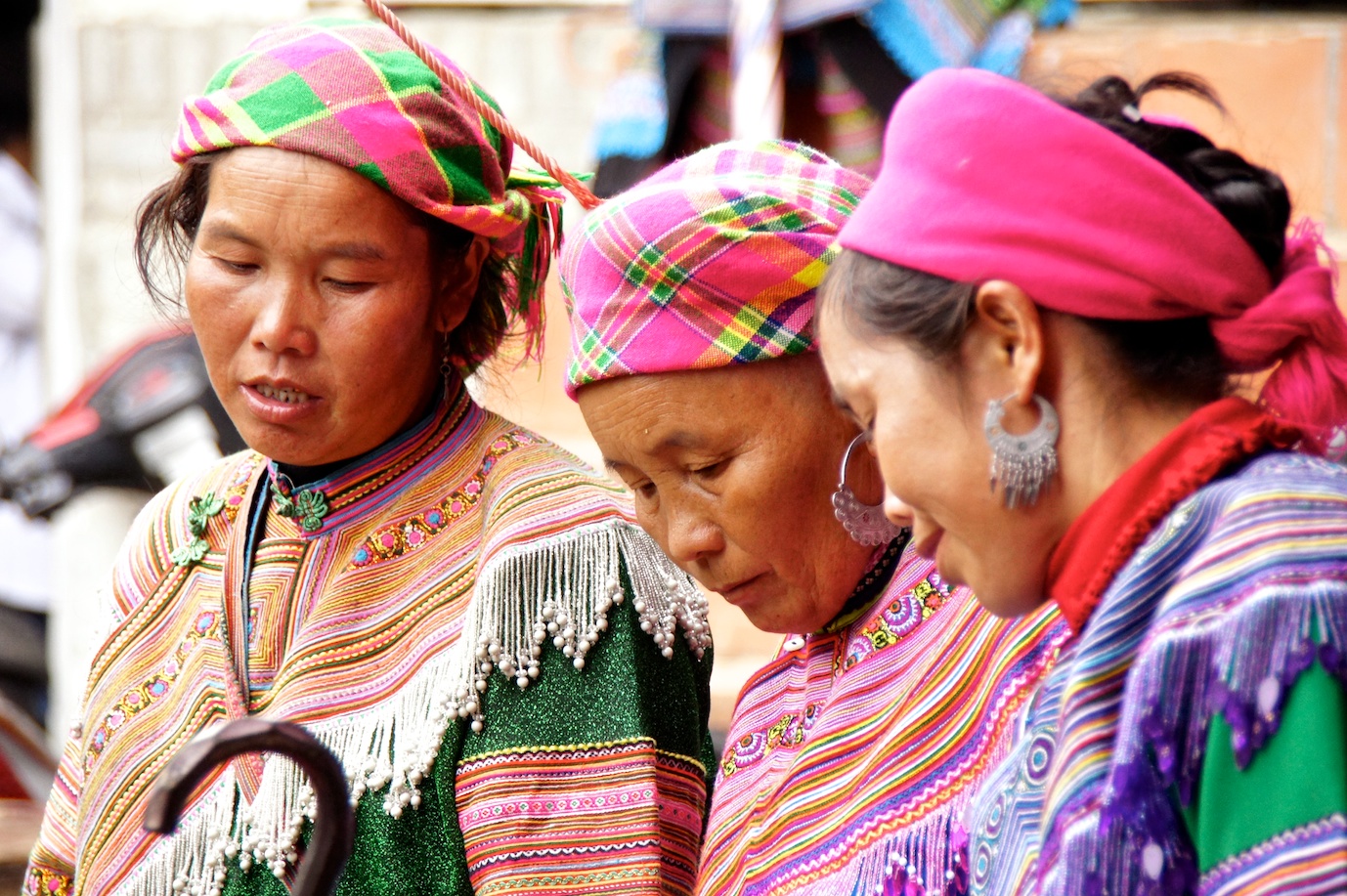
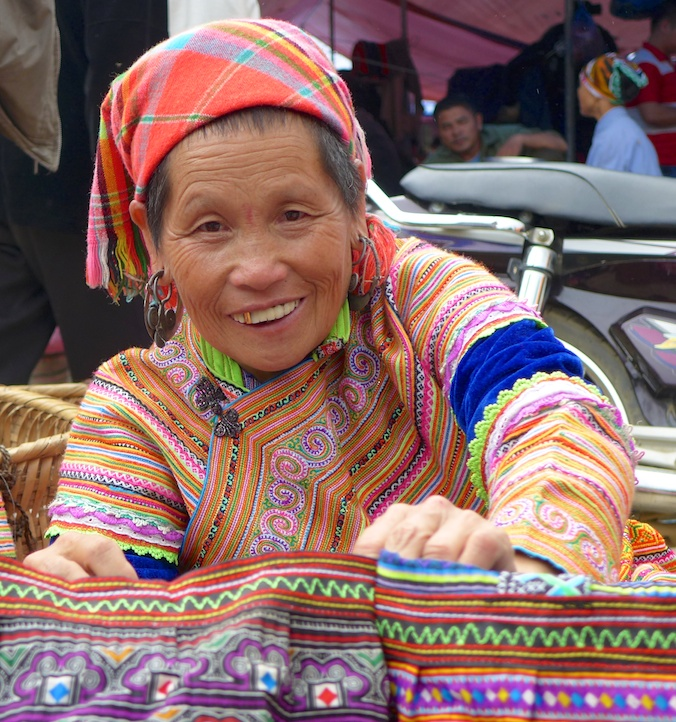
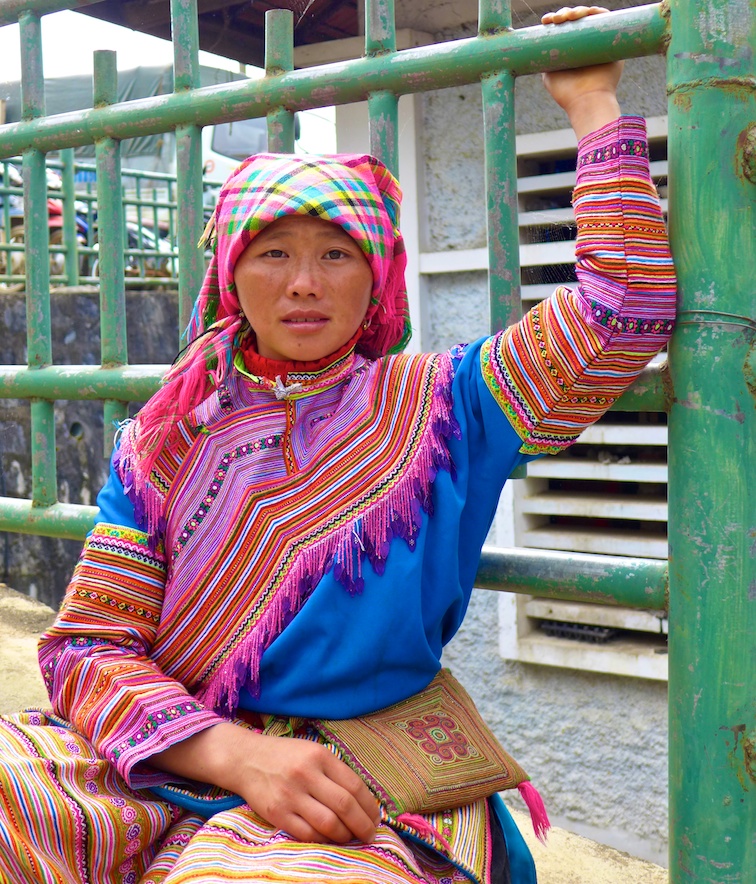
In Bac Ha, you will see the Flower Hmong minority group. Alive with the bright colors and extravagant costumes, they come from all over to buy and sell a wide variety of goods, including livestock. Although many tourists visit this market, it really is for the local people. Especially the sale of the livestock.

Erin bargaining for a purse for her mom.

Women and children
Hmong households traditionally consist of large extended families, with the parents, children and grown children (son with their wives) all living under the same roof. Households of twenty-plus family members are not uncommon.
Women are responsible for all household chores, cooking, child care, and farming tasks such as feeding and cleaning the animals.

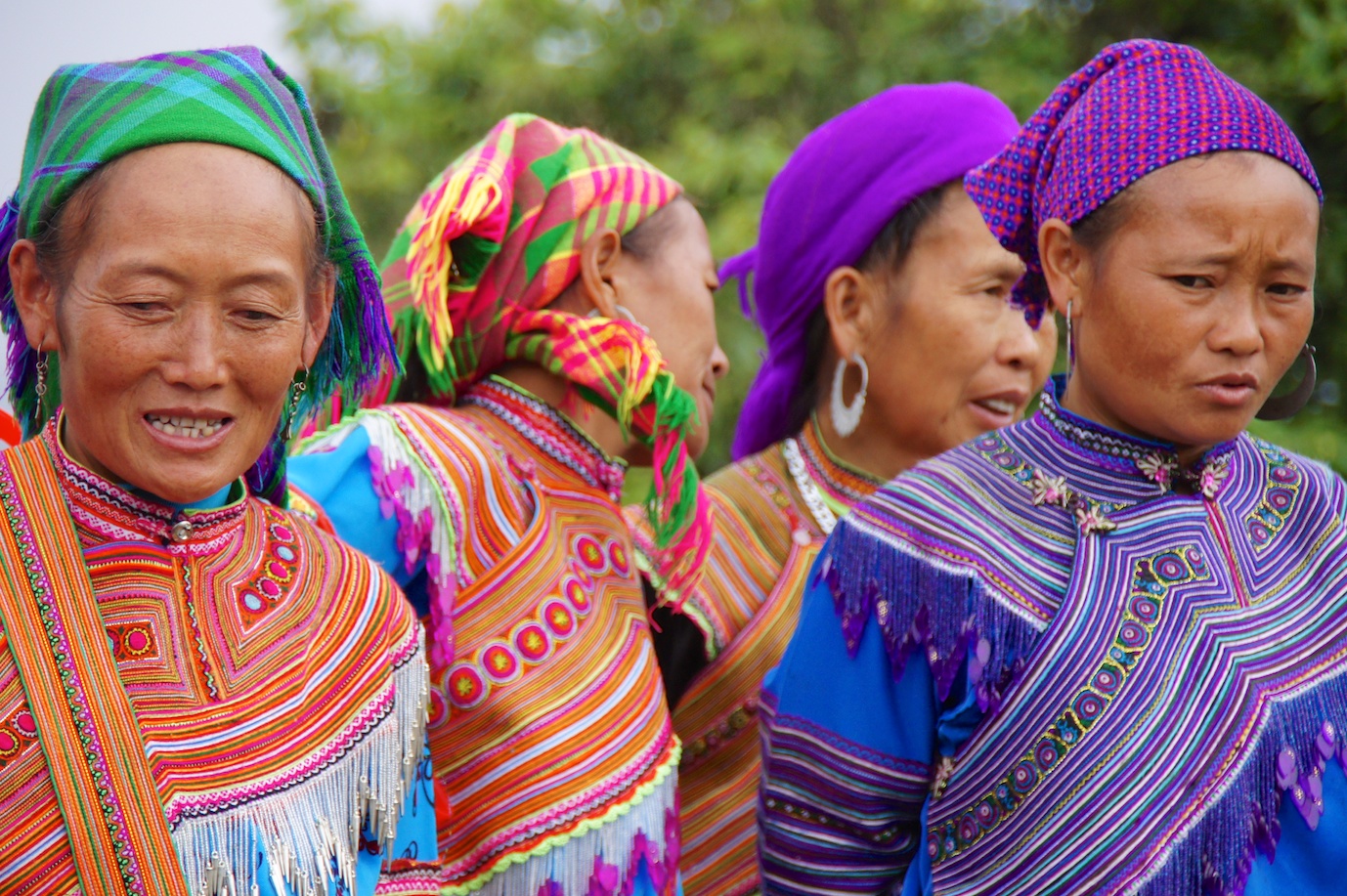

I am in love with the colorful fabrics and outfits they wear. They do not dress for tourists, this is their everyday attire.




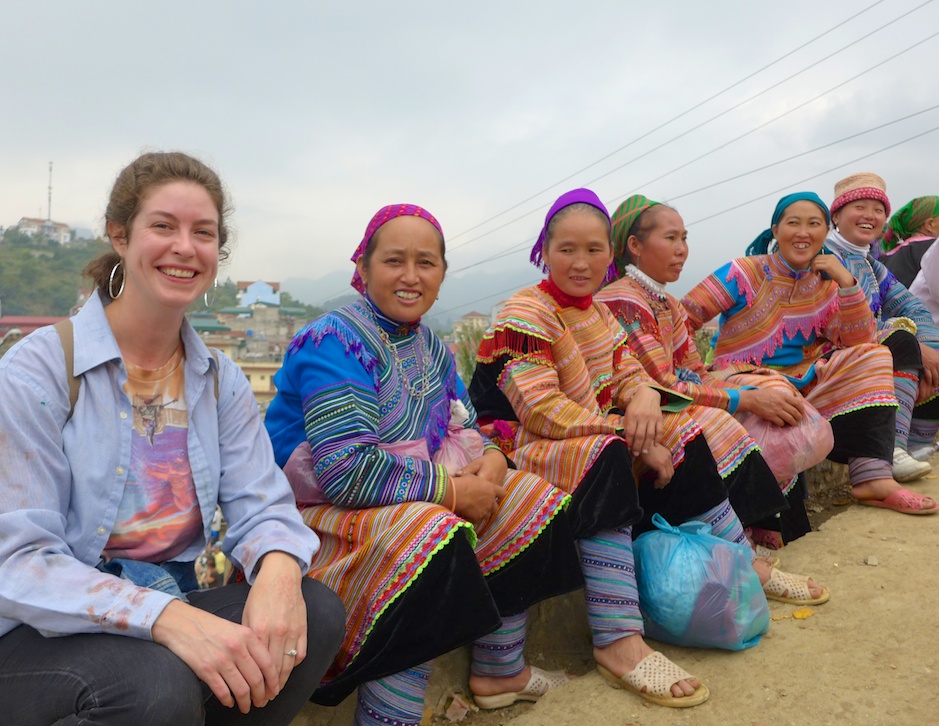
Erin with her new friends.
A cock fight (not for the fainthearted)
This was the first real cock fight we have seen. In many countries it is illegal, but I think it is only illegal to place a bet in Vietnam. We did not see any money being passed at this fight.


They did not let them fight til death.
Onto the horse sales….
The livestock sales and trade is the most authentic part of the market because a tourist obviously can't take one home.

Our guide for the market and the rest of the day was Zee. She was very witty and funny. What is the big red circle on her head? It was for her headache. They place the end of a burning buffalo horn on it to help it go away. What was her headache from? Drinking too much moonshine!
The bell Zee is holding is from a buffalo – Erin bought it. A fun souvenir!

We missed the peak harvest season, but we still saw some beautiful golden colors from the rice fields.

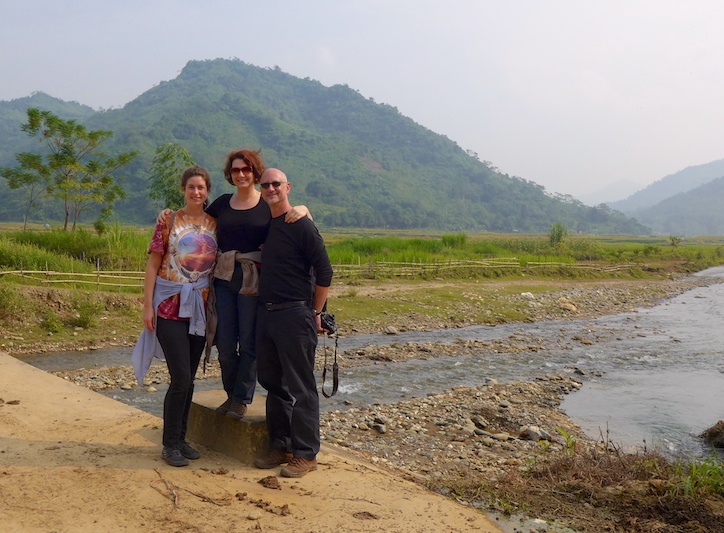
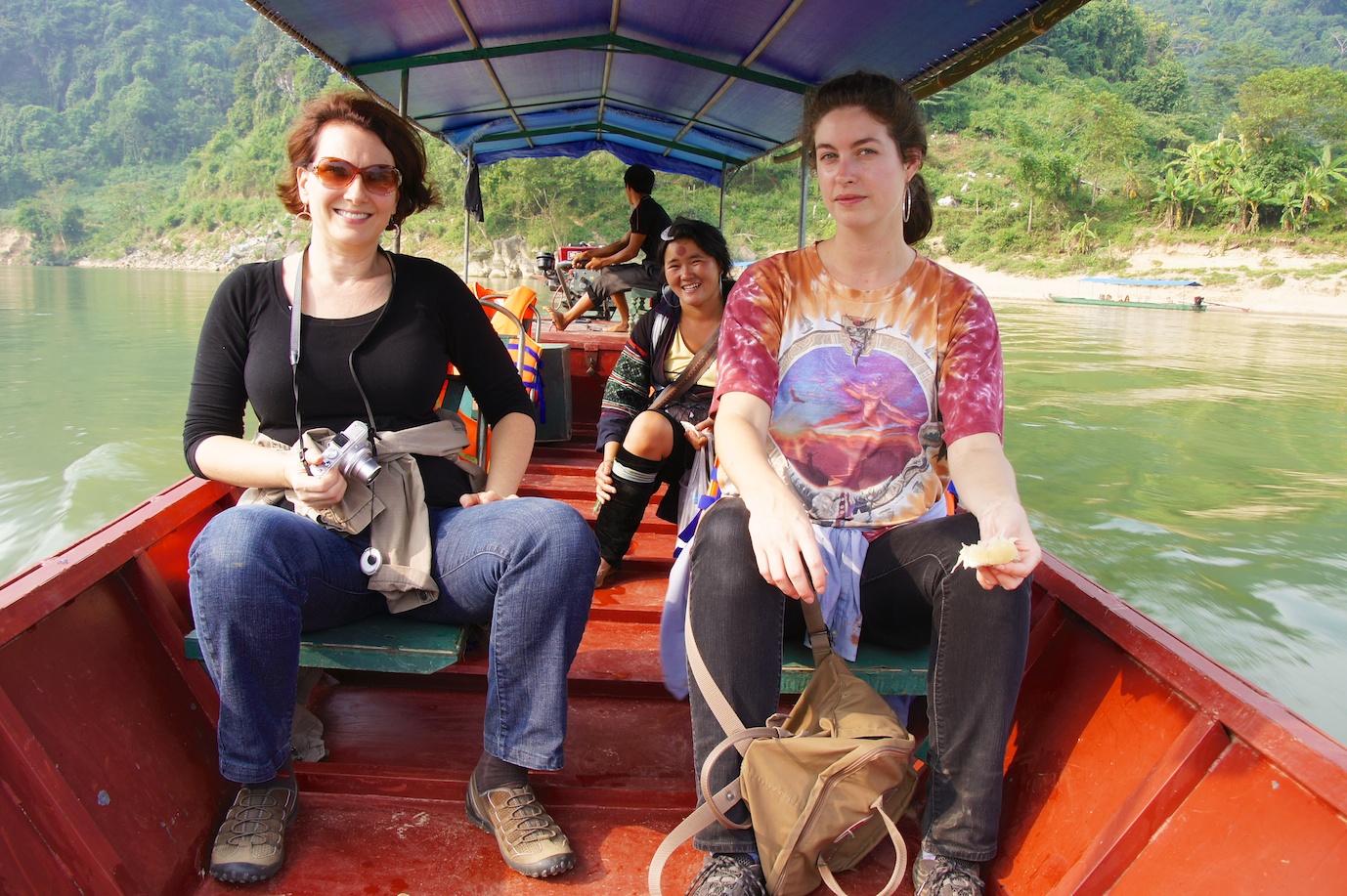
One of the things on Erin's "to do" list was a boat ride, so we squeezed in a short ride along the Chay River.

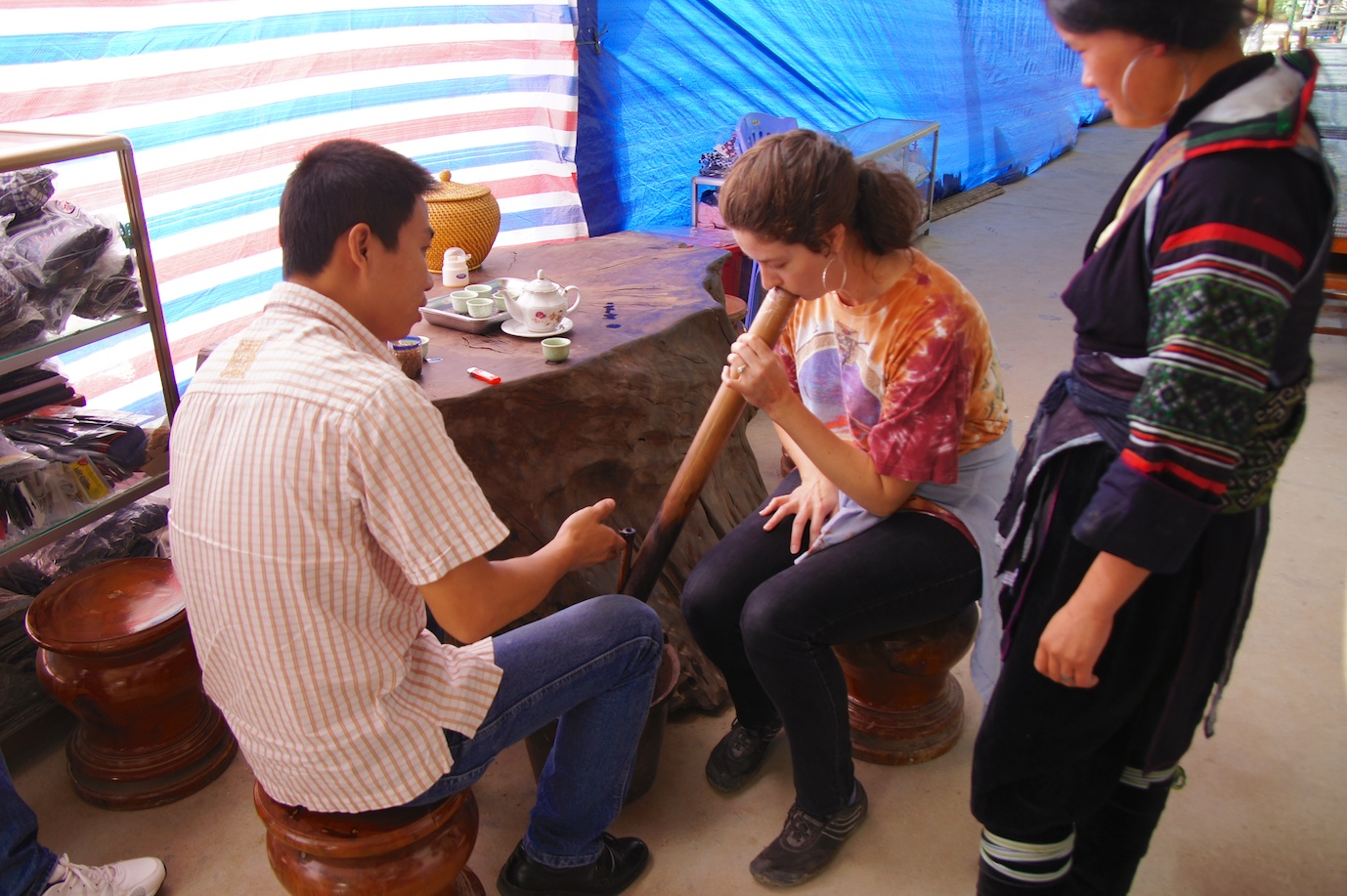
We also visited Trung Do village where the Tay people live. It was a very touristy town but still interesting as they were making moonshine.


Oh yeah, and a little hooka (flavored tobacco) for Erin, shared with our guide and our driver!
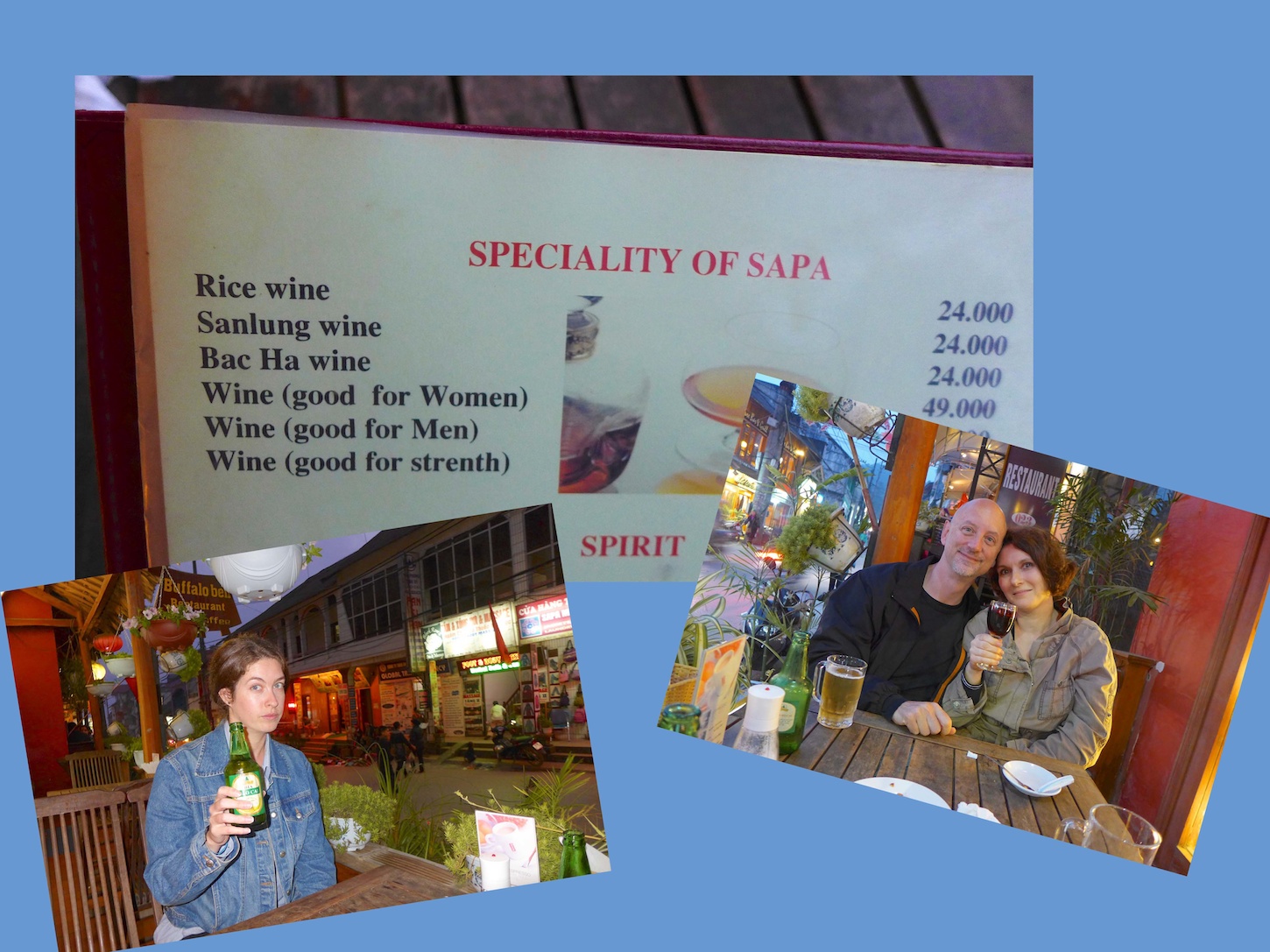
Enjoying the specialties of Sapa…
Day three
The Motorcycle ride

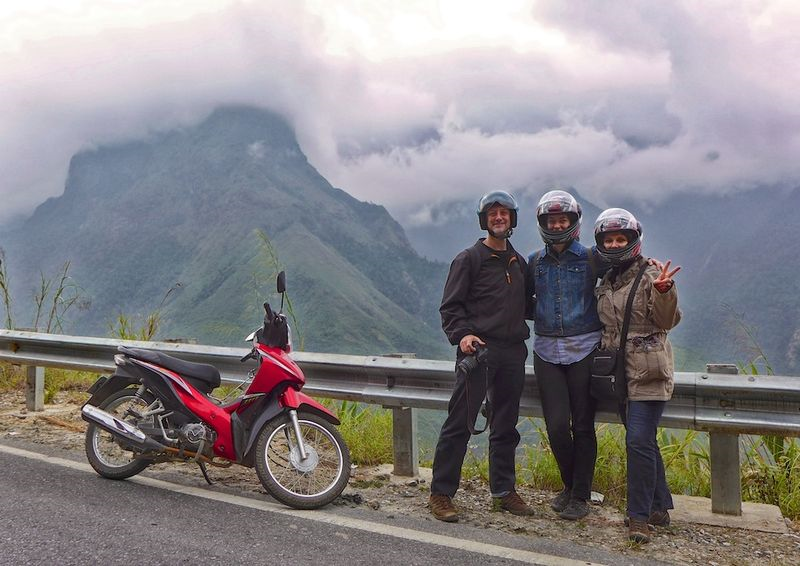
Those of you who follow me know that my new found passion is touring random Asian countries via the back of a motorcycle. I thought it would be a fun adventure for Erin! And fun it was – we would rate it up there as one of our best!
The photo above is the sweet little B&B where we stayed. Our guides met us there to begin our ride. They assigned, the teeny tiny Hmong woman to me. What? That little thing is going to hold me up on a motorcycle??? She did an excellent job!
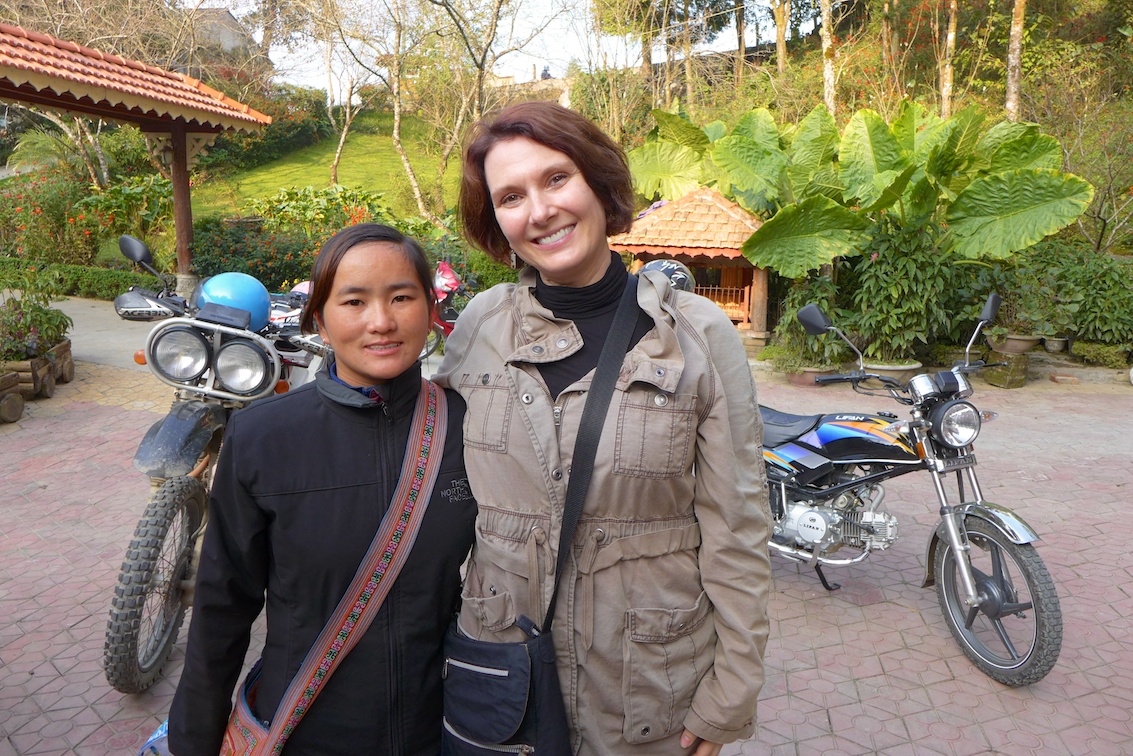
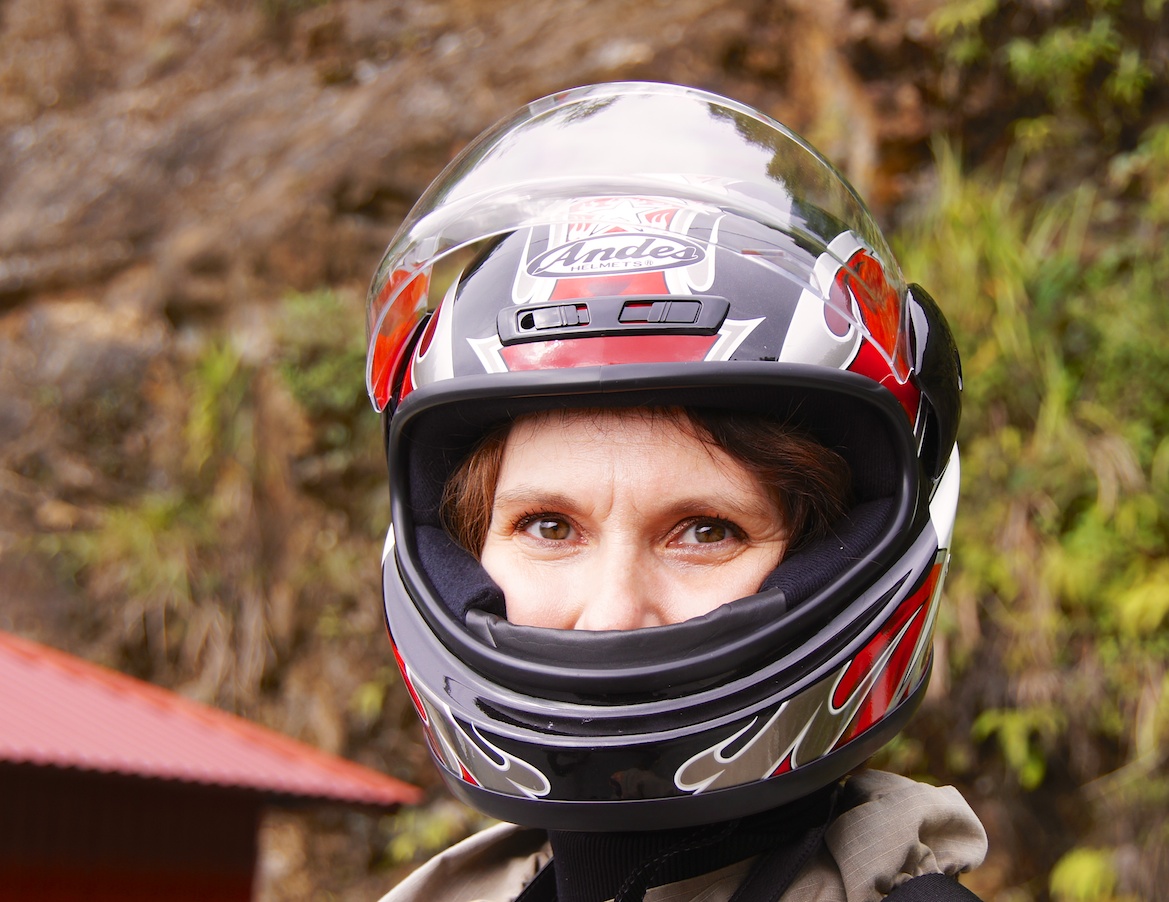
Erin looking very cool in her helmet.

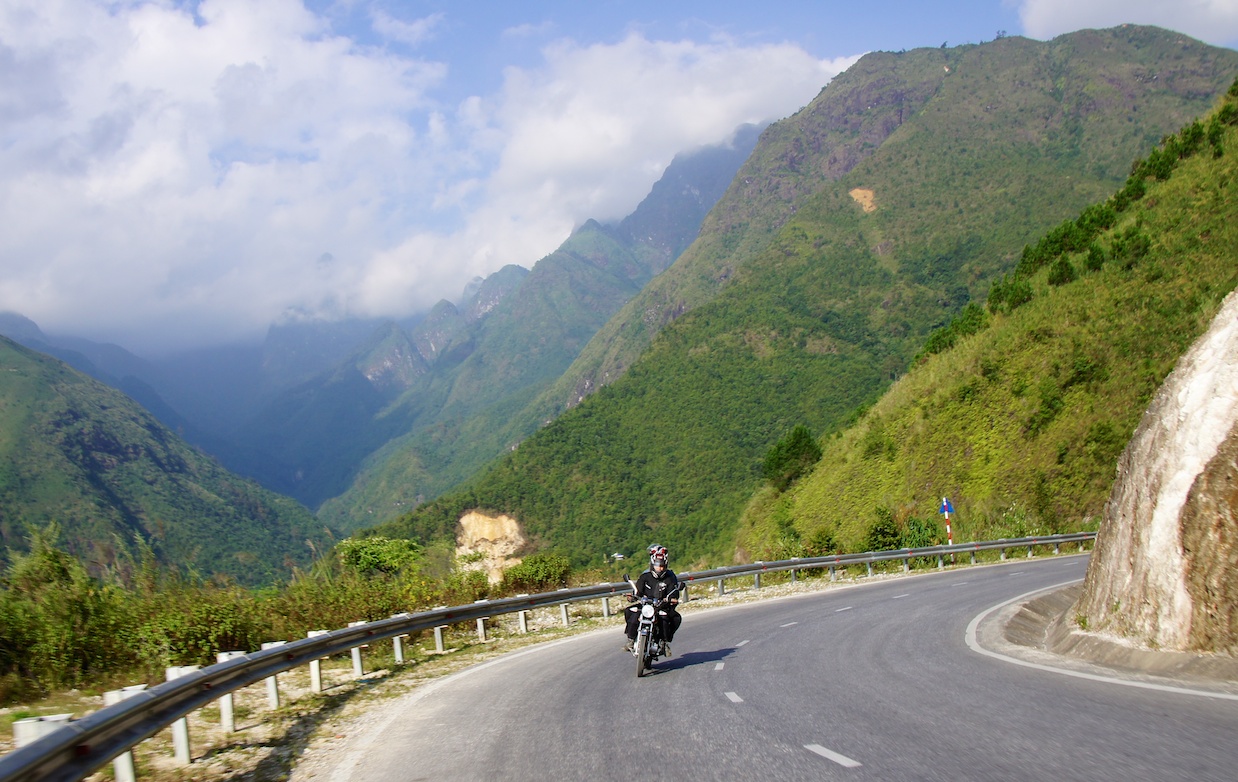
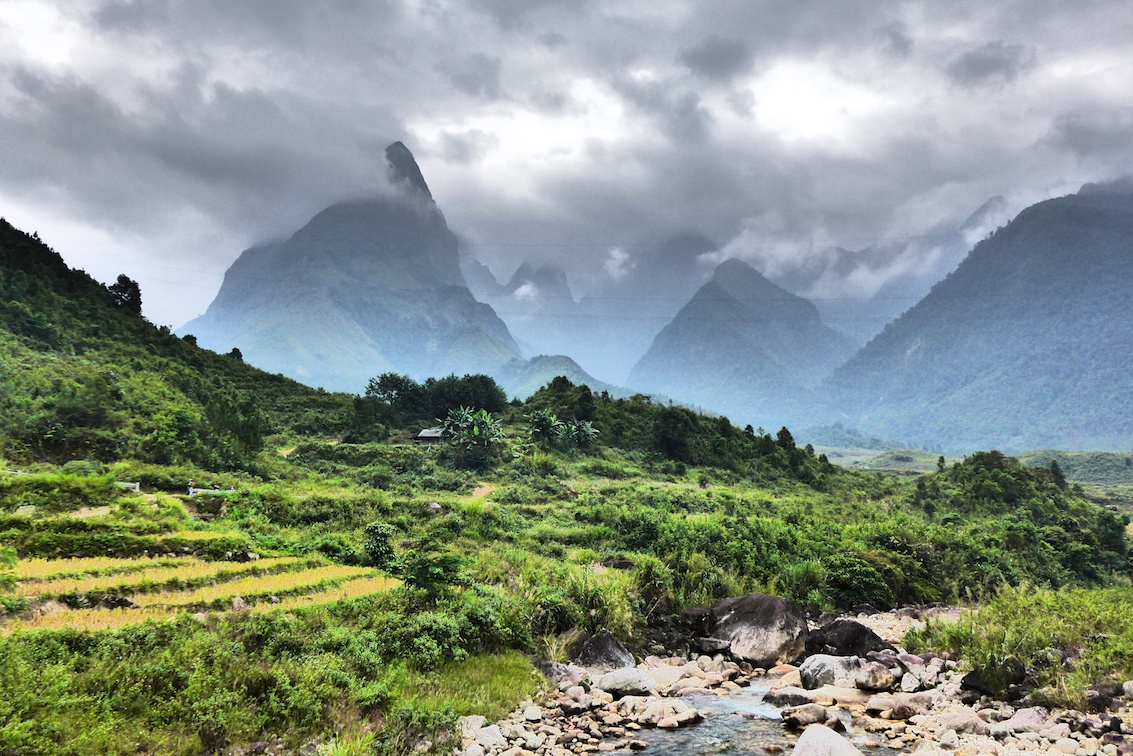
The route was amazing…..

… with some of the most scenic areas in Northern Vietnam. At one point we could see the border of China. We contemplated hoping over to give Erin another country to add to here list, but it was not that simple.
An advantage of taking a motorcycle tour is they can get you to remote areas. This means no other tourists! We got to visit the home of a Lu family.
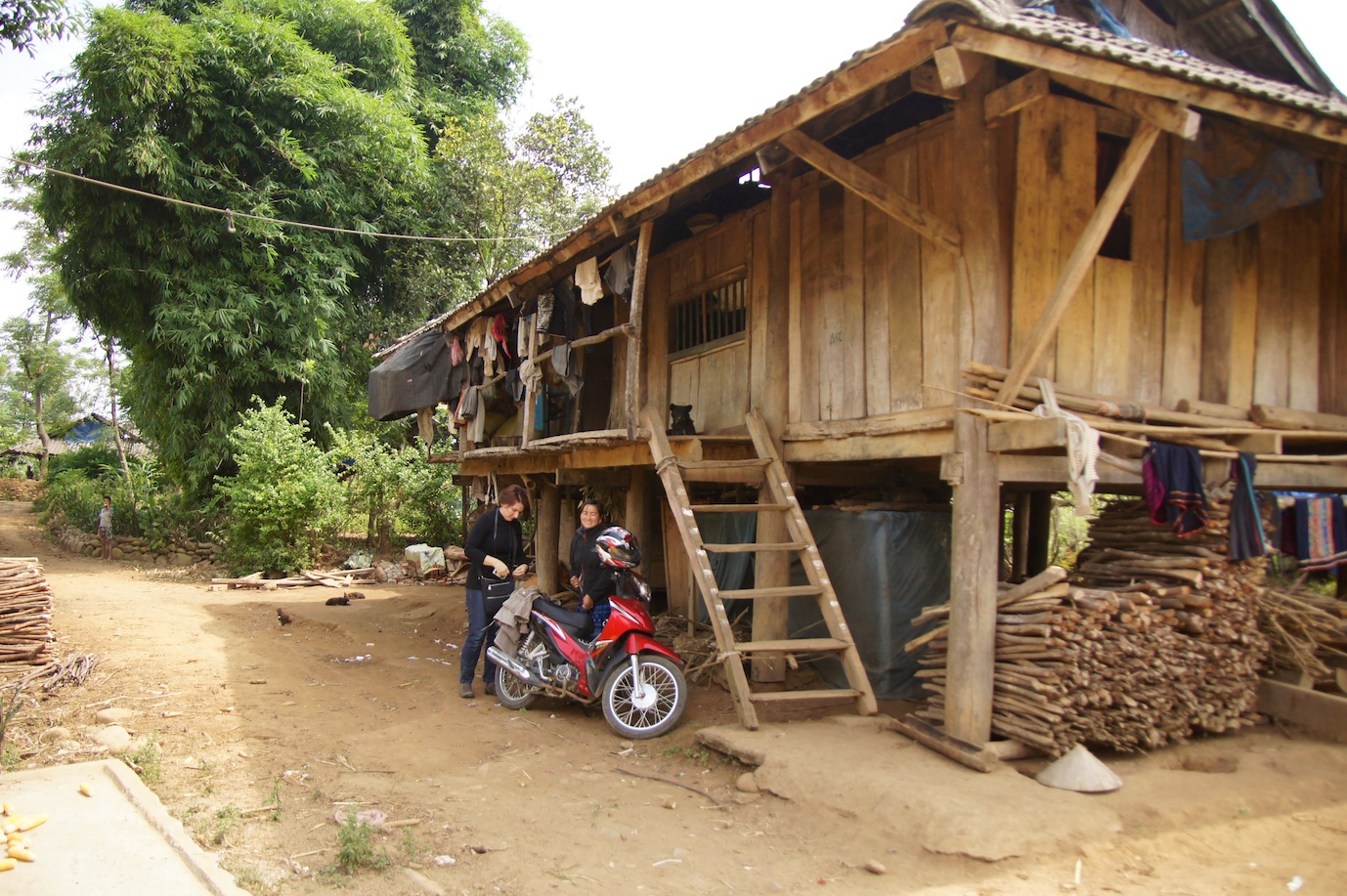
It was a very sparse, simple home built on stilts. The guides are trying to establish a relationship with this family to help them sell their handwoven pieces at the market.
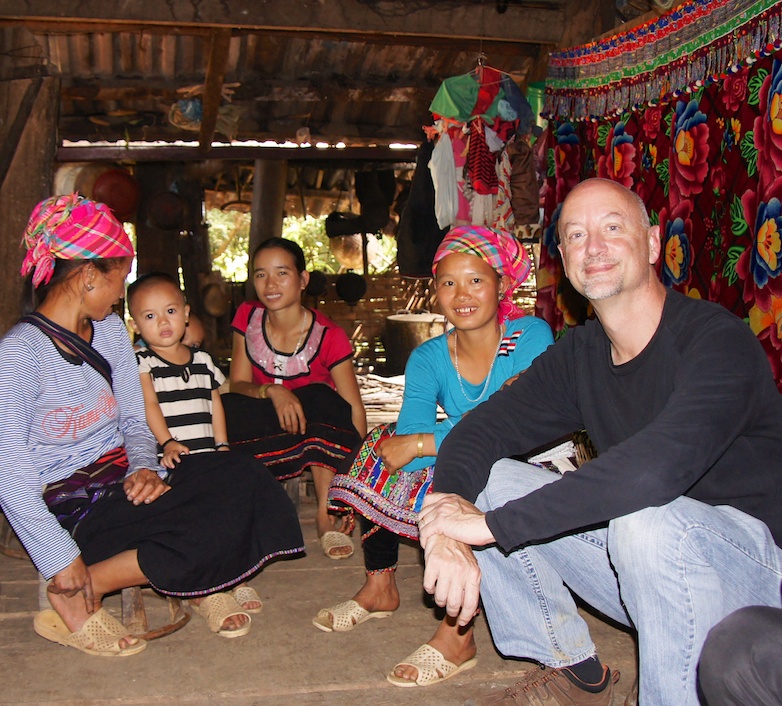
We enjoyed playing with the children.


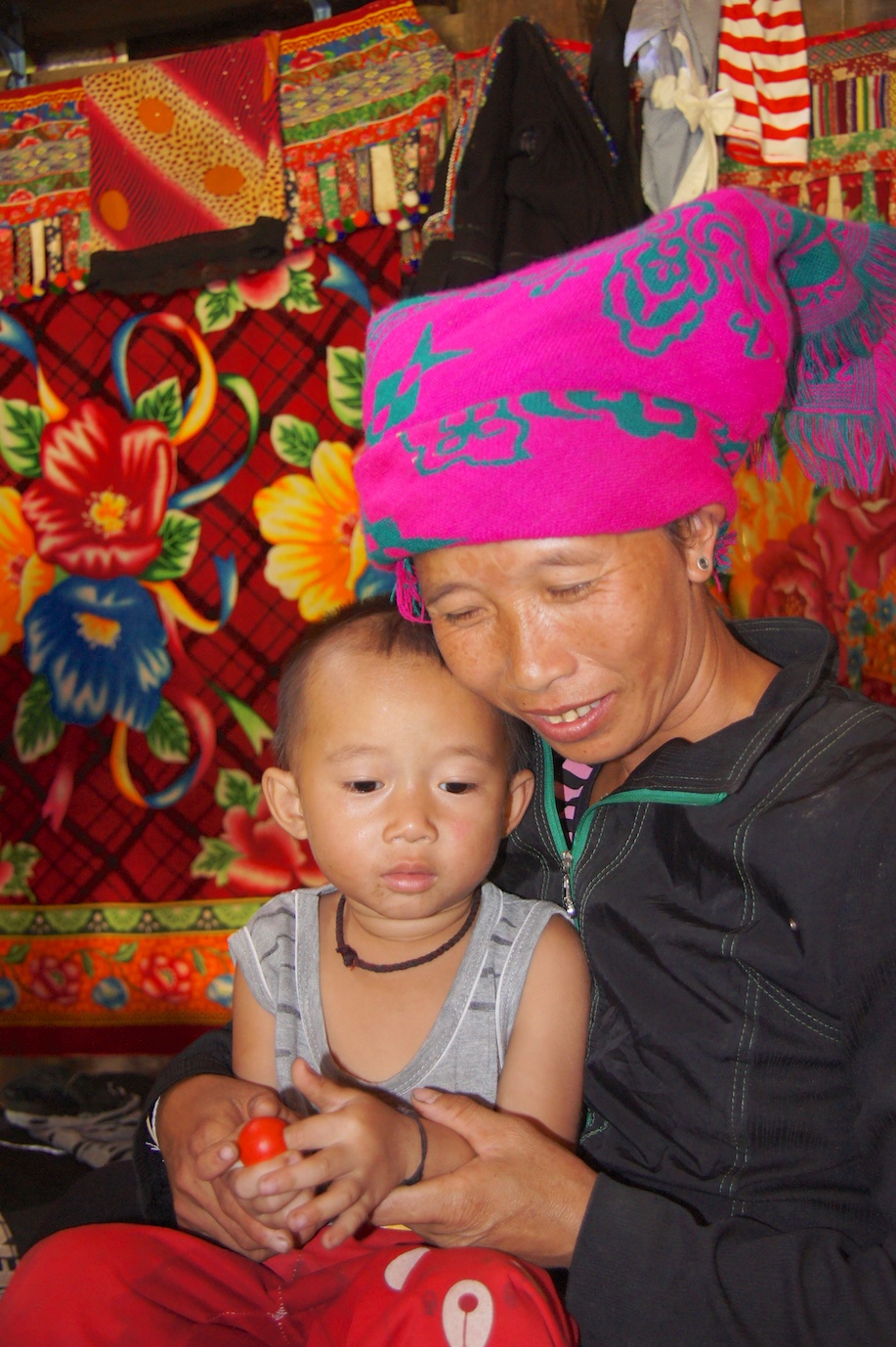
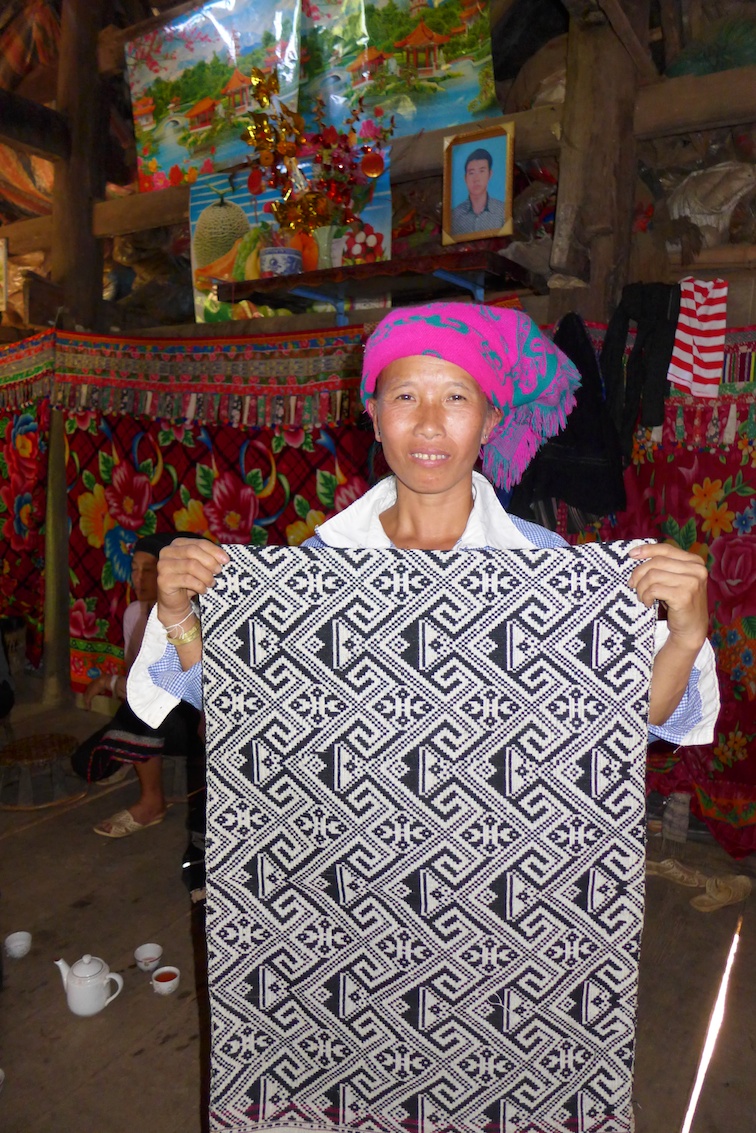
Below, one of the young women showed us how they weave the intricate fabrics.

We purchased the black and white one – made by the woman holding it up.

Of course I was drawn to the woman with the black teeth. Blackened teeth are considered beautiful. The old tradition is based on the belief that that only wild animals and demons have white teeth. The blackening of the teeth, was an assurance that one would not be mistaken for an evil spirit.
What is the black made from? Stick lac, a natural resin obtained from an insect.

Several of the younger girls had two gold teeth, also a sign of beauty and wealth.


Back to our ride…



This fishing net/contraption was fascinating – I have never seen one like it.


The back roads were busy with kids…

and water buffalo!

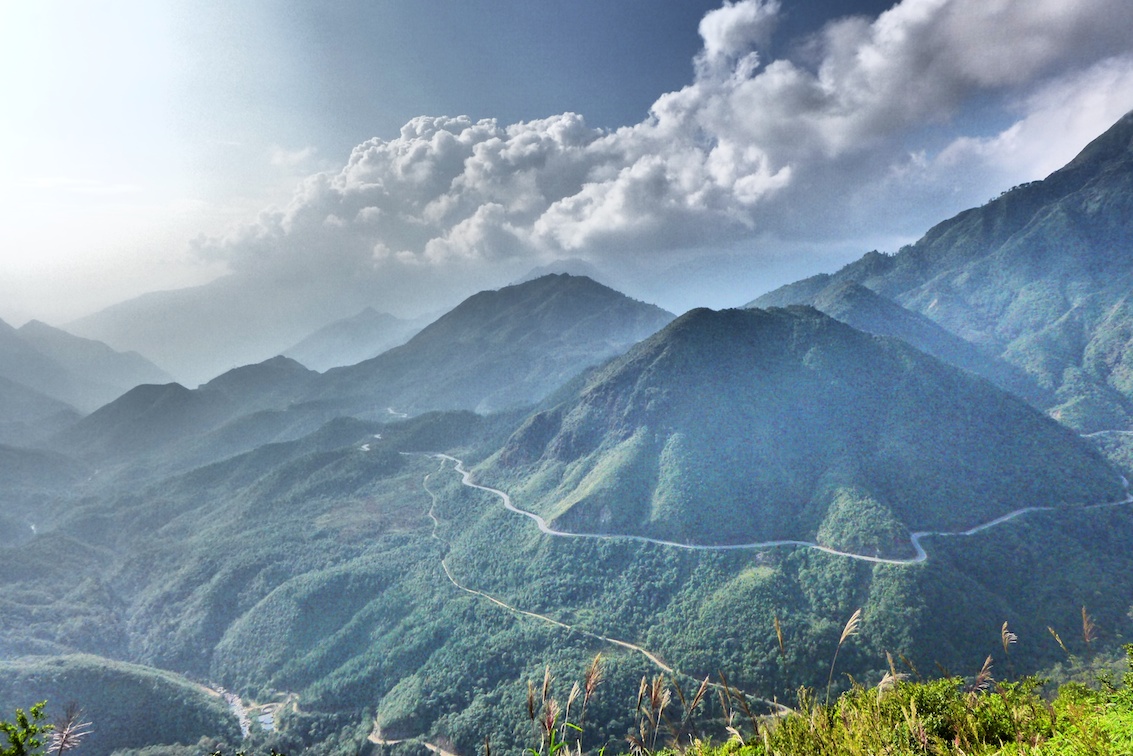
The road you see in the photo below is the route we took.
Never say never… I never thought I would be traveling around the world on the back of a motorcycle.
Sapa, although touristy, is an amazing place to visit! We are glad Erin was there to share this adventure with us.


 The XtraSuitcase
Leave a comment